Medusa 5e Guide: Petrifying Gaze, Mirrors, and a Sluice Encounter
This guide uses the 2014 D&D 5e rules and SRD 5.1. Open the for its statistics. The conservatory, sluice dispute, and recovery arrangements are original encounter material.
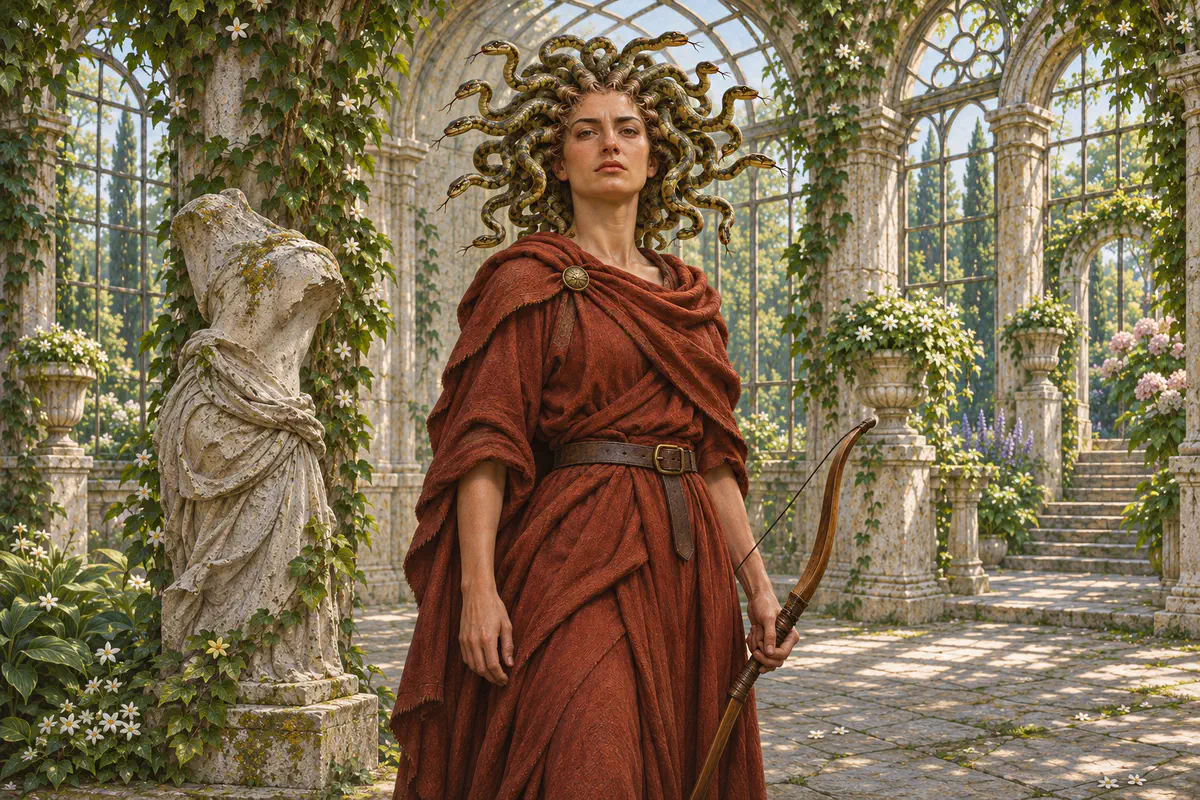
Monster overview
A medusa is a Medium monstrosity with a humanoid figure, living snakes for hair, and a gaze that can turn creatures to stone. A medusa can speak Common, use weapons, and decide whether to force the saving throw. A ruined estate or walled garden gives her room to control approaches and a reason to keep visitors at a distance.
Statues in ordinary working clothes or with hands raised over their eyes can tell the party what happened before anyone rolls a save. A medusa can threaten people without closing to melee range, so give the party reasons to choose between speaking across a barrier, fighting from range, or getting close enough to risk the gaze.
When does Petrifying Gaze take effect?
At the start of a creature’s turn, check whether it is within 30 feet and can see the medusa’s eyes. If the medusa can see that creature and isn’t incapacitated, she can call for a DC 14 Constitution saving throw. The gaze uses no action, so she still has her usual attacks on her turn.
| First save total | Result |
|---|---|
| 14 or higher | The creature succeeds. |
| 10–13 | The creature starts turning to stone and is restrained. It repeats the save at the end of its next turn. Success ends the effect. Failure petrifies it. |
| 9 or lower | The creature is petrified immediately. |
Track the repeat save on the affected creature’s entry in the initiative tracker. Moving the medusa away or blocking sight after the first failure won’t cancel a pending save. Greater Restoration or other appropriate magic ends the petrification.
Averting your eyes and using a reflection
A creature that isn’t surprised can avert its eyes at the start of its turn to avoid the first save. It can’t see the medusa until its next turn starts. Looking back before then requires an immediate save. While it averts its eyes, its attacks against her usually have disadvantage and her attacks against it usually have advantage if she can see it. Spells that require sight also have to account for that choice.
A polished surface within 30 feet and in bright light can turn the gaze on the medusa if she sees her own reflection. Resolve the saving throw if the party gets the angle and light right. Set up the attempt so the character can position the surface without looking at her eyes. She can move out of the angle or behind a pillar on her turn.
Ready to run — The conservatory sluice
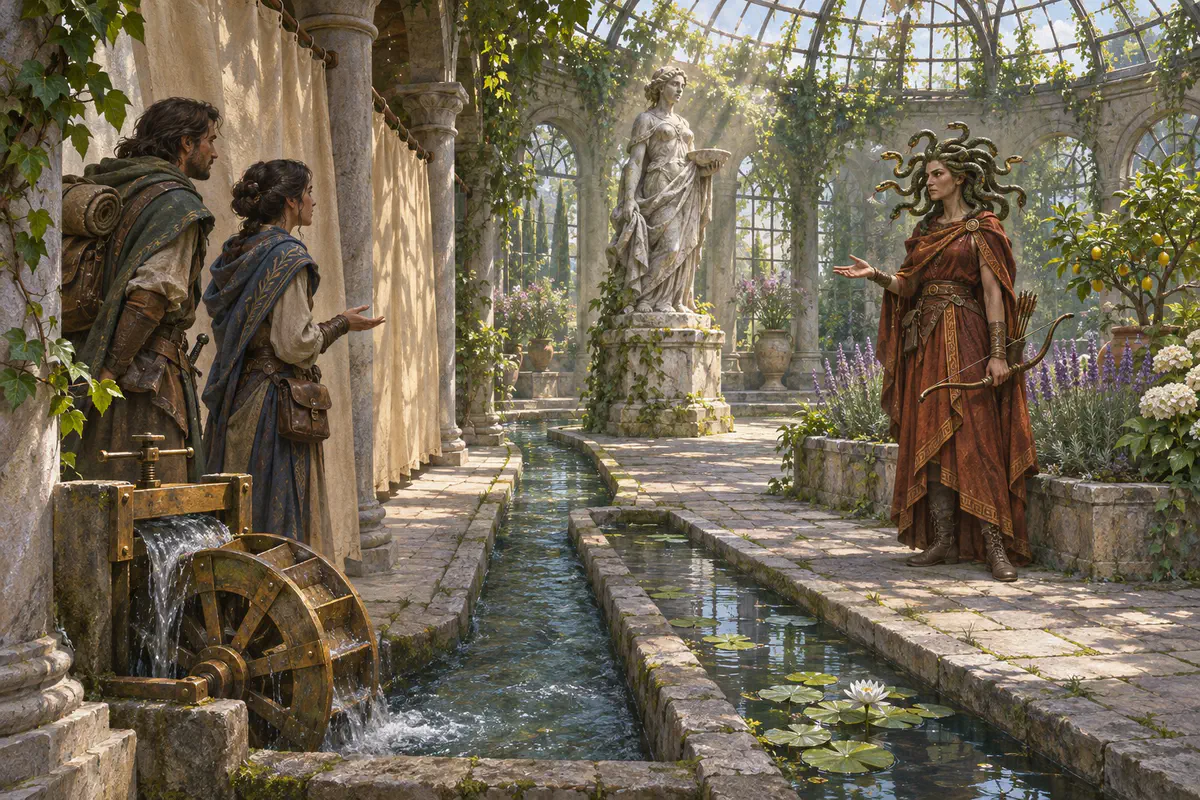
Situation. One medusa has blocked a conservatory sluice to keep quarry silt out of her planted beds. The town’s cistern is running low. The water keeper hires the party to restore the flow and gives them a brass key for the bypass wheel.
Layout. The entrance and the medusa’s planting bed are 45 feet apart. A stone main channel crosses the middle of the conservatory. Two pillars and an opaque canvas curtain screen a 20-foot side walkway. The first wheel, 10 feet inside the entrance, closes the feeder to the planted beds. The bypass wheel is 15 feet farther down the walkway and sends water around the beds to the cistern. The two wheels are accessible from the screened side. A sunlit statue of a quarry guard stands by the main channel.
Opening. The medusa calls out in Common. She tells the party to stay behind the curtain and warns them that opening the main sluice will bury the beds again. From the entrance they can see a fan of gray silt on the tiles. She offers to let them use the bypass if they close the feeder first.
Choices. Agreeing to the terms takes no check. The feeder wheel and the unlocked bypass wheel each take an action to turn. The medusa leaves the party alone while they operate the wheels in that order. Opening the bypass with the feeder still open sends a fresh surge into the beds. A polished mirror and the patch of direct sunlight by the statue give the party a second option if talks fail.
If combat begins. Roll initiative if the party attacks, starts opening the main sluice, or turns the bypass wheel before closing the feeder. The medusa shoots twice with her longbow when she has a clear shot across the channels. In reach she uses her snake hair and shortsword attacks. The curtain blocks sight until someone moves around it or pulls it aside. The stone pillars can provide cover from arrows. At 30 hit points or fewer she retreats through a rear garden door. She stays near the conservatory if the party withdraws.
Finish. Restoring the flow earns 120 gp from the water keeper. The keeper has arranged one casting of Greater Restoration with a temple cleric, including the required 100 gp of diamond dust. The party can bring the quarry guard or a petrified companion for that casting. Further castings require additional diamond dust. If the party withdraws before opening the bypass, the town starts rationing water. The medusa renews her offer if the party returns willing to close the feeder and make good on any damage to the beds.
Prepare for your party
This is a CR 6 creature with a chance to remove someone from play on one failed roll. Establish the restoration arrangement before anyone goes in. For an easier scene, hang a second curtain between the main walkway and the planted beds. For a harder one, move the bypass wheel into the open. Two characters can each spend an action to unhook the existing curtain and hold it up while a companion reaches the wheel. Use the encounter balancing guide when deciding whether a fight is appropriate. A conservatory like this can sit inside a city’s public gardens or at a manor in your next urban encounter.