Wolf 5e Guide: Pack Tactics and Wilderness Encounters
Decide what the wolves want before deciding whom they attack. A pack defending a den should react differently from animals following a blood trail. That objective gives both sides a way to end the encounter.
This guide uses the 2014 wolf from SRD 5.1. The behavior and encounter below are original suggestions for play, rather than claims about universal animal behavior.
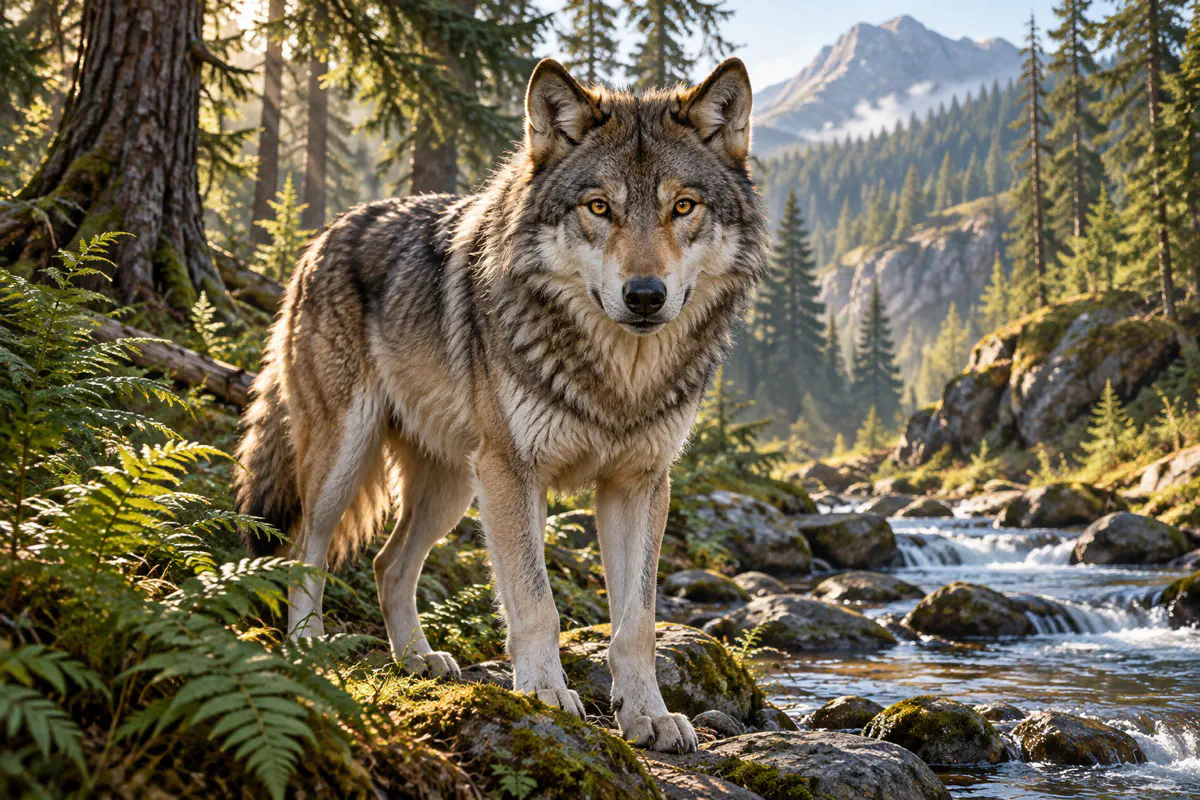
The wolf at a glance
AC 13 · HP 11 · Speed 40 feet · CR 1/4. Pack Tactics helps a wolf attack a target beside a non-incapacitated ally. Its bite can knock a creature prone. Use the complete wolf stat block, SRD 5.1 page 393 for the exact conditions, attack, save, and senses.
Put the objective on the map
Choose something tangible: a carcass, a den entrance, or a wounded pack member. Place the wolves between that objective and the party so the scene makes sense as soon as the characters see it.
Give the pack a withdrawal point. These particular wolves might retreat when one is badly hurt, stop pursuit once the party leaves a clearing, or abandon a contested carcass when an easier meal appears. Such choices change the situation without requiring the DM to invent new combat abilities.
Use ordinary movement and the printed traits. Wolves can approach the same target from different directions, but encircling an adventurer does not create extra attacks. Decide whether your table uses optional flanking separately. Think about how a narrow bridge or a defensible doorway changes the pack’s approach.
Warn the party before commitment
Show tracks, a half-dragged carcass, and figures watching from the trees. Those signs give travelers a reason to stop, change route, or protect a pack animal. They also make wilderness travel feel connected to the surrounding environment.
Let an effective precaution matter. A detour around the den, a barrier that keeps the animals away, or an appropriate spell can solve the immediate problem. If a proposed Animal Handling check is uncertain, explain what it might achieve and what failure changes. A successful check should not imply that wild animals become permanent companions.
Ready to run: the deer at the ford

Situation: two wolves have brought down a deer beside a shallow ford. They want to keep their meal, while the travelers want to cross. Use a creature count appropriate to the party; two wolves can threaten inexperienced or depleted adventurers.
Layout: the ford is 20 feet wide, with the carcass on its east bank. The party approaches from the west. An upstream crossing takes a one-hour detour over firm ground. The wolves are plainly visible beside the deer; they are not hidden attackers waiting for a free opening strike.
Opening: one wolf stands over the carcass while the other paces between it and the water. Both watch the approaching party.
Choices: the travelers can take the detour without a check. Waiting quietly until evening lets the pack drag its meal away. A substantial food offering placed away from the crossing can draw them aside long enough for passage; establish what counts as substantial before the party spends supplies. A spell or a convincing different approach can also work.
If fighting starts: roll initiative. The wolves try to drive intruders away from the carcass using their normal statistics. If one falls, the other Disengages and retreats into the eastern trees. They do not pursue travelers who withdraw west.
Finish: crossing gains a shortcut and a clear local landmark. The detour costs time but preserves resources for the destination. Record that choice in the travel tracker, or find another pack encounter in the forest collection. That collection uses dire wolves, whose statistics differ from ordinary wolves.
This work includes material taken from the System Reference Document 5.1 (“SRD 5.1”) by Wizards of the Coast LLC and available at https://dnd.wizards.com/resources/systems-reference-document. The SRD 5.1 is licensed under the Creative Commons Attribution 4.0 International License available at https://creativecommons.org/licenses/by/4.0/legalcode.