Crown of Madness 5e: Forced Attacks, Charm, and Control
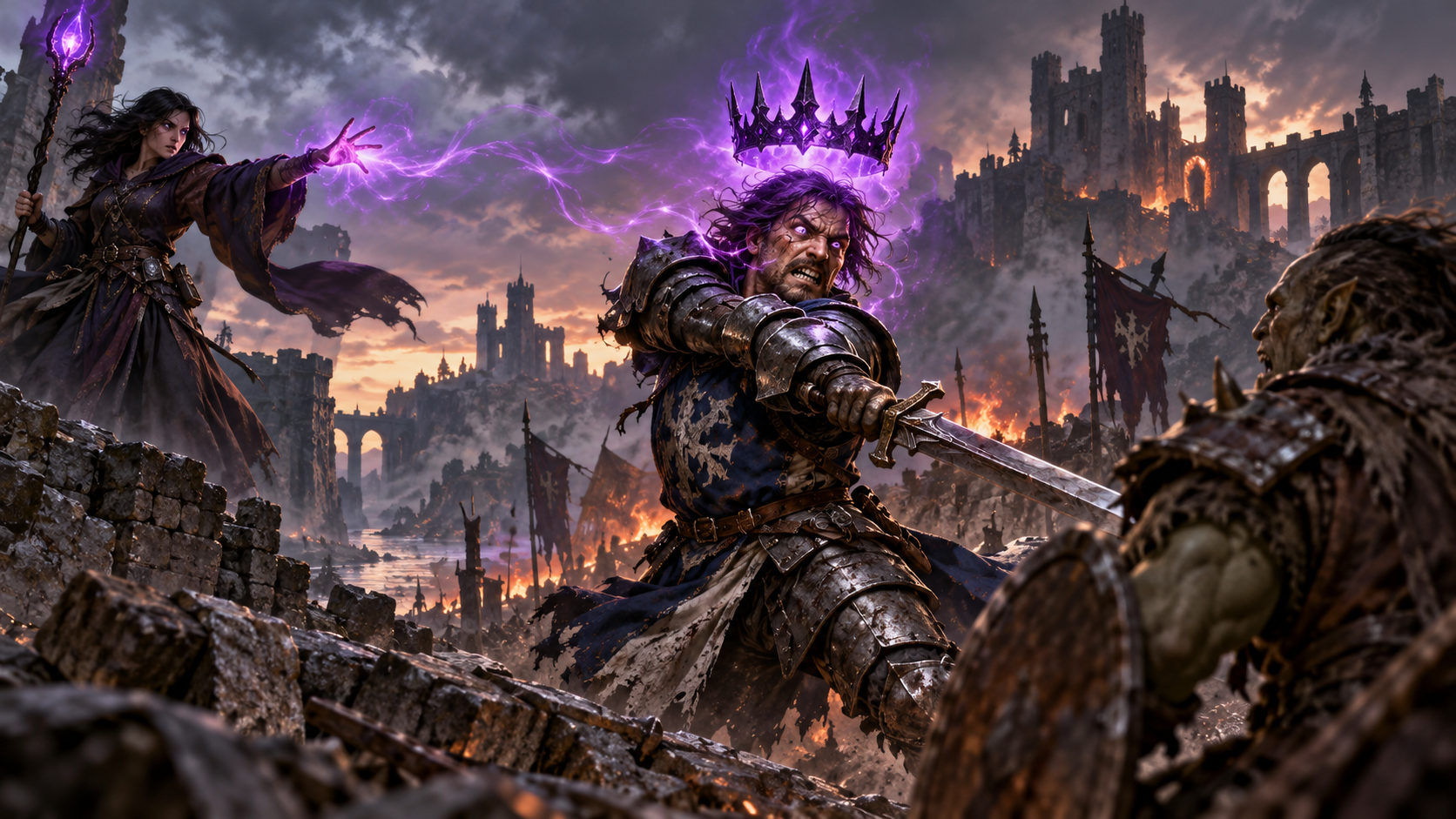
I’ve always found Crown of Madness wonderfully dramatic: a jagged crown appears, madness shines in an enemy’s eyes, and that foe may strike one of its own allies. The spectacle can disguise how demanding the spell really is. It requires concentration, repeated actions from the caster, and an eligible target already within the victim’s reach to produce its signature attack.
Crown of Madness 5e — Quick Spell Reference
| Casting Time | 1 action |
|---|---|
| Range | 120 feet |
| Components | V, S |
| Duration | Up to 1 minute |
| Concentration | Yes |
| Ritual | No |
| Classes | Bard, Sorcerer, Warlock, Wizard |
| Source | Player's Handbook (2014), pg. 229 |
How Crown of Madness Works
The caster chooses one Humanoid they can see within 120 feet. The target makes a Wisdom saving throw. On a failure, it becomes charmed by the caster for the spell’s duration, a twisted iron crown appears on its head, and madness glows in its eyes.
On each of its turns while charmed this way, the target must use its action before moving to make a melee attack against a creature other than itself that the caster mentally chooses. The chosen creature must be within the target’s reach. If the caster chooses no creature, or no eligible creature is within reach, the target can act normally on its turn.
The target repeats the Wisdom saving throw at the end of each of its turns, ending the spell on a success. The spell also ends if the caster loses concentration or fails to spend their action on a subsequent turn to maintain control over the target.
What the Caster Controls
Crown of Madness does not give the caster complete control of the target. The caster chooses only the creature that must receive the required melee attack. The spell does not let the caster choose the target’s movement, bonus action, reaction, exact attack option, or other decisions.
The forced attack must occur before the target moves. If no eligible creature is already within the target’s reach, the spell does not make the target walk toward one; the target instead acts normally. If the forced attack occurs, it uses the target’s action, but the target can still move and use any available bonus action or reaction afterward.
Charm, Targets, and Immunity
The 2014 spell can target only a Humanoid. A creature with another creature type is not a valid target even if it looks humanoid. A Humanoid immune to the charmed condition cannot be affected by the spell’s charm.
While charmed, the target cannot attack the caster or target the caster with harmful abilities or magical effects. The caster also has advantage on ability checks made to interact socially with the target. These are the ordinary 2014 charmed-condition rules; they do not make the target friendly or obedient beyond the specific forced attack described by Crown of Madness.
The visible crown and changed eyes make the effect conspicuous. The spell does not say that observers automatically understand its exact rules, but it is not a subtle or hidden enchantment.
Concentration and Action Economy
The caster must maintain concentration for up to 1 minute. Taking damage can force a Constitution saving throw, and beginning concentration on another spell ends Crown of Madness.
Concentration alone is not enough. On every turn after the initial casting, the caster must use their action to maintain control; otherwise the spell ends. That ongoing action cost prevents the caster from using most other spells and actions while keeping Crown of Madness active.
The target also receives a new Wisdom saving throw at the end of every turn. Even with concentration and maintenance intact, one successful save ends the spell.
Tactical Uses and Limitations
The spell works best when the target begins its turns beside another enemy and has a meaningful melee attack. A heavily armed Humanoid standing in a packed formation is a much better candidate than an isolated archer or spellcaster. The 120-foot range can help the caster begin the effect from a safer position.
Its limitations are substantial: the target must be a Humanoid that can be charmed, gets an initial save and repeated saves, and may have no eligible creature within reach. The caster also spends later actions maintaining it. For those reasons, Crown of Madness is a situational disruption spell rather than reliable full control.
Casting at Higher Levels
Crown of Madness has no higher-level benefit. A higher spell slot does not add targets, increase the duration, remove concentration, or raise the save DC beyond any change caused by the caster’s normal statistics.
FAQ
Does Crown of Madness control the target’s movement?
No. The forced melee attack must happen before movement, and the spell never lets the caster choose where the target moves.
What happens if no other creature is within the target’s reach?
The target acts normally on that turn. It is not forced to move toward a creature first.
Must the caster spend an action every turn?
The caster spends the initial action to cast the spell and must spend their action on each subsequent turn to maintain control. If they do not, the spell ends.
Can the target attack the caster?
Not while the target remains charmed by the caster. The charmed condition prevents it from attacking the charmer or targeting the charmer with harmful abilities or magical effects.