Gnoll 5e Guide: Rampage, Pursuit, and a Contested Ford
Rules baseline: 2014 D&D 5e, SRD 5.1. Use the gnoll stat block in the SRD, pages 314–315 for complete statistics. The objectives, motives, layout, and morale below are original DM suggestions, rather than universal gnoll behavior.

Gnolls put pressure on a scattered party. Their most distinctive combat feature rewards a successful melee takedown, so a wounded scout far from help creates a different problem from a group holding a defensible crossing. Prepare the routes between those positions before choosing how many gnolls to use.
What to emphasize
The standard gnoll is CR 1/2 and has spear, bite, and longbow options. It does not have Multiattack. Its signature Rampage triggers when it reduces a creature to zero hit points with a melee attack on its own turn. It can then spend a bonus action to move up to half its speed and make a bite attack.
A ranged takedown does not trigger Rampage. Neither does an opportunity attack outside the gnoll’s turn. The feature does not grant an endless chain of movement and bites: the gnoll still has only one bonus action that turn. Rampage movement also does not provide protection from opportunity attacks.
If switching weapons matters, keep track of the shield and held equipment. The listed shield contributes to AC; a gnoll cannot keep using that shield while simultaneously firing a two-handed longbow. Decide its starting equipment before initiative instead of giving it every equipment benefit at once.
Make pursuit a choice
Place one obvious obstacle between a vulnerable traveler and the gnolls: a low wall, a wagon, or a narrow gate. Describe whether characters can go around it, climb it, or use it as cover. Players can then choose whether to hold together, retreat, or risk an exposed dash.
Give the gnolls an immediate objective that affects their decisions. Here, two raiders want stolen grain. They will defend it and threaten intruders, but they will not abandon it to chase every passerby over the hills. This is a scenario motive, not a change to their abilities.
Telegraph their presence with hyena-like calls, spear marks in a wagon, and tracks around the grain. If the party investigates from safety, reveal the number of visible guards and the bypass. For more ideas on meaningful terrain, see creating dynamic environments.
Ready to run: grain at the dry ford
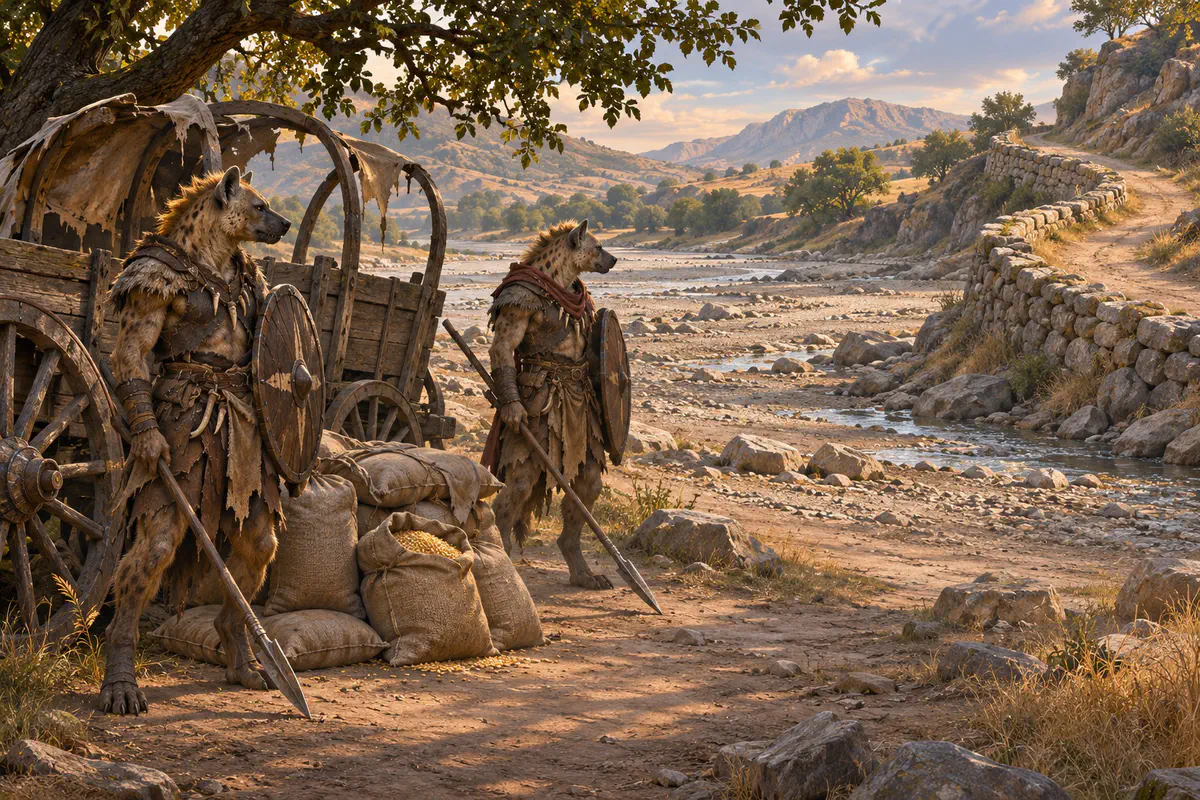
Situation: two gnolls have taken six grain sacks from an abandoned caravan wagon. A village messenger wants at least two sacks recovered before nightfall. Passing through the area and recovering the supplies are separate objectives.
Layout: a dry riverbed crosses the road in a 60-foot-wide clearing. The wagon and sacks stand on the northern bank. Both gnolls begin beside the wagon, holding spears and shields. A low stone wall along the east bank separates the clearing from a raised trail that bypasses the ford, adding one hour of travel. The wall provides cover where it actually blocks a shot.
Opening: the gnolls call out and strike their spear shafts against the wagon. They point away from the sacks. The messenger identifies the raised trail and explains that it rejoins the road beyond the clearing.
Choices: the party can take the bypass without a check if it keeps away from the grain. In this scene, offering equivalent food in exchange for two sacks earns a reluctant trade if the offer is communicated through Gnoll, magic, or clear demonstration. A distraction might let another character recover supplies; the success of that plan depends on sight lines and checks, rather than automatically turning the guards away.
If combat begins: roll initiative. The gnolls defend the wagon and use Rampage only when its actual trigger occurs. They do not gain a free bite after every spear attack. If one falls, the survivor abandons the sacks and withdraws along the northern road, using its action to Disengage if needed to escape safely.
Finish: recovered grain reaches the village. A bypass preserves resources but leaves the messenger’s problem unresolved. A fleeing survivor leaves tracks to another scene; pursuit is optional. If the party begins chasing, establish the distance and terrain using the chase guide.
Prepare for your party
Two CR 1/2 creatures can still threaten wounded adventurers. Check the encounter balancing guide and account for who is already low on hit points. Easier: use one gnoll and leave the bypass plainly open. Harder: require recovery of more sacks, making transport part of the problem, before increasing enemy numbers. Record the bypass in the travel tracker and browse road encounters for the next stop.