Earth Tremor 5e: Range, Prone, and Difficult Terrain
I like Earth Tremor when several enemies close in and a single weapon hit would leave the rest standing. The spell can knock a group down for nearby allies to follow up, but the short range puts you close to the creatures you want to catch.

Earth Tremor 5e — Quick Spell Reference
- Casting time
- 1 action
- Range
- 10 feet
- Components
- V, S
- Duration
- Instantaneous
- Classes
- Bard, Druid, Sorcerer, Wizard
What Does Earth Tremor Hit?
The spell shakes the ground within 10 feet of you. Measure from your position when you cast. Every other creature in that area makes a Dexterity saving throw, including allies. Earth Tremor excludes you, so you can cast it while surrounded without rolling against your own spell.
The spell describes a tremor in the ground and gives no height for the area. If a creature is airborne or standing on a separate platform, ask the DM whether its position is within the affected area before you cast.
What Happens on a Failed Dexterity Save?
A creature that fails takes 1d6 bludgeoning damage and falls prone. A creature that succeeds stays on its feet and takes no damage. The spell has no ongoing knockdown effect, so a creature can stand on its turn by spending the usual movement.
Think about initiative before casting. If your fighter acts before the fallen enemy, the fighter can move within 5 feet and attack with advantage. An archer farther than 5 feet away would have disadvantage against that prone target. If the enemy acts first and has enough movement to stand, the attack opening may close.
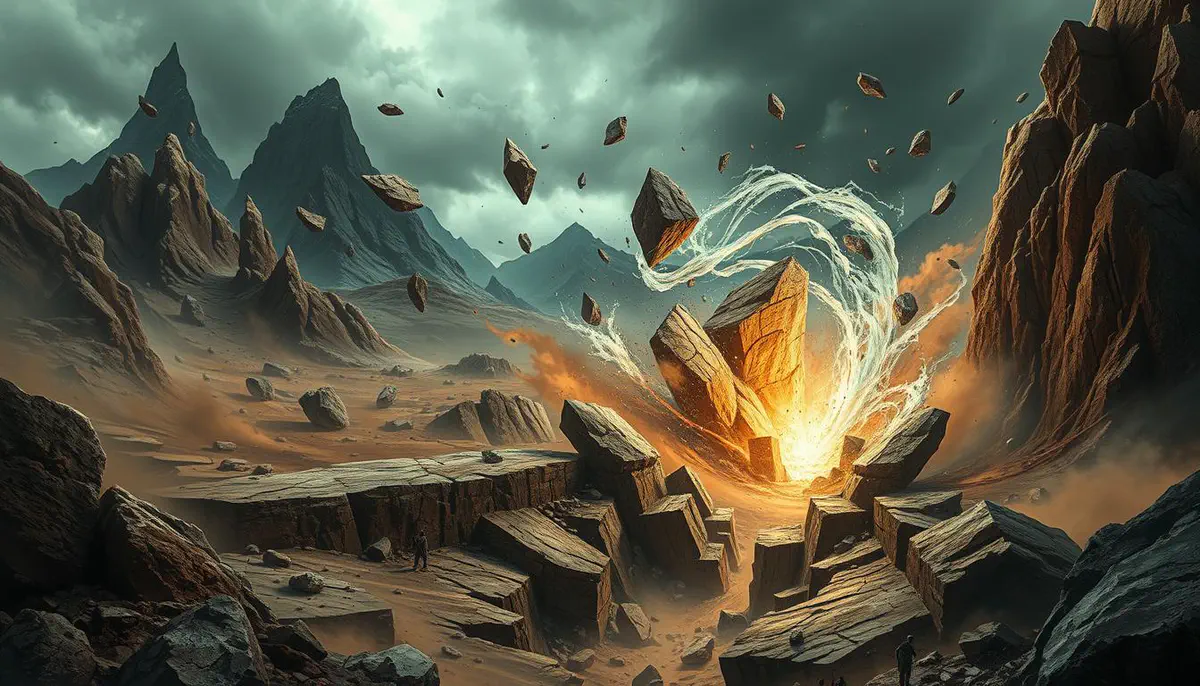
When Does the Ground Become Difficult Terrain?
The terrain clause applies to loose earth or stone in the area. A wooden floor, for example, can be the surface creatures stand on without turning into difficult terrain. Ask your DM how the table will classify an intact stone floor or another surface where the distinction matters.
Changing the ground does not depend on a creature failing its save. The difficult terrain lasts until someone clears it, even though the casting itself is instantaneous. Clearing a patch 5 feet across takes at least one minute by hand. If you cast in a narrow passage, account for the extra movement your party will need to cross the same rubble. You are exempt from the save and still pay the terrain cost.
Does Upcasting Change the Range or Knockdown?
Each slot level above 1st adds 1d6 bludgeoning damage on a failed save. A 2nd-level slot deals 2d6, and a 3rd-level slot deals 3d6. The range, save, prone effect, and terrain clause stay the same.
When Should You Choose Earth Tremor Over Thunderwave?
Choose Earth Tremor when enemies crowd around you and nearby allies can attack them before they stand. Thunderwave gives you a directional cube and pushes creatures on a failed save, which can make it easier to clear space on one side while leaving allies on the other side out of the area.
The Xanathar’s Guide to Everything spell lists Bard, Druid, Sorcerer, and Wizard. It takes an action, uses verbal and somatic components, and leaves your existing concentration spell available.
The official Earth Tremor listing includes the damage progression and terrain-clearing rule.
Earth Tremor FAQ
Can Earth Tremor damage objects or collapse a building?
Earth Tremor deals damage to creatures and changes qualifying ground into difficult terrain. Its rules assign no damage to walls, doors, or other objects. If you cast near an unstable structure, any collapse is a DM ruling.