Rust Monster 5e Guide: Creature Overview, Corrosion, and Equipment Choices
Rules baseline: 2014 D&D 5e, SRD 5.1. Use the for complete statistics. The feeding response, bait, layout, and morale below are original DM suggestions.

Monster overview
A rust monster is an insectlike monstrosity with an armored body, long antennae, and a distinctive tail. Its attraction to metal makes it memorable for a different reason than most dungeon predators: the adventurers’ equipment can be more appealing than the adventurers themselves. The standard creature is Medium and unaligned.
Mines, abandoned armories, scrap heaps, and forgotten workshops give a rust monster both food and a reason to stay. It fits an adventure about salvage, missing supplies, or a dungeon whose metal fittings are disappearing. Its modest challenge rating describes a relatively small combat threat, while the prospect of damaged armor can still create a difficult decision for an experienced party.
What to emphasize
The standard rust monster is CR 1/2. Iron Scent pinpoints ferrous metal within 30 feet. This detects suitable metal, not every creature or every kind of valuable object in that area.
Keep its two corrosion mechanics separate. Rust Metal applies when a nonmagical metal weapon hits the creature: after damage, the weapon takes a cumulative −1 penalty to damage rolls and is destroyed at −5. Nonmagical metal ammunition that hits is destroyed after dealing damage. This trait’s wording covers metal weapons, rather than only ferrous ones.
Its Antennae action instead targets a visible nonmagical ferrous metal object within 5 feet. A creature wearing or carrying it can make the printed DC 11 Dexterity save to avoid the touch. Armor or shields suffer the specified AC penalty; a held metal weapon rusts as described in Rust Metal. Unattended objects use the action’s separate destruction rule. The bite does not also corrode armor automatically.
Make equipment loss an informed risk
Show flaking rails, a ruined iron shovel, and untouched wooden crates before the party reaches the creature. If a miner knows what happened, let them explain that steel blades and armor are at risk. Surprise equipment destruction is less useful than a visible problem players can prepare for.
Place scrap within reach of an alternate route. Bait should create a meaningful opening: decide how long the creature feeds and what interrupts it. That is encounter behavior, not a universal promise that dropping a nail buys ten minutes of safety.
When corrosion occurs, record the penalty on the item instead of treating it as hit point damage to the wielder. The printed penalties are permanent. An ordinary rest does not remove them, and you should not assume a cantrip repairs them without a separate ruling. Make replacement supplies available if the campaign expects continued adventuring away from town.
Ready to run: the courier tube in the ore cart
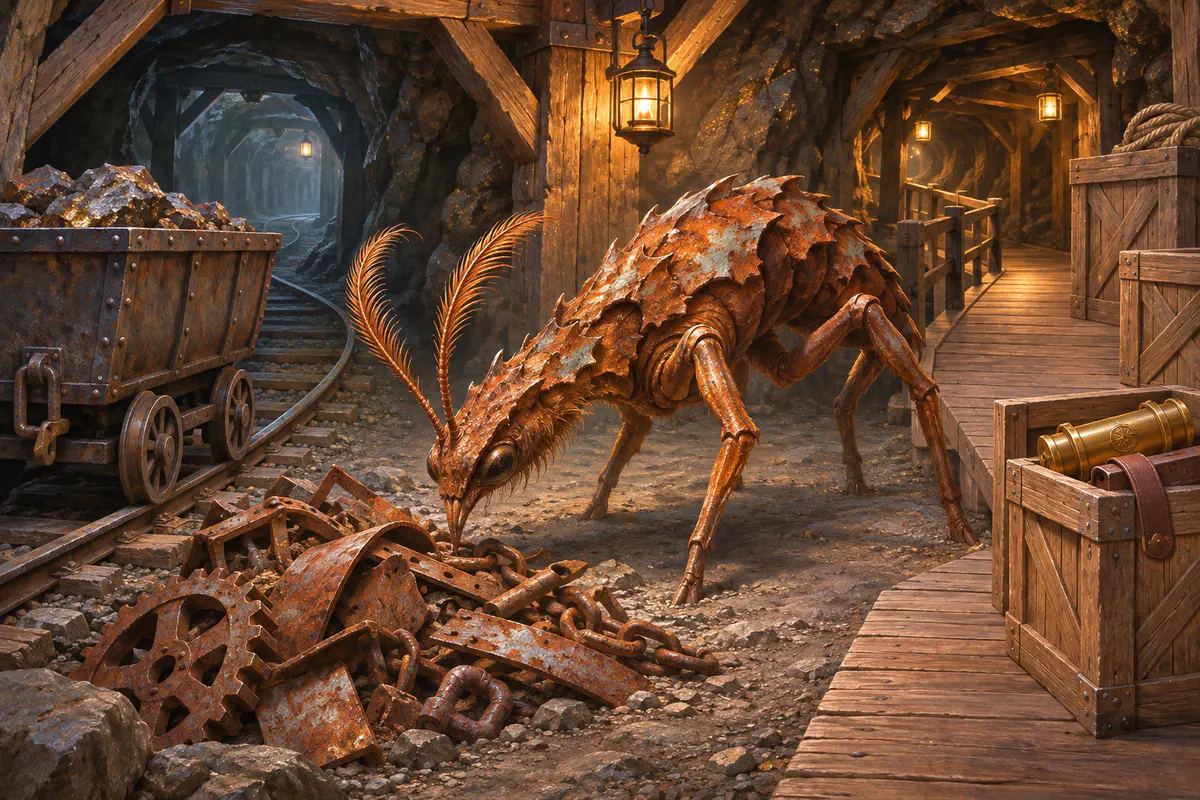
Situation: one rust monster feeds on abandoned rails at a mine junction. A courier’s brass dispatch tube lies in a wooden crate in the ore cart. The tube itself is nonferrous; the danger comes from approaching with exposed iron or steel equipment.
Layout: a 40-foot-square junction has southern entry, northern exit, and a broad wooden walkway along the east wall. The cart stands near the west wall. The rust monster starts beside the cart, 20 feet from the entrance. A bucket containing 10 pounds of iron offcuts sits at the southern threshold.
Opening: lantern light reveals the animal touching a rail and leaving crumbling rust. The courier, waiting outside, identifies the crate. The walkway and scrap bucket are visible immediately.
Choices: the party can bypass the cart using the walkway. For recovery, placing the iron offcuts in the southeast corner keeps this creature occupied for one minute while someone retrieves the tube. It stays with the larger food supply during that interval unless attacked or touched. Characters can also leave ferrous gear safely outside and approach carefully; Iron Scent is not a rule that detects brass as iron.
If combat begins: roll initiative. The rust monster uses its printed Antennae or bite action, not both as an invented Multiattack. Apply Rust Metal after qualifying weapon hits. At half hit points it retreats west toward a disused shaft, leaving the tube behind. It does not pursue beyond the junction in this scene.
Finish: the courier pays the agreed 20 gp for the intact tube. A peaceful recovery preserves both supplies and equipment. If the party leaves the rust monster here, the miners can redirect it toward a scrap enclosure later; the encounter does not require a kill.
Prepare for your party
Use the encounter balancing guide, but also consider the cost of damaged equipment. Easier: the creature is already feeding on the scrap in the southeast corner. Harder: the cart’s stuck wooden wheel requires an extra action to reach the crate. For another object-centered dungeon problem, see the mimic guide or browse cave encounters.