Skeleton 5e Guide: Undead Tactics and a Guard Encounter
A skeleton guard becomes memorable when the party can understand its job. Give it an instruction, a boundary, and signs that reveal how the place once worked. The players can then fight, investigate, or find a way to satisfy the command.
This guide uses the 2014 skeleton from SRD 5.1. The specific instructions and encounter below are original scenario design.

The skeleton at a glance
AC 13 · HP 13 · Speed 30 feet · CR 1/4. Skeletons are vulnerable to bludgeoning damage and immune to poison damage. Read the complete skeleton stat block, SRD 5.1 page 346 for attacks, condition immunities, and senses.
Choose orders the players can discover
Write the command in one sentence: “Keep everyone without the librarian’s seal out of the archive.” Decide what the skeletons do when someone retreats, presents a seal, or approaches from another door.
Put clues in the room before the trigger. A portrait of the librarian, a visitor register, and a brass seal on a hook make the exception understandable. If the characters find the correct solution, let it work. A permission token that arbitrarily fails after they retrieve it turns an investigation into wasted effort.
The command is your setup, not a universal rule for every skeleton. In another adventure, these guards might obey a living necromancer or attack intruders throughout a ruin. Tell the players what they can observe rather than expecting them to guess the exact wording in your notes.
Make the battlefield readable
Use short sightlines, clear entrances, and one piece of useful cover. Skeleton archers behind a low wall create a different problem from skeletons holding a doorway, even with the same creature count.
Let the party identify options: a side aisle, a shelf to hide behind, or a fallen beam they can use to bar pursuit. Resolve cover and movement using the ordinary rules. The room’s appearance does not automatically give the guards extra attacks or resistances.
Describe the effect of a solid impact on brittle bones so players can learn about bludgeoning damage. Reward deductions made from those clues. Keep the resistance and vulnerability rules available when applying damage.
Ready to run: the overdue archive
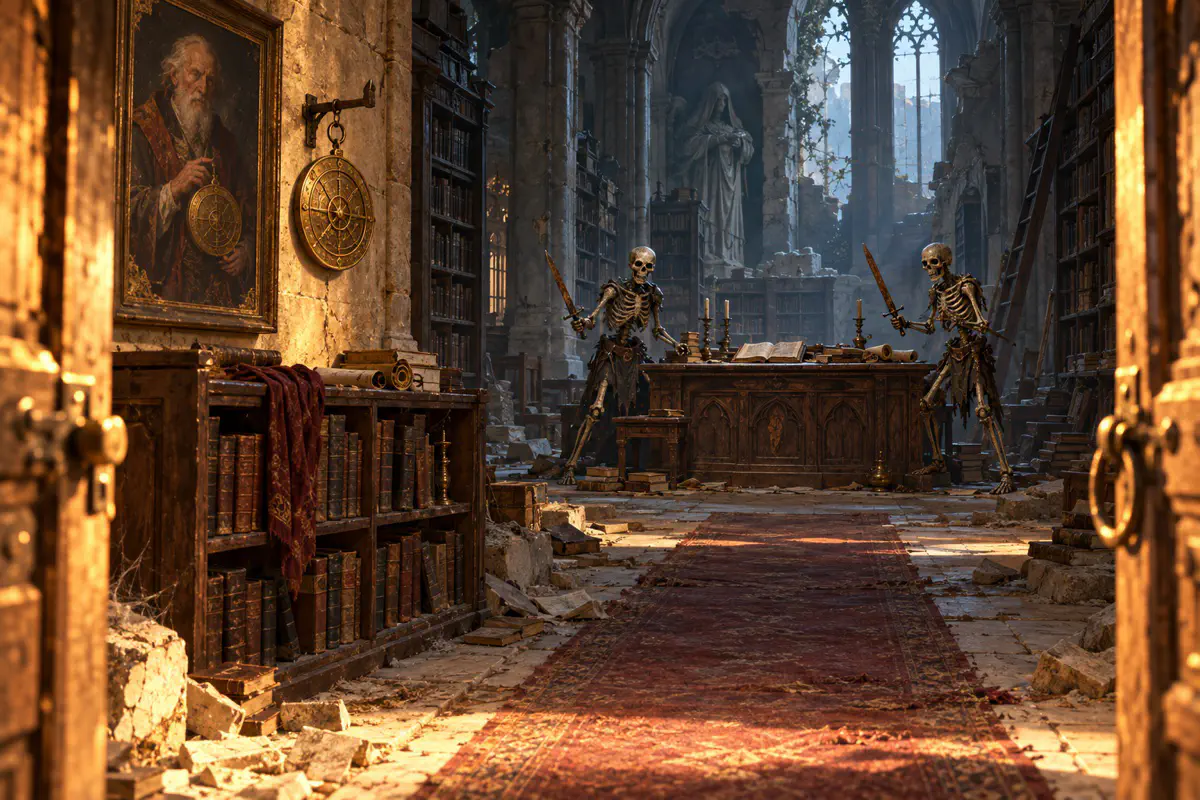
Situation: two skeletons guard a ruined archive. Their command permits entry to anyone openly carrying the librarian’s brass seal. The party needs a ledger describing an abandoned supply depot.
Layout: a 40-foot aisle leads north from the entrance to a reading desk. The guards wait beside that desk. A waist-high shelf on the west side provides cover when it actually blocks a shot. The seal hangs beside a faded portrait just outside the southern doorway; neither is concealed.
Opening: as a visitor reaches the threshold, the skeletons raise their weapons. The portrait shows the same seal held conspicuously in the librarian’s hand. Give the players time to describe their approach before anyone crosses.
Choices: carrying the seal openly allows passage. The guards also let people withdraw south. Entering without the seal starts a fight; use their printed attacks and ordinary initiative. They pursue only within the archive and return to the desk when intruders leave. Their predictable behavior can support another plan, such as distracting them while a companion takes the ledger.
Finish: the ledger provides a useful route and a named contact. Defeating the guards gives the same access. For a harder scene, place the seal inside a stuck display case and make its condition obvious; decide what tools or time open it before asking for a roll.
Explore more undead scenes in the northern wilderness collection, or use the initiative tracker to run the guards.
This work includes material taken from the System Reference Document 5.1 (“SRD 5.1”) by Wizards of the Coast LLC and available at https://dnd.wizards.com/resources/systems-reference-document. The SRD 5.1 is licensed under the Creative Commons Attribution 4.0 International License available at https://creativecommons.org/licenses/by/4.0/legalcode.