Dancing Lights 5e: Movement, Spacing, and Dim Light
Dancing Lights is the illumination cantrip I choose when flexibility matters more than brightness. Four moving lights can mark a route, probe the edge of a room, or travel ahead of the party, but the spell’s concentration and spacing rules keep that versatility under control.
Dancing Lights 5e — Quick Spell Reference
| Casting Time | 1 action |
|---|---|
| Range | 120 feet |
| Components | V, S, M(a bit of phosphorus or wychwood, or a glowworm) |
| Duration | Up to 1 minute |
| Concentration | Yes |
| Ritual | No |
| Classes | Artificer, Bard, Sorcerer, Wizard |
| Source | Basic Rules (2014), pg. 230 |
How Dancing Lights Works
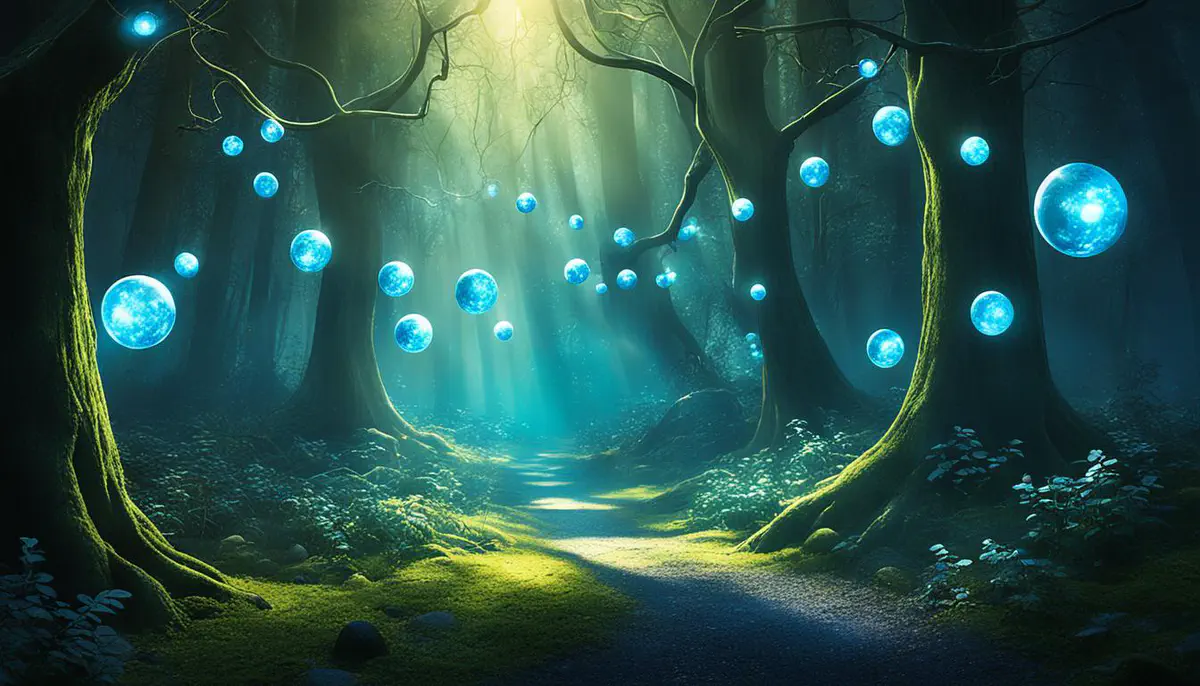
The caster creates up to four torch-sized lights within 120 feet. Each light resembles a torch, lantern, or glowing orb and sheds dim light in a 10-foot radius. Instead, the caster can combine all four into one glowing, vaguely humanoid form of Medium size.
The lights last for up to 1 minute with concentration. They are magical light sources, not creatures or solid objects. They cannot carry equipment, open doors, press switches, block movement, make attacks, or take the Help action.
Moving and Spacing the Lights
As a bonus action, the caster can move the lights up to 60 feet to a new spot within the spell’s range. That movement uses the caster’s bonus action; the lights do not receive turns or actions of their own.
Each light must remain within 20 feet of at least one other light created by the spell. They can form a chain rather than all remaining within 20 feet of one central point. A light winks out if it moves beyond the spell’s 120-foot range.
The wording does not restore a light after it winks out, so keeping the formation inside range matters. The caster can move the group around corners only when the destination and the table’s normal spell-targeting rules allow it.

Dim Light Is Not Bright Light
Each light creates only a 10-foot radius of dim light. Under the 2014 vision rules, dim light is lightly obscured, imposing disadvantage on Wisdom (Perception) checks that rely on sight. Unlike the Light cantrip, Dancing Lights never produces bright light. A creature with darkvision may treat that dim light as bright light within its darkvision range.
This makes Dancing Lights better for navigation and marking positions than for fully illuminating a fight. The Light cantrip and a mundane torch both provide bright light, while Dancing Lights exchanges brightness for multiple mobile sources.
The Humanoid Form
Combining the lights creates one vaguely humanoid, Medium form. The spell does not make an illusion of a specific person, add sound, or state that observers believe it is real. It can suggest a distant figure in darkness, but any deception depends on the scene and the DM’s normal adjudication rather than an automatic spell effect.
The form remains light rather than a creature. It cannot threaten spaces, trigger abilities that require a creature, or provide physical cover.
Components and Concentration
Dancing Lights uses verbal, somatic, and material components. A component pouch or spellcasting focus can replace the inexpensive material under the normal component rules. Because the spell requires concentration, casting another concentration spell ends it, and taking damage can force a concentration save.
Its bonus-action movement also competes with other bonus actions. Casting the spell takes an action, but repositioning it on later turns does not prevent the caster from using an action for another purpose.
2014 vs. 2024 Rules
The core behavior is unchanged in the 2024 rules: the spell still creates up to four dim lights, uses concentration, moves with a bonus action, and enforces the same spacing and range limits.
Two details changed. The 2024 spell is classified as Illusion rather than Evocation, and its listed material component is only a bit of phosphorus. Those changes can matter to a feature that refers to spell school or when tracking literal material components, but they do not change the lights’ brightness, movement, or duration. The quick-reference table above remains the 2014 version.
Frequently Asked Questions
How far can Dancing Lights move?
Up to 60 feet when the caster spends a bonus action, provided the lights remain within the spell’s 120-foot range and obey their spacing rule.
Can the four lights split up?
Only partially. Each light must stay within 20 feet of at least one other light created by the spell.
Does Dancing Lights create bright light?
No. Each light sheds dim light in a 10-foot radius.
Can the humanoid form attack or interact with objects?
No. It is a glowing form, not a creature or a solid body.