Vision and Light 5e: Darkness, Obscurement, and Sight
Light rules become much easier once I separate illumination from its mechanical result. Bright light, dim light, and darkness describe illumination; lightly and heavily obscured describe how difficult something is to see. Connecting those two layers explains most questions about Perception, attacks, darkvision, and hiding.
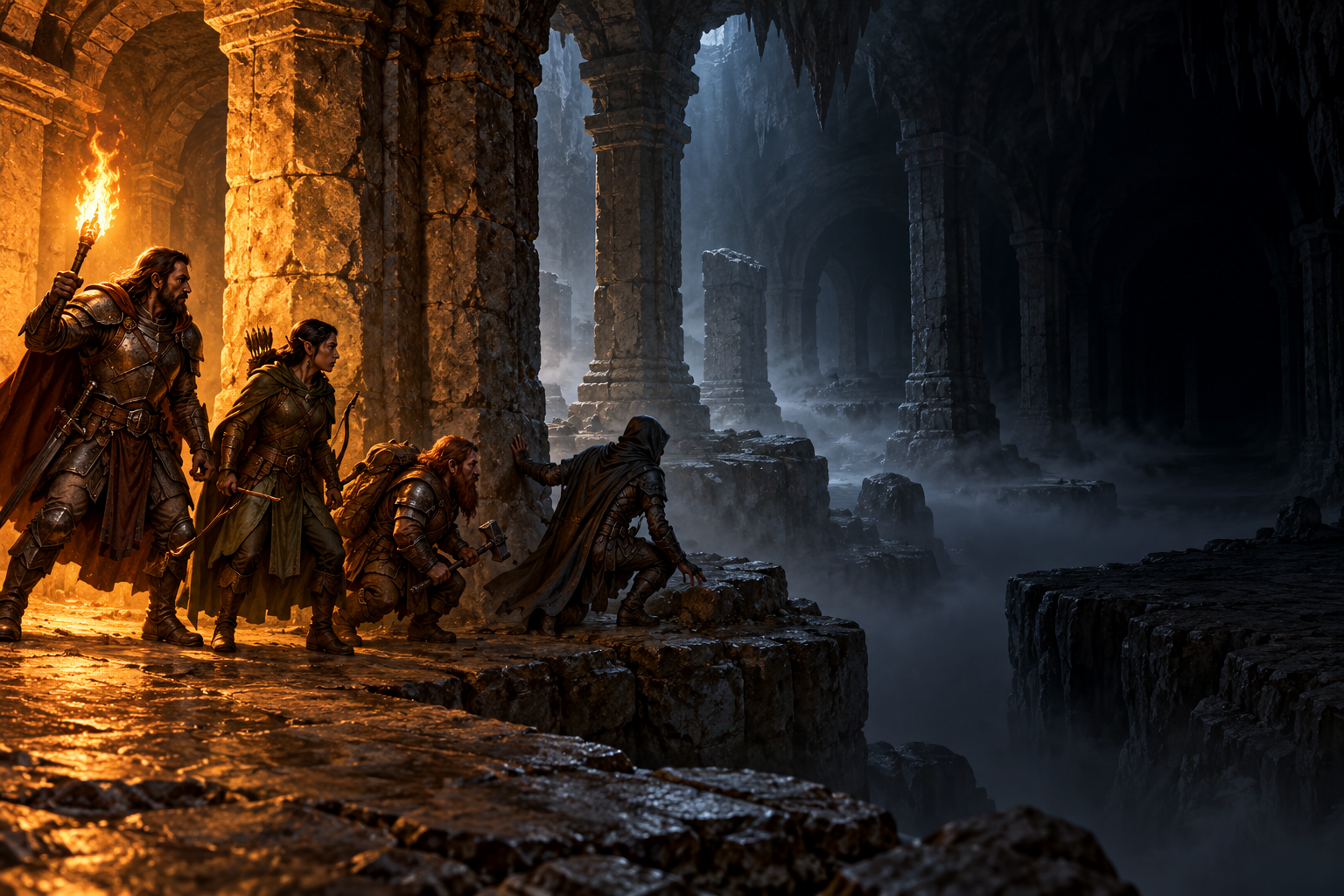
Vision and Light 5e: Quick Answer
Under the 2014 rules, bright light allows normal vision. Dim light creates a lightly obscured area, imposing disadvantage on Wisdom (Perception) checks that rely on sight. Darkness creates a heavily obscured area, effectively blinding a creature when it tries to see something in that area.
Darkvision improves those categories within its listed range: darkness is treated as dim light, and dim light is treated as bright light. In darkness, darkvision normally perceives only shades of gray.
Bright Light, Dim Light, and Darkness
The three illumination categories establish the starting point:
- Bright light: Most creatures see normally. Torches, daylight, and other sources create bright light within a listed radius.
- Dim light: Also called shadows. It is lightly obscured and can occur at the edge of a light source, at dawn or twilight, or under similarly weak illumination.
- Darkness: It is heavily obscured. Unlit dungeons and most outdoor nights qualify unless another light source or sense changes what a creature can perceive.
These categories can be different for different creatures. A human and a dwarf looking into the same unlit corridor may experience different effective illumination because the dwarf has darkvision.
Lightly Obscured Areas and Perception
A lightly obscured area gives disadvantage on Wisdom (Perception) checks that rely on sight. Dim light is a common cause, but patchy fog, moderate foliage, and similar environmental effects can also lightly obscure an area.
This penalty applies only when sight matters. Listening for footsteps is not a sight-based Perception check, although other circumstances may affect it.
Light obscurement also does not automatically make a creature hidden. It can help create the circumstances for hiding, but the 2014 stealth and hiding rules still require the DM to determine whether the creature can attempt to hide.
Heavily Obscured Areas and the Blinded Effect
Darkness, opaque fog, and dense foliage can heavily obscure an area. A creature effectively suffers the blinded condition when trying to see something in that area.
For sight-dependent situations, that means:
- The creature automatically fails ability checks that require sight.
- Its attack rolls against a target it cannot see have disadvantage.
- Attack rolls against it have advantage when the attacker is unseen by it.
- It cannot choose a target for an effect that specifically requires a target it can see.
Heavy obscurement is directional. A creature in clear air looking into opaque fog cannot see a target inside it; a creature inside the fog also cannot normally see a target outside. The relevant question is whether the obscured space blocks the line of sight between observer and subject.
Unseen Attackers and Canceling Advantage
When you attack a target you cannot see, you have disadvantage. When a target cannot see you, you have advantage against it. If neither combatant can see the other, both rules apply and the advantage and disadvantage cancel, producing a normal roll unless another source affects it.
That cancellation does not mean the creatures can see. Effects requiring sight still fail, and the attacker may have to guess the target’s location. If the target is not in the chosen location, the attack misses regardless of the roll.
How Darkvision Changes Light
Within its specified range, darkvision treats dim light as bright light and darkness as dim light. Because darkness becomes dim light rather than bright light, a creature using darkvision still has disadvantage on sight-based Wisdom (Perception) checks in that darkness.
Darkvision also does not normally show color in darkness. The creature sees shades of gray, which can matter for colored markings, wires, liquids, heraldry, and other visual clues.
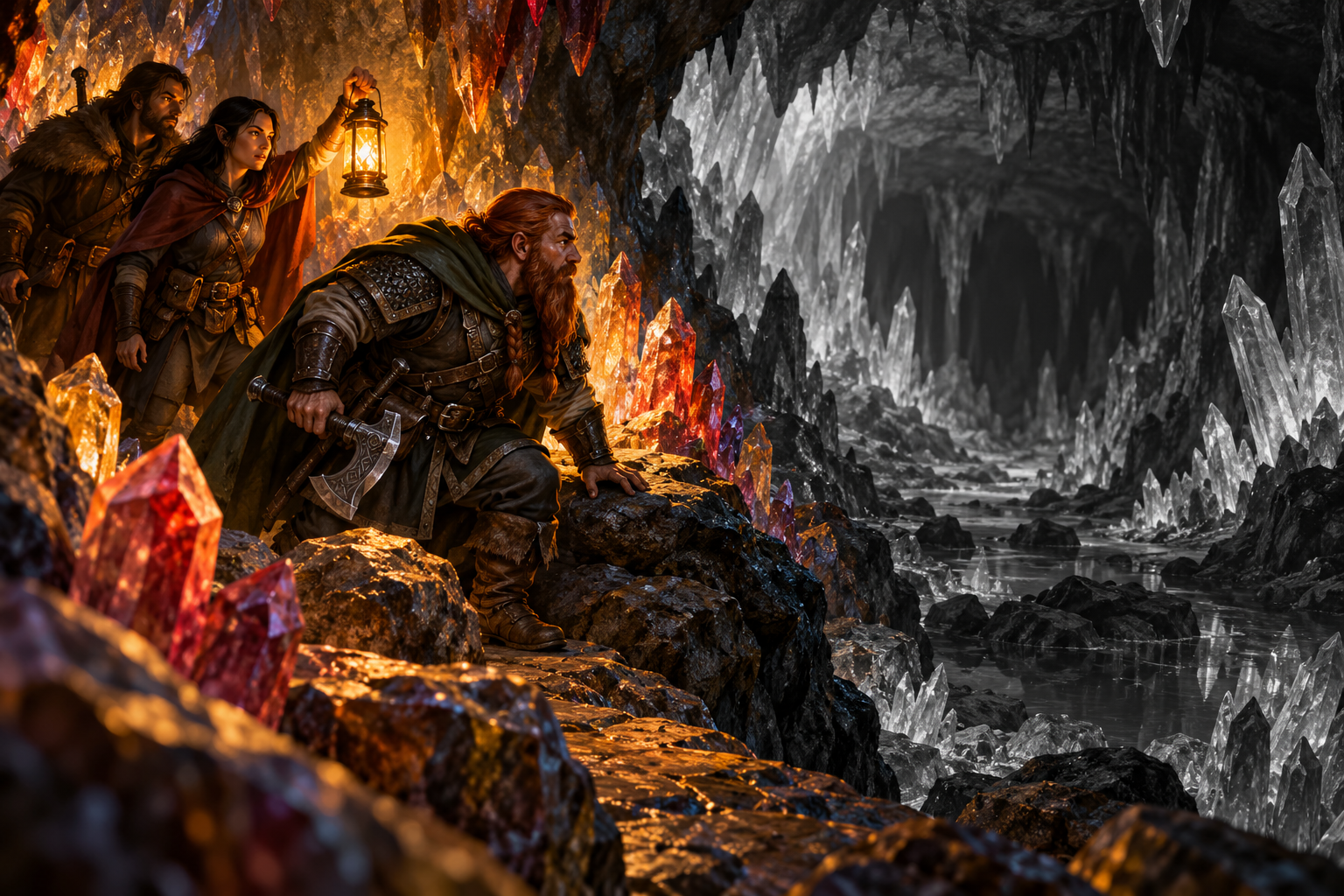
Example: A Dwarf in an Unlit Passage
A dwarf with 60-foot darkvision looks down an unlit tunnel. Within 60 feet, the darkness is treated as dim light: the dwarf can see shapes but has disadvantage on sight-based Perception checks and cannot distinguish colors. Beyond 60 feet, the dwarf experiences the darkness normally and cannot see without another sense or light source.
Darkvision and Magical Darkness
Ordinary darkvision handles ordinary darkness. A magical effect can state that darkvision cannot see through it. The darkness spell does exactly that, so ordinary darkvision does not overcome the spell.
Other senses or features may work if their text applies. Blindsight does not rely on ordinary sight, and a feature such as Devil’s Sight has its own specific wording. Always apply the specific feature rather than assuming every enhanced sense works the same way.
Cover Is Not the Same as Obscurement
Cover is a physical obstruction that can improve Armor Class and Dexterity saving throws or completely block direct targeting. Obscurement concerns vision. A glass window might provide a physical barrier while leaving a creature visible, and opaque fog might block sight without providing physical protection from a projectile.
An effect can involve both. A solid stone wall grants total cover and blocks sight, while dense foliage may obscure a creature without granting the same protection as stone.
Vision and Light FAQ
Does dim light impose disadvantage on attack rolls?
No. Dim light itself imposes disadvantage on sight-based Perception checks. Attack rolls are affected only if another rule, such as being unable to see the target, applies.
Can darkvision see normally in darkness?
No. Within range, darkness becomes dim light for that creature. Sight-based Perception checks therefore still have disadvantage, and color is normally lost.
Does magical darkness block all special senses?
No. It blocks normal vision and, when specified by the effect, darkvision. Blindsight, truesight, or a specifically worded feature may perceive through it according to that feature’s rules.
Can you target a creature you cannot see?
It depends on the effect. Attacks can be aimed at a guessed location with disadvantage, but a spell or feature that requires “a creature you can see” cannot select an unseen target.