Bugbear 5e Guide: Ambushes, Surprise, and a Silent Bell
Rules baseline: 2014 D&D 5e, SRD 5.1. Use the bugbear stat block in the SRD, page 266 for complete statistics. The tactics, motives, layout, and morale below are original DM suggestions. These rules describe the monster, rather than a player-character ancestry.

A bugbear makes a useful ambusher because one strong opening hit can change the party’s plan. The interesting preparation happens before that hit: tracks, sight lines, a lookout’s signal, and the decision to approach quietly or announce a bargain. Give players enough information to influence the opening.
What to emphasize
The standard bugbear is CR 1, with a strong Stealth modifier and a dangerous melee attack. Brute is already included in its printed melee damage; do not add another weapon die when using the stat block’s attack line.
Surprise Attack adds 2d6 damage when the bugbear surprises a creature and hits it during the first round of combat. Acting before someone in initiative is insufficient by itself. Determine surprise for each creature using the 2014 rules, then track whether the trait’s conditions are met. See stealth and hiding when planning the approach.
The standard monster has neither Multiattack nor an automatic extra-long melee reach. Use its printed actions. Its opening strike is dangerous enough without importing unrelated bugbear features.
Build an ambush players can investigate
Choose one hiding place with a believable view of the approach. A broken tollhouse wall works well: it provides concealment, but a side trail lets careful travelers inspect the building from another angle. Resolve actual cover from the wall’s height and the combatants’ positions.
Leave a clue outside the ambush: oversized bootprints among smaller tracks, recently moved branches, or a meal still warm beside an apparently abandoned building. These signs suggest someone is present without automatically revealing a hidden creature. A player who investigates gets useful information, and a failed check does not erase tracks already described.
Decide what the bugbear wants before rolling initiative. A paid lookout may value its wages and escape route more than a fight. That gives a social approach something concrete to work with; it does not require every bugbear to accept the same deal.
Ready to run: the silent bell
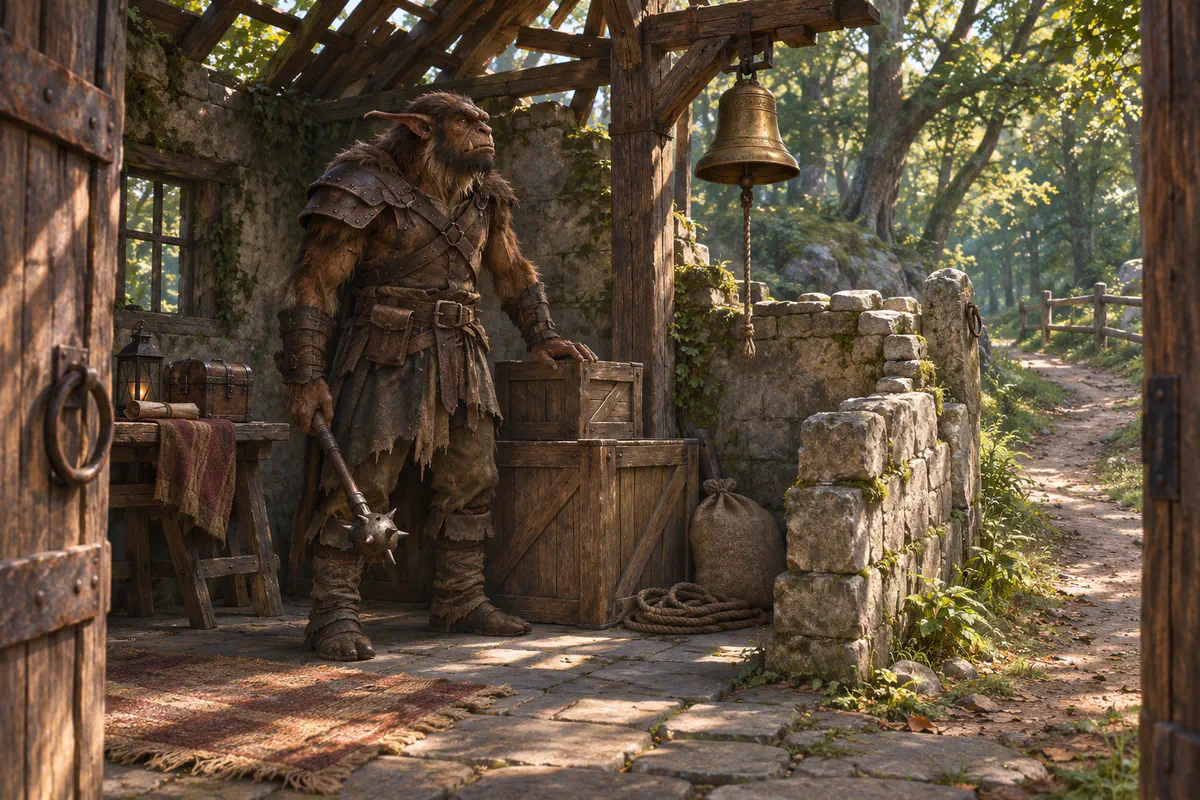
Situation: one bugbear watches a disused tollhouse for a smuggling crew. Its immediate job is to ring a signal bell when armed strangers arrive. It has been paid 10 gp and would rather keep the money than die defending empty crates. No other creatures join this scene; the signal warns smugglers at a distant camp.
Layout: the tollhouse is 30 feet square, with an open southern doorway and waist-high gaps in its outer walls. A bell hangs on a timber frame in the northern corner. The bugbear begins behind the western wall. A visible footpath along the east side bypasses the building and rejoins the road 100 feet north.
Opening: fresh bootprints cross the road. Through the doorway, the party can see the bell and crates, but seeing the hidden lookout requires the normal detection procedure. If the party openly calls out, the bugbear answers from cover and asks who sent them.
Choices: the eastern path permits passage without entering the tollhouse, though the lookout may still signal if it notices them. Offering 10 gp and safe departure persuades this particular lookout to leave without ringing. Stealth or a distraction might prevent the signal; establish who can see and hear each approach before asking for checks.
If combat begins: roll initiative and determine surprise normally. If unopposed, the bugbear first tries to reach the bell; ringing it costs its action as a scene ruling. If engaged, it fights with its printed attacks and retreats through the northern gap once reduced to half its hit points. Moving away may provoke an opportunity attack.
Finish: preventing the signal leaves the distant smugglers unaware of the party. If it rings, the camp starts packing and leaves tracks the party can follow. Either result advances the adventure; the bell changes the next scene rather than summoning an unannounced army.
Prepare for your party
A surprise hit can drop a fragile low-level character. Use the encounter balancing guide before adding allies. For an easier scene, have the lookout visible and arguing with a merchant when the party arrives. For more pressure, make the party’s goal preventing the signal, rather than simply defeating the guard. Use the initiative tracker to record surprise and the first round, or pair this creature with a separately balanced goblin encounter.