Fighter Guide 5e: Weapons, Subclasses, and Builds
A Fighter turns equipment, training, and positioning into reliable pressure. You can build an armored defender, a long-range archer, or a specialist who spends limited resources to change a fight at the right moment. The class rewards knowing when an extra action matters more than saving it for later.
This guide uses 2014 D&D 5e. Three 27-point-buy builds show the choices from level 1 onward. The 2024 comparison keeps Weapon Mastery and revised features separate. Champion is the SRD subclass; other options require their named books.
Fighter quick build
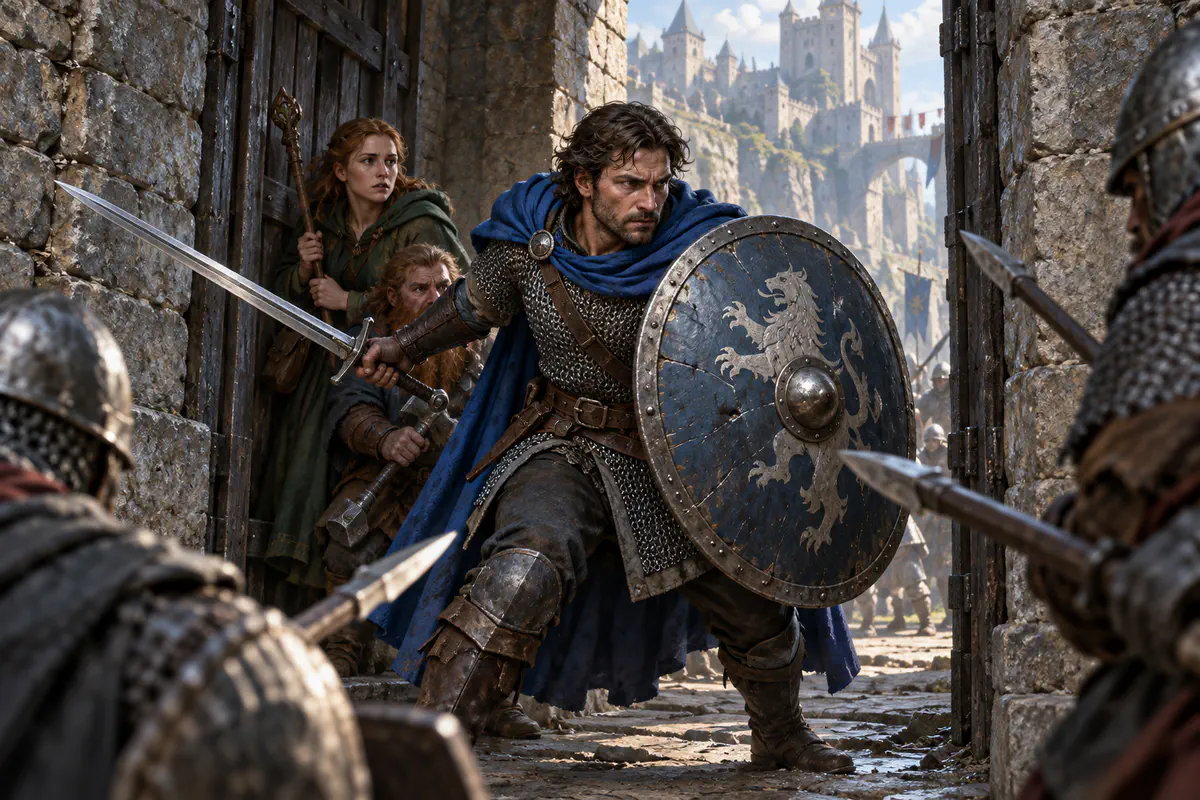
For a straightforward start, choose a half-orc with Strength 16 and Constitution 16, chain mail, a shield, a longsword, and the Dueling fighting style. Choose Athletics and Perception as class skills. Champion at level 3 keeps turn management simple; Battle Master adds more decisions if you want maneuvers and have the 2014 Player’s Handbook.
Strength Fighters want a ranged fallback, and Dexterity Fighters still need a plan for enemies who reach them. Heavy armor, a shield, and high hit points do not force opponents to attack you. Positioning, damage, control, and particular features provide the reasons to engage.
Fighting Style, Second Wind, and Action Surge
Fighters use a d10 Hit Die, begin with 10 + Constitution modifier hit points, and gain 1d10 (or 6) + Constitution modifier at each later Fighter level. Their saving throw proficiencies are Strength and Constitution.
Choose a style that supports your actual weapon
| 2014 style | Benefit | When to choose it |
|---|---|---|
| Archery | +2 to attack rolls with ranged weapons | Longbow or crossbow plans; it does not boost a thrown handaxe |
| Defense | +1 AC while wearing armor | Flexible defense across weapon setups |
| Dueling | +2 damage with a melee weapon held in one hand and no other weapon wielded | Sword and shield; a shield does not invalidate it |
| Great Weapon Fighting | Reroll 1s and 2s on qualifying two-handed melee weapon damage dice, keeping the new result | Greatsword, maul, or polearm offense |
| Protection | Reaction to impose disadvantage on an attack against another target within 5 feet of you, subject to the feature’s conditions | Shield users who stay beside allies and can spare a reaction |
| Two-Weapon Fighting | Add your ability modifier to the bonus attack’s damage | Deliberate two-weapon plans, with bonus-action competition |
These are the base PHB/SRD options. The original class does not let you freely change styles after every long rest. Optional later-book features need separate table approval. Great Weapon Fighting applies to the weapon’s damage dice, not every unrelated damage rider.
Second Wind is a bonus action, not a spell
Once per short or long rest, use a bonus action on your turn to regain 1d10 + Fighter level hit points. At level 5, that averages 10.5. It heals only you and does not grant movement in the 2014 base class.
Use it while you can still act; a character unconscious at 0 HP cannot take the bonus action. It competes with two-weapon attacks, Polearm Master, and subclass bonus actions. After combat, consider spending Hit Dice during a short rest if the party has time.
Action Surge adds an action, not another turn
At level 2, Action Surge gives one additional action on your turn. It does not refresh movement, grant a second bonus action, or restore a spent reaction. You regain the use after a short or long rest. At level 17, you can use it twice between rests but still only once on a turn.
Extra Attack applies whenever you take the Attack action on your turn. At level 5, Attack plus Action Surge Attack gives four attacks; level 11 gives six; level 20 gives eight. That is before any separate bonus-action or reaction attack. You can instead spend the extra action on something urgent: Dash to an objective, Dodge under pressure, or attempt another useful action.
Indomitable is a limited reroll
At level 9, Indomitable lets you reroll a failed saving throw and requires you to use the new result. Its uses recover on a long rest, unlike Action Surge and Second Wind. You gain two uses at 13 and three at 17. The 2014 feature adds no special bonus to the reroll, so it may not rescue an extremely weak Wisdom save against a high DC.

Ability scores, skills, and equipment
Choose Strength or Dexterity as your primary attack ability. Constitution comes next for most builds, and Wisdom is valuable against control effects. Intelligence matters more for an Eldritch Knight casting spells that require attacks or saves.
| Plan | Priority | Armor direction |
|---|---|---|
| Shield or heavy-weapon melee | Strength, Constitution, then Wisdom/Dexterity | Heavy armor with an appropriate Strength score |
| Longbow archer | Dexterity, Constitution, then Wisdom | Light armor; medium armor can be an interim purchase |
| Finesse melee | Dexterity, Constitution | Light or medium armor; shield if using one weapon |
| Eldritch Knight | Weapon ability, Constitution, then Intelligence as needed | Depends on weapon style; component handling matters |
All Fighters start proficient with simple and martial weapons, all armor, and shields. Their saving throws are Strength and Constitution. Choose two skills from the Fighter list, then use your background to cover another role. Athletics suits a Strength character; Perception and Insight are useful for noticing problems and understanding people.
Armor and starting equipment
| Example | AC | Requirement or tradeoff |
|---|---|---|
| Chain mail + shield | 18 | Strength 13 avoids the usual heavy-armor speed reduction; Stealth disadvantage |
| Chain mail + shield + Defense | 19 | Uses the fighting-style choice |
| Plate + shield | 20 | 1,500 gp purchase; Strength 15 avoids the usual speed reduction |
| Leather, Dexterity 16 | 14 | Included with the longbow starting option |
| Studded leather, Dexterity 18 | 16 | Costs 45 gp; no shield while firing a longbow |
Heavy armor’s Strength requirement affects speed, not proficiency. A lower-Strength Fighter can wear it but must accept the relevant penalty unless another feature removes it. See how Armor Class works.
The class package offers either chain mail or leather, a longbow, and arrows. It also offers a martial weapon plus shield or two martial weapons, then a crossbow package or handaxes, and a pack. A starting archer does not automatically receive chain mail and the longbow together. Purchased upgrades in the builds are separate.
Weapon plans and hand use
A greatsword or maul deals 2d6; a greataxe deals 1d12. A longsword held in one hand deals 1d8, leaving room for a shield. Glaives and halberds offer 10-foot attack reach but require two hands to attack. Longbows use Dexterity and require both hands; thrown javelins use Strength but are still ranged attacks.
A free hand is necessary for an ordinary grapple. Sword plus shield leaves none. A two-handed weapon can be held in one hand while you do something else, but you cannot attack with it in two hands while the other is maintaining a grapple. Switching a shield on or off takes an action; do not treat it as a free AC toggle.
Fighter progression: levels 1–20
These are Fighter levels. Extra Attack does not multiply an ordinary opportunity attack or the single weapon attack made through the Ready action on someone else’s turn.
| Level | Main feature | What changes in play |
|---|---|---|
| 1 | Fighting Style, Second Wind | Choose a weapon plan and track self-healing |
| 2 | Action Surge | An additional action once between short or long rests |
| 3 | Martial Archetype | Champion, Battle Master, or another allowed subclass |
| 4 | ASI or optional feat | Improve your attack ability or start a feat plan |
| 5 | Extra Attack | Two attacks with each Attack action on your turn |
| 6 | ASI or feat | Earlier specialization than most classes |
| 7 | Subclass feature | Revisit utility and tactical options |
| 8 | ASI or feat | Finish primary ability or a weapon pairing |
| 9 | Indomitable | One failed-save reroll per long rest |
| 10 | Subclass feature | Review resource and damage changes |
| 11 | Extra Attack improves | Three attacks per Attack action on your turn |
| 12 | ASI or feat | Defense, accuracy, or specialization |
| 13 | Indomitable improves | Two uses per long rest |
| 14 | ASI or feat | An extra opportunity to patch weak saves |
| 15 | Subclass feature | Read the exact trigger and recovery |
| 16 | ASI or feat | Complete remaining priorities |
| 17 | Action Surge and Indomitable improve | Two Surges between rests; three Indomitable uses per long rest |
| 18 | Subclass feature | Subclass capstone |
| 19 | ASI or feat | Last 2014 ASI |
| 20 | Extra Attack improves | Four attacks per Attack action on your turn |
ASIs arrive at 4, 6, 8, 12, 14, 16, and 19. You have more than most classes, but taking feats at every opportunity can still leave accuracy behind. Reaching Fighter 5 before a multiclass detour is usually the clearest route to a functional early character.
Which Fighter subclass should you choose?
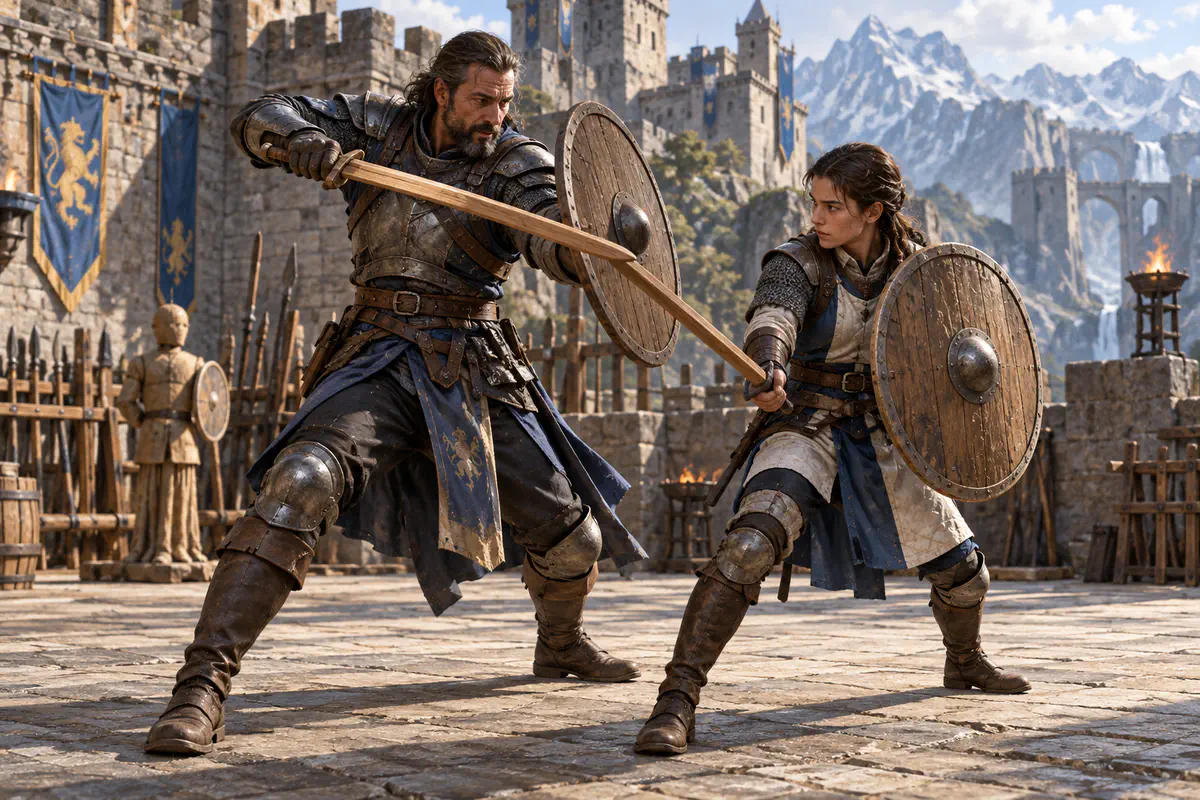
Champion is in SRD 5.1. The other entries summarize official book options as playstyle guidance; use the books for exact features and restrictions. The 2014 subclass starts at level 3 and advances at 7, 10, 15, and 18.
| Subclass | Choose it for | Main limitation | Source |
|---|---|---|---|
| Champion | Minimal additional turn management | Fewer active tactical choices; expanded critical range is not a flat bonus on every hit | SRD 5.1 / PHB 2014 |
| Battle Master | Maneuvers that improve accuracy, control, and reactions | Limited superiority dice; choices require knowing the triggers | PHB 2014 |
| Eldritch Knight | Defensive magic and a weapon/spell hybrid | Slow spell progression and spell-school restrictions in the original version | PHB 2014 |
| Arcane Archer | Magical archery effects | Limited signature uses make resource timing important | Xanathar’s Guide to Everything |
| Cavalier | Protecting nearby allies and holding a line | Depends on enemy behavior and positioning; a mount is not required for every feature | Xanathar’s Guide to Everything |
| Samurai | Bursts of accuracy and a disciplined warrior theme | Signature bonus actions compete with other bonus-action plans | Xanathar’s Guide to Everything |
| Psi Warrior | Psionic protection, mobility, and offense | Another resource pool; Intelligence matters for some features | Tasha’s Cauldron of Everything |
| Rune Knight | Giant-themed control and rune utility | Several activated effects and timing choices to track | Tasha’s Cauldron of Everything |
| Echo Knight | Unusual positioning through an echo | Precise echo rules differ from a normal creature or companion | Explorer’s Guide to Wildemount |
| Purple Dragon Knight / Banneret | A cooperative knight supporting companions | Benefits can be more situational than other choices | Sword Coast Adventurer’s Guide |
Choose Champion for the simplest sheet, Battle Master for active weapon tactics, or Eldritch Knight when a little defensive magic is central to your concept. The latter two need the PHB beyond SRD content.
Battle Master basics
At level 3, the original Battle Master learns three maneuvers and has four d8 superiority dice that return after a short or long rest. Its maneuver save DC is 8 + proficiency bonus + your Strength or Dexterity modifier, your choice. Some maneuvers need no save.
Precision Attack helps a near miss; Trip Attack can knock an eligible target prone after a failed save; Menacing Attack threatens a different save and condition. Read their triggers before spending dice. A maneuver that helps the next melee ally can be less helpful to an archer attacking a prone target from far away.
Eldritch Knight basics
The original version uses Intelligence and learns Wizard spells under its subclass’s school restrictions. Defensive options such as Shield can work without a high spell save DC, but you still need slots, components, and a free reaction. A weapon-and-shield setup needs a legal hand plan for somatic casting.
The level 7 War Magic feature rewards a cantrip action with a bonus-action weapon attack. It does not simply add a cantrip to every ordinary Attack action in the 2014 version. Check the 2024 overview before importing a revised sequence.
Best Fighter feats in 2014
Feats are optional and normally replace an ASI. These are 2014 PHB recommendations, not the revised feat versions.
| Choice | Good fit | Tradeoff |
|---|---|---|
| +2 Strength or Dexterity | Every weapon build | Delays a specialized feat, but improves attack and damage together |
| Polearm Master | Glaive/halberd control and bonus attacks | Bonus action competes with Second Wind and some subclass features |
| Great Weapon Master | Heavy-weapon burst damage | Its −5 attack / +10 damage choice can lose value against high AC |
| Sharpshooter | Ranged weapons and difficult firing conditions | The −5/+10 choice is situational; it does not guarantee hits |
| Crossbow Expert | A deliberate crossbow plan | Ammunition and free-hand requirements still matter; read the exact weapon interactions |
| Sentinel | Punishing movement and threatening enemies near allies | One reaction does not lock down a whole battlefield |
| Resilient (Wisdom) | Protection from mental control | Defensive investment instead of immediate weapon damage |
For a first shield Fighter, improving Strength at levels 4 and 6 is a strong uncomplicated path. For a variant human polearm specialist, a starting feat and the level 4/6 ASIs allow specialization sooner. Do not spend a feat merely because it is popular if its action cost conflicts with your subclass.
Sharpshooter accuracy example
At Fighter 5 with Dexterity 18, Archery, and a mundane longbow, your attack bonus is +9. Against AC 15, you hit 75% of the time. The 2014 penalty changes it to +4, hitting 50%. Ignoring critical extra dice and subclass effects, ordinary damage averages 0.75 × 8.5 = 6.375 per attack; the penalty option averages 0.50 × 18.5 = 9.25.
Against AC 20, the same comparison is 4.25 versus 4.625, a much smaller gain; against AC 22, it becomes 3.4 versus 2.775, favoring an ordinary shot. Actual cover, advantage, remaining enemy HP, and maneuver use change the choice. A damage penalty can be poor when any small hit will finish the target.
Three complete Fighter builds
Scores are Strength, Dexterity, Constitution, Intelligence, Wisdom, Charisma. Each uses 27-point buy and the original 2014 racial bonuses. Add background equipment separately; listed upgrades are purchases, not free additions.
Beginner defender: half-orc Champion
| Choice | Selection |
|---|---|
| Before bonuses | 14, 12, 15, 8, 13, 10 — costs 7 + 4 + 9 + 0 + 5 + 2 = 27 |
| After +2 Strength, +1 Constitution | 16, 12, 16, 8, 13, 10 |
| Background | Folk Hero: Animal Handling, Survival |
| Class / racial skills | Athletics, Perception / Intimidation |
| Style / subclass | Dueling / Champion at level 3; no feats required |
| Equipment | Chain mail, longsword, shield, light crossbow and 20 bolts, explorer’s pack |
| Level 4 / 6 / 8 | Strength 18 / Strength 20 / Resilient (Wisdom) if allowed, otherwise Constitution +2 |
AC starts at 18. At level 5, a longsword hit deals 1d8 + 6 from Strength 18 and Dueling. Attack twice, use Action Surge for two more attacks when removing the threat matters, and spend your single bonus action on Second Wind when needed.
Weakness: you are durable but have no automatic taunt. A hit from an ordinary opportunity attack does not stop an enemy’s movement. Use a narrow approach, help the ally who is actually threatened, and keep a crossbow for distant enemies even though Dexterity is modest.
Tactical archer: wood elf Battle Master
| Choice | Selection |
|---|---|
| Before bonuses | 8, 15, 14, 10, 14, 10 — costs 0 + 9 + 7 + 2 + 7 + 2 = 27 |
| After +2 Dexterity, +1 Wisdom | 8, 17, 14, 10, 15, 10 |
| Background | Soldier: Athletics, Intimidation |
| Class / racial skills | Insight, Survival / Perception |
| Style / subclass | Archery / Battle Master; PHB 2014 |
| Starting maneuvers | Precision Attack, Menacing Attack, Trip Attack |
| Equipment | Leather, longbow and 20 arrows; rapier and shield; two handaxes; explorer’s pack |
| First purchase | Studded leather, 45 gp |
| Level 4 / 6 / 8 | Dexterity +1 and Wisdom +1 / Sharpshooter / Dexterity +2; without feats, improve Dexterity at 6 instead |
At level 5, Dexterity 18 gives +9 to longbow attacks and AC 16 in studded leather. The shield is packed while shooting; donning it takes an action. Trip Attack may benefit nearby melee companions but hinder your own subsequent distant shots, so choose targets and timing deliberately. At level 6, use the Sharpshooter calculation above to assess the accuracy trade.
Example turn: move to a clear firing line, shoot twice, and spend Precision Attack only when the additional accuracy is likely to matter. Use Menacing Attack against an eligible enemy when its control effect would protect the party. Weakness: light armor and only moderate Constitution make being surrounded dangerous; a bow has disadvantage when an applicable hostile creature is within 5 feet.

Heavy-weapon specialist: variant human Battle Master
| Choice | Selection |
|---|---|
| Before bonuses | 15, 10, 15, 8, 13, 10 — costs 9 + 2 + 9 + 0 + 5 + 2 = 27 |
| After +1 Strength, +1 Constitution | 16, 10, 16, 8, 13, 10 |
| Background | Soldier: Athletics, Intimidation |
| Class / human skills | Perception, Survival / Insight |
| Style / subclass | Great Weapon Fighting / Battle Master; variant human and PHB feats required |
| Starting feat / maneuvers | Polearm Master / Precision Attack, Trip Attack, Menacing Attack |
| Equipment | Chain mail; glaive and longsword as the two martial weapons; light crossbow and 20 bolts; explorer’s pack |
| Level 4 / 6 / 8 | Great Weapon Master / Strength 18 / Strength 20 |
At level 5, a normal glaive hit deals 1d10 + 3; the Polearm Master bonus attack deals 1d4 + 3. Resolve Great Weapon Fighting rerolls where applicable. Choosing the damage penalty changes both accuracy and damage; a maneuver is not a promise that the attack will hit.
Example turn: Attack twice, use Action Surge for two further attacks if a priority enemy needs to fall, then use the polearm bonus attack if you did not need Second Wind. That is five attacks, not six: Action Surge does not add a second bonus action. Weakness: AC begins at 16 without a shield, and early feats delay Strength increases. Saving superiority dice exclusively for damage can leave you without a needed accuracy or control option.

Combat decisions with examples
When should you spend Action Surge?
Spend it when acting now changes what enemies can do next: eliminating a dangerous caster, opening a gate before pursuers arrive, or reaching a fallen ally. Saving it for a hypothetical perfect moment can mean never benefiting from it.
At level 5, two extra attacks offer two more chances to remove a target before its turn. If the enemy is already likely to fall to the next ally, consider whether the resource is needed. Action Surge’s short-rest recovery makes the party’s actual rest opportunities relevant, but do not assume a rest after every fight.
Attack, grapple, or shove?
In 2014, a grapple or shove can replace an attack in the Attack action. They use contested checks rather than ordinary weapon attack rolls. At Fighter 5, you can grapple with a free hand, then shove prone if the size and reach restrictions permit.
If both work, a prone enemy with speed 0 cannot stand through ordinary movement. Nearby allies may gain advantage, but distant attacks suffer disadvantage. You sacrificed weapon damage and changed your hand use, so make sure the party can exploit the result. Against a target that would die to the next hit, simply attacking may be better.
Hold a line without inventing extra reactions
Your opportunity attack normally costs one reaction and makes one melee attack. You do not get Extra Attack on it, and you cannot react to every enemy crossing the same doorway. Sentinel can change the effect of a hit, but your reaction is still limited. An enemy may also Disengage or use another route.
If you use Protection, a Battle Master reaction maneuver, or Shield through Eldritch Knight, each competes for that reaction. State which threat matters most instead of treating every defensive feature as simultaneously available.
Use cover and range deliberately
Ranged combat is about lines of fire as well as attack bonuses. Other creatures can provide cover; a doorway can expose you while blocking a shot; long range can impose disadvantage. Moving to a better position can be worth more than accepting a poor shot.
A Strength Fighter can throw javelins or use a crossbow, but the relevant ability and weapon properties still apply. A Dexterity Fighter can switch to a rapier when a safe shot is unavailable. You are not required to keep making the same attack when circumstances change.

Exploration and roleplaying
Choose a trained profession and a reason the party needs you outside battle: a veteran who recognizes military signals, a guide who reads terrain, a guard who understands inspections, or a duelist who knows local rivals. Skills and background connections make these concepts practical.
Athletics can secure ropes or help cross obstacles during wilderness travel. Insight, History, and a relevant background can support a negotiation. You need not have the highest Charisma to ask a useful question or make a credible offer.
Ask who trained you, what rule of combat you refuse to break, and what defeat taught you. Fighters can be merciful, scholarly, theatrical, or cautious. Their class does not require a personality limited to weapon maintenance.
Should you multiclass?
Fighter requires Strength 13 or Dexterity 13 for multiclassing, plus the other class’s prerequisites. Starting Fighter provides Constitution-save proficiency and heavy armor; adding Fighter later does not grant every starting proficiency. Extra Attack from separate classes does not stack into the Fighter’s higher-level versions.
| 2014 option | Why consider it? | What to check |
|---|---|---|
| Rogue | Expertise, Sneak Attack, then mobility | Dexterity 13; finesse/ranged weapon eligibility; Sneak Attack is once per turn, not on every Fighter attack |
| Barbarian | Rage and later Reckless Attack for Strength melee | Strength 13; heavy armor conflicts with Rage benefits; casting and concentration conflict with Rage |
| Cleric | Support spells and a domain | Wisdom 13; delays Fighter attack milestones and adds component/concentration demands |
| Wizard | Arcane utility and defensive spells | Intelligence 13; spell preparation, slots, armor proficiency, and hands still need attention |
Stay through Fighter 5 before a first detour unless you have a specific plan. At higher levels, delaying Fighter 11’s third attack can be an even larger cost. A multiclass should gain a capability you actually use rather than collect features that all demand the same bonus action.
2024 Fighter changes
The following differences come from SRD 5.2.1. They do not apply to the 2014 builds automatically.
| Feature | 2014 | 2024 |
|---|---|---|
| Fighting Style | A class choice; no default frequent replacement | Fighting Style feat, replaceable when gaining a Fighter level |
| Weapon Mastery | No base-class feature | Three weapon choices at level 1; additional choices as you advance |
| Second Wind | One use per short or long rest | Two initial uses, later more; recover one on short rest and all on long rest |
| Action Surge | Additional action | Additional action excluding the Magic action |
| Tactical Mind | No base equivalent | At level 2, spend a Second Wind use to add 1d10 to a failed ability check; if it still fails, the use is not expended |
| Tactical Shift | No base equivalent | At level 5, activating Second Wind as a bonus action also permits half-speed movement without opportunity attacks |
| Indomitable | Reroll a failed save | Reroll with a bonus equal to Fighter level |
| Tactical Master | No base equivalent | At level 9, replace an eligible weapon’s mastery with Push, Sap, or Slow on an attack |
| Studied Attacks | No base equivalent | At level 13, a miss grants advantage on your next attack against that creature before the end of your next turn |
| Level 19 | ASI or optional feat | Epic Boon or another qualifying feat |
Weapon Mastery changes your choices
Greatsword Graze provides some damage on misses; maul Topple can knock a creature prone after a failed save; pike Push helps reposition a target; longsword Sap can reduce an enemy’s next attack accuracy. A longbow’s Slow can help manage an approaching threat. Read property restrictions and coordinate prone effects with ranged allies.
These effects do not give unlimited reactions or allow every creature to be pushed regardless of size. Match the actual weapon to its property, and learn when control matters more than another point of damage.
Rebuild feats and subclass sequences
The revised PHB features Champion, Battle Master, Eldritch Knight, and Psi Warrior. Champion gains more support for mobility and Heroic Inspiration; Eldritch Knight’s revised War Magic changes how it combines cantrips with attacks. The official Fighter overview introduces these changes; use the actual subclass for its final wording.
Do not carry the 2014 damage calculations into revised feats: the old Great Weapon Master and Sharpshooter −5/+10 options are not the revised versions. Revised Polearm Master’s Reactive Strike is not an opportunity attack, changing its interaction with Sentinel. Background ability increases and feat prerequisites also mean the variant-human build needs reconstruction.
For a 2024 Eldritch Knight, Action Surge cannot provide the Magic action. That restriction does not mean every magical class feature is forbidden; identify the action the feature actually uses. Revised spell-slot limits also differ from the 2014 bonus-action spellcasting rule.
Fighter FAQ
Does Action Surge give me another bonus action?
No. It gives one additional action on the same turn. Movement and other action resources do not refresh.
Can I use Dueling with a shield?
Yes. A shield is not another weapon for that style. Wielding another weapon is a different case.
Does Extra Attack improve opportunity attacks?
No. It improves the Attack action on your turn. An ordinary opportunity attack is one melee attack made with your reaction.
Should every Fighter maximize Strength?
No. Dexterity can power ranged weapons and finesse attacks. Pick the ability that supports your weapon plan rather than splitting resources across both without a reason.
Is Champion the best damage subclass?
Not automatically. It is simple to run, but expanded critical range does not replace comparing maneuvers, accuracy, action costs, and the number of encounters between rests.
Rules sources: SRD 5.1 for the main class, Champion, equipment, and combat framework; SRD 5.2.1 for the revision comparison. Non-SRD subclasses and feats are identified by book above. The 2014 Sage Advice Compendium addresses fighting styles and reaction interactions. Builds, calculations, and recommendations are original analysis under the stated assumptions.