Cave Encounters
Pick a cave encounter, read its opening aloud, and start playing. These 18 encounters include creature counts, starting positions, player choices, running instructions, and outcomes. Use the picker to jump directly to the scene you need. Each Setup includes an expandable DM hex map with a numbered key and a full-size download.
Choose a Cave Encounter
Level ranges assume four adventurers with some resources remaining. They are suggested starting points, not guaranteed difficulty ratings. Times are approximate minutes of table play. Social encounters can work outside their suggested range; the listed creatures matter if a fight starts.
| # | Encounter | Levels | Type | Minutes | Immediate problem |
|---|---|---|---|---|---|
| 1 | Bioluminescent Fungus Ambush | 1–2 | Combat / bypass | 10–15 | Hungry rats defend a glowing food cache. |
| 2 | Cave-In Escape | 1–4 | Timed rescue | 10–20 | A failing roof forces a choice between escape and rescue. |
| 3 | Subterranean River Crossing | 1–4 | Exploration | 10–15 | A broken crossing threatens to separate the party. |
| 4 | Crystal Guardian | 3–4 | Combat / negotiation | 15–25 | A crystal sentinel demands the return of stolen offerings. |
| 5 | Fungus Tenders’ Circle | 1–3 | Social / clearing hazard | 15–20 | Growers need one dangerous fungus removed intact. |
| 6 | Cave Chimera Lair | 5–7 | Dangerous combat / retrieval | 20–40 | A courier’s satchel lies within reach of an alert chimera. |
| 7 | Underground Traders’ Market | Any | Social / resupply | 10–20 | The last caravan is packing; maps and supplies remain for sale. |
| 8 | Shadowy Ambush | 2–3 | Combat / detection | 10–20 | A false stalactite waits above a dropped lantern. |
| 9 | Dwarven Excavation Site | 1–4 | Social / rescue | 15–25 | Miners need a slab lifted to free their coworker. |
| 10 | Giant Centipede Nest | 2–3 | Combat / recovery | 10–20 | A missing miner lies among venomous scavengers. |
| 11 | Dark Elf Assassins | 3–4 | Social / ambush | 15–25 | Two hired killers have the wrong description of their target. |
| 12 | Ooze Infestation | 2–4 | Combat / containment | 15–20 | Corroded tools warn of a living spill beside a supply chest. |
| 13 | Medusa’s Gaze | 6–8 | Dangerous social / combat | 20–40 | A veiled sculptor offers passage in exchange for a stolen mirror. |
| 14 | Goblin Market | 1–3 | Social / investigation | 15–25 | A goblin seller has the party’s missing route marker. |
| 15 | Deep Gnome Explorer | 1–4 | Social / exploration | 10–20 | A mapper needs someone to recover a survey weight. |
| 16 | Underground Garden Guardian | 1–3 | Social / exploration | 10–20 | A talking shrub protects the last fresh water for a garden. |
| 17 | Shadow Rift | 2–4 | Timed hazard / combat | 15–25 | Three loose seals hold a rift that releases skeletons. |
| 18 | Ghostly Miners | 3–5 | Social / possible combat | 15–25 | A silent dead miner wants a name restored to a memorial. |
Running These Encounters
- Rules: use the 2014-compatible SRD 5.1 throughout. Creature references are paraphrased from its Creative Commons edition; open the reference inside an encounter for combat details and a free full-source link. All creatures use their unmodified SRD statistics; descriptive changes and non-hostile behavior are noted in the scenes. No paid book or account is needed. Scenario names, dialogue, objectives, behavior, DCs, timers, treasure placement, and peaceful resolutions are original encounter design, not additional official rules.
- Units: all distances are feet. Each map uses a 5-foot hex grid (distance between adjacent hex centers), with north up and a numbered DM key. Open the map below a Setup to view it; download the SVG to zoom or print in landscape. Maps include creature positions and secrets, so keep them on the DM side of the screen. Stated dimensions and distances take precedence over the grid; unspecified feature sizes, door positions, and decorative details are illustrative. The river chamber and the north–south passages are oriented to preserve their stated travel distances. Unless a scene says otherwise, exits are open and rooms contain breathable air.
- Light and hiding: dim light is not physical cover. Darkness does not automatically make an ambush succeed. Use normal hiding and surprise rules; roll initiative before attacks. A monster’s False Appearance does not itself grant a free attack. See vision and light, stealth and hiding, and cover.
- Checks and consequences: use the listed check only for the stated approach. A sound plan that removes the risk can succeed without rolling. “Harder” options change the situation; reassess them for your party instead of treating them as a fixed balance formula.
- Numbers: a damage entry such as 4 (1d4 + 2) offers a fixed average or a roll; choose one, not both. A range of 30/120 means normal/long range; attacks beyond normal range have disadvantage and cannot exceed long range. Attacks here target one creature unless specified; melee reach is listed in each reference. Use ability modifiers for unlisted checks and saves. HP is per creature.
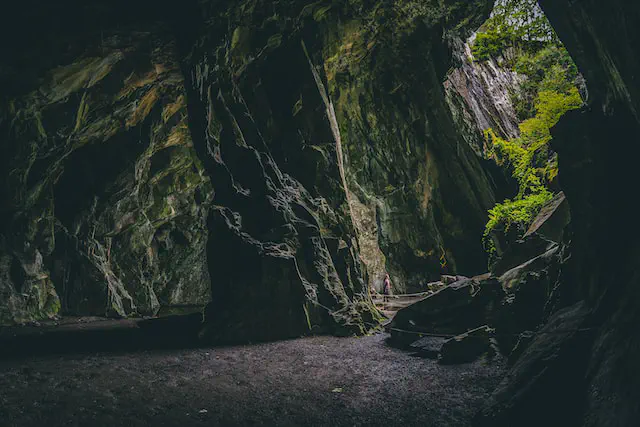
1. Bioluminescent Fungus Ambush
At a glance: levels 1–2 | Combat / bypass | 10–15 minutes | Creatures: 3 giant rats.
Blue mushrooms illuminate a torn grain sack. Something beneath the caps drags a boot-sized bone out of sight.
Setup. A 40-by-30-foot chamber, ceiling 10 feet high. Glowing fungi provide dim light throughout. The entrance is west; an open exit is 40 feet east. Three giant rats feed behind a 1-foot-high stone lip 20 feet from the entrance. The rats gain half cover while peering over it against attacks from the opposite side. A clear 5-foot-wide path runs along either end.
DM hex map: Bioluminescent Fungus Ambush

Trigger. A rat hisses when anyone approaches within 15 feet. It attacks only if someone comes within 5 feet of the grain sack or attacks a rat. Tell the players where the movement came from; this is not automatic surprise.
Run it. Rats cluster around an intruder to use Pack Tactics. They chase no farther than the chamber. A ration thrown at least 10 feet from the passage distracts all three for 1 minute, allowing passage without a roll. At one rat remaining, it Disengages and flees into a crack.
Resolution and reward. The sack contains 8 sp and a brass tag bearing a nearby caravan’s emblem. Returning the tag earns 5 gp and news of a missing wagon. Bypassing the rats leaves the sack guarded; driving them away allows recovery.
Adjust. Easier: 2 rats. Harder: 4 rats. The larger group gains more attacks and more chances to benefit from Pack Tactics.
SRD reference: Giant Rat
Small beast; CR 1/8. AC 12; HP 7; speed 30 ft. STR 7 (−2), DEX 15 (+2), CON 11 (+0), INT 2 (−4), WIS 10 (+0), CHA 4 (−3). Darkvision 60 ft.; passive Perception 10; no languages.
- Bite: +4 to hit, reach 5 ft.; 4 (1d4 + 2) piercing damage.
- Pack Tactics: advantage on attacks against a creature with an unincapacitated rat ally within 5 ft. of it.
- Keen Smell: advantage on Perception checks relying on smell. Use ordinary rats here, without the optional disease variant.
2. Cave-In Escape
At a glance: levels 1–4 | Timed rescue | 10–20 minutes | Creatures: 1 trapped commoner; no enemies.
Dust trickles from a split roof beam. Beyond it, a miner struggles beneath a fallen brace. “The side passage—before the next crack!”
Setup. A straight tunnel is 60 feet long and 10 feet wide, with a 10-foot ceiling. The party starts at its west end. Miner Tella is pinned 30 feet east; a safe side passage branches south at 40 feet. Her lantern lights the rescue site. The main eastward route is already blocked.
DM hex map: Cave-In Escape

Trigger. The first roof crack starts initiative. Tell the players that the central tunnel is failing, that Tella will not survive its final collapse if left there, and identify the side exit. This is an original hazard, using the following timing rather than a universal cave-in rule.
Run it. On initiative count 0 each round:
- Round 1: dust falls; no damage. The central 20 feet of tunnel, from 20 to 40 feet east, becomes difficult terrain.
- Round 2: creatures in that central section make a DC 12 Dexterity save, taking 3 (1d6) bludgeoning on failure, none on success.
- Round 3: creatures still in that section make a DC 12 Dexterity save, taking 7 (2d6) bludgeoning on failure, half on success. Rubble then blocks that section. It does not automatically bury or kill survivors; anyone trapped west can clear a crawlway in 1 hour.
A character beside Tella can free her with an action and a DC 12 Strength (Athletics) check. An adjacent helper can Help. A crowbar used as a lever gives advantage; another physically effective plan can work without a roll. Once freed, Tella moves on her own turn toward safety. She dies if left in the central section through round 3; do not track hazard damage against her before then.
Resolution and reward. Rescue earns 15 gp from the miners and a route map. If the party abandons her, her coworkers refuse assistance; the expedition can still continue. Recovery of her body is possible after the collapse.
Adjust. Easier: Tella is already free but frightened and needs guidance. Harder: start the party 20 feet farther west; do not increase damage at the same time.
SRD reference: Commoner
Medium humanoid; CR 0. AC 10; HP 4; speed 30 ft. All six ability scores 10 (+0). Passive Perception 10; Common for these encounters.
Club: +2 to hit, reach 5 ft.; 2 (1d4) bludgeoning damage. No multiattack or special combat traits.
3. Subterranean River Crossing
At a glance: levels 1–4 | Exploration | 10–15 minutes | Creatures: No enemies.
A snapped rope bridge trails in black water. Across the river, iron rings remain fixed in the stone. Downstream, pale gravel breaks the current.
Setup. A dark chamber is 60 feet long, 40 feet wide, and 15 feet high. A 20-foot-wide, 6-foot-deep river runs north to south between the west entrance bank and east exit bank. Sound footing extends 10 feet along both banks. A gravel bar lies 30 feet downstream. There are no creatures waiting in the water.
DM hex map: Subterranean River Crossing

Trigger. The obstacle begins when the party chooses how to cross. Make the far-bank rings and gravel bar obvious once illuminated. The following current checks are an original hazard.
Run it. A creature entering the river makes one DC 12 Strength (Athletics) check during that crossing. A swimming speed or securely anchored safety line removes this check. On failure, the creature is swept to the gravel bar, takes 2 (1d4) bludgeoning damage, and can stand up there; nothing is automatically lost from its inventory. On success, it crosses, spending movement normally; swimming without a swimming speed costs 1 extra foot per foot traveled.
A creature on the bar can walk along a shallow downstream shelf back to either bank in 10 minutes. A secured rope across the river lets everyone cross without further checks. Flight, suitable magic, or a stable bridge also solves the obstacle; do not invent a second roll to defeat a working plan. A character can cross first and anchor a carried rope to the visible rings.
Resolution and reward. An abandoned waterproof tube on the far bank contains a readable sketch identifying a safe campsite one chamber ahead. Failure costs time and a little damage rather than ending the journey.
Adjust. Easier: the current deals no damage. Harder: the downstream return takes 1 hour instead of 10 minutes; keep the safe landing visible.
4. Crystal Guardian
At a glance: levels 3–4 | Combat / negotiation | 15–25 minutes | Creatures: 1 gargoyle, crystal appearance only.
A winged crystal figure crouches over an empty offering bowl. Scratched beneath it: “Return what was taken. Pass with empty hands.”
Setup. A 40-foot-square chamber has a 30-foot ceiling and no natural light. Entrance south, exit north. A pedestal stands in the center, 20 feet from either doorway. A single gargoyle rests on it. Use its unmodified SRD statistics: the crystal is appearance only, and it remains an elemental. Three conspicuously cut crystals worth 5 gp each lie in a torn satchel beside the entrance.
DM hex map: Crystal Guardian

Trigger. When a creature comes within 10 feet of the pedestal, the guardian points at the satchel, then the bowl. It attacks if a creature passes the pedestal toward the exit without replacing all three crystals, removes an offering, or attacks it.
Run it. Returning all three crystals grants safe passage without a check. The guardian accepts other valuables worth at least 15 gp as a replacement. It understands Terran; its gestures also explain the demand. In combat it lands to block the northern doorway, using bite and claws against anyone crossing. It stops attacking creatures that withdraw south of the pedestal. Replacing the offerings ends its hostility even after combat begins.
Resolution and reward. Safe passage exposes a niche beyond the northern door containing 25 gp, separate from the offerings. Taking the bowl’s offerings restarts the confrontation.
Adjust. Easier: the guardian accepts one crystal. Harder, for levels 5–6: use 2 gargoyles, both visible on the pedestal, with the same peaceful solution.
SRD reference: Gargoyle
Medium elemental; CR 2. AC 15; HP 52; speed 30 ft., fly 60 ft. STR 15 (+2), DEX 11 (+0), CON 16 (+3), INT 6 (−2), WIS 11 (+0), CHA 7 (−2). Darkvision 60 ft.; passive Perception 10; Terran.
- Multiattack: one bite and one claw attack. Both are +4 to hit, reach 5 ft.; bite deals 5 (1d6 + 2) piercing, claws deal 5 (1d6 + 2) slashing.
- Resistance: bludgeoning, piercing, and slashing from nonmagical attacks that are not adamantine.
- Immunity: poison damage; exhaustion, petrified, and poisoned conditions.
- False Appearance: while motionless, indistinguishable from an inanimate statue. Crystal appearance changes none of these statistics or its elemental creature type.
5. Fungus Tenders’ Circle
At a glance: levels 1–3 | Social / clearing hazard | 15–20 minutes | Creatures: 3 commoners; 1 violet fungus.
Three masked growers encircle a purple mushroom with long, twitching tendrils. “Keep back,” one whispers. “That one isn’t part of the harvest.”
Setup. A 40-foot-square chamber has a 10-foot ceiling. Ordinary glowing fungi provide dim light. Three growers use commoner statistics and speak Common. One violet fungus stands 20 feet from the entrance; the growers wait behind a waist-high stone wall 15 feet beyond it. A clear 15-foot-wide path skirts the growth to the east exit.
DM hex map: Fungus Tenders’ Circle

Trigger. Foreman Pell asks the party to isolate the violet fungus before it reaches a bed of edible mushrooms. It is 15 feet from that bed and moves 5 feet toward it on each of its turns once disturbed. This movement objective is scenario behavior; its attacks remain the SRD attacks.
Run it. Explain its 10-foot reach before anyone approaches: a dead rat lies beneath a stretched tendril. It attacks creatures within reach. The growers offer an open-topped stone bin on runners, with a 15-foot hauling rope. From beyond the fungus’s reach, characters can pull the bin into its route and lure it inside with tossed food; once inside, a character can use an action to lower the attached lid with the rope. This plan needs no roll if the party keeps clear and blocks the route to the edible bed. Other plans use the normal movement and attack rules. Killing it also protects the harvest, but loses Pell’s specimen.
Resolution and reward. Containment earns 10 gp and 4 days of rations; killing it earns the rations. If it reaches the edible bed, the growers evacuate and salvage only enough food for themselves. They still explain the eastern route.
Adjust. Easier: growers have already surrounded it with bins. Harder: a second violet fungus threatens a separate bed, 20 feet away.
SRD reference: Commoner
Medium humanoid; CR 0. AC 10; HP 4; speed 30 ft. All six ability scores 10 (+0). Passive Perception 10; Common for these encounters.
Club: +2 to hit, reach 5 ft.; 2 (1d4) bludgeoning damage. No multiattack or special combat traits.
SRD reference: Violet Fungus
Medium plant; CR 1/4. AC 5; HP 18; speed 5 ft. STR 3 (−4), DEX 1 (−5), CON 10 (+0), INT 1 (−5), WIS 3 (−4), CHA 1 (−5). Blindsight 30 ft., blind beyond it; passive Perception 6; no languages.
- Multiattack: makes 1d4 Rotting Touch attacks.
- Rotting Touch: +2 to hit, reach 10 ft., one creature; 4 (1d8) necrotic damage.
- Immunity: blinded, deafened, and frightened conditions.
- False Appearance: indistinguishable from ordinary fungus while motionless. It has no spore attack in this stat block.
6. Cave Chimera Lair
At a glance: levels 5–7 | Dangerous combat / retrieval | 20–40 minutes | Creatures: 1 chimera.
Three heads breathe in uneven rhythm above a mound of scorched packs. A red leather satchel hangs from a horn beside the beast’s nest.
Setup. A dark cavern is 80 by 60 feet, with a 40-foot ceiling. The party enters from the south. The chimera’s nest is 50 feet north; a 10-foot-wide escape tunnel lies 20 feet east of the entrance. Three stone pillars fully block sight across their 10-foot widths and provide total cover when they completely conceal someone. The satchel contains a courier’s dispatch and 60 gp.
DM hex map: Cave Chimera Lair

Trigger. The chimera rests with lowered heads but remains awake. Compare a quiet approach’s Dexterity (Stealth) check with its hearing-based passive Perception 18. On detection it raises its heads; determine surprise normally rather than granting either side a free attack. A lone sneak can recover the satchel without a second check if the approach succeeded and the player avoids touching the creature.
Run it. Once it notices intruders, it hisses and spreads its wings before attacking. It wants intruders out, not a chase through narrow passages. It uses Fire Breath if it can catch at least two intruders in the cone, then claws and the remaining multiattack options. A full animal carcass thrown away from the nest occupies it for 1 minute if offered before anyone attacks; a single ration does not. At 35 HP or fewer it flies to a northern ledge and allows retreat with the satchel. It does not block the southern exit.
Resolution and reward. Returning the dispatch earns 75 gp from its intended recipient; the satchel’s 60 gp is separate. Retreating without it preserves the retrieval problem for another visit. Its breath can drop several adventurers at once: show the scorched packs before they commit.
Adjust. Easier: start the chimera on the northern ledge, leaving a clear ground route to the satchel. Harder: it is watching the entrance on arrival; retain the warning and exits.
SRD reference: Chimera
Large monstrosity; CR 6. AC 14; HP 114; speed 30 ft., fly 60 ft. STR 19 (+4), DEX 11 (+0), CON 19 (+4), INT 3 (−4), WIS 14 (+2), CHA 10 (+0). Perception +8; darkvision 60 ft.; passive Perception 18; understands Draconic but cannot speak.
- Multiattack: one bite, one horns attack, and one claws attack. If Fire Breath is available, it can replace the bite or horns attack, not both.
- Bite: +7 to hit, reach 5 ft.; 11 (2d6 + 4) piercing.
- Horns: +7 to hit, reach 5 ft.; 10 (1d12 + 4) bludgeoning.
- Claws: +7 to hit, reach 5 ft.; 11 (2d6 + 4) slashing.
- Fire Breath (recharge 5–6): 15-foot cone; DC 15 Dexterity save; 31 (7d8) fire damage on failure, half on success. Once expended, roll a d6 at the start of each of its turns; it recharges on 5 or 6.
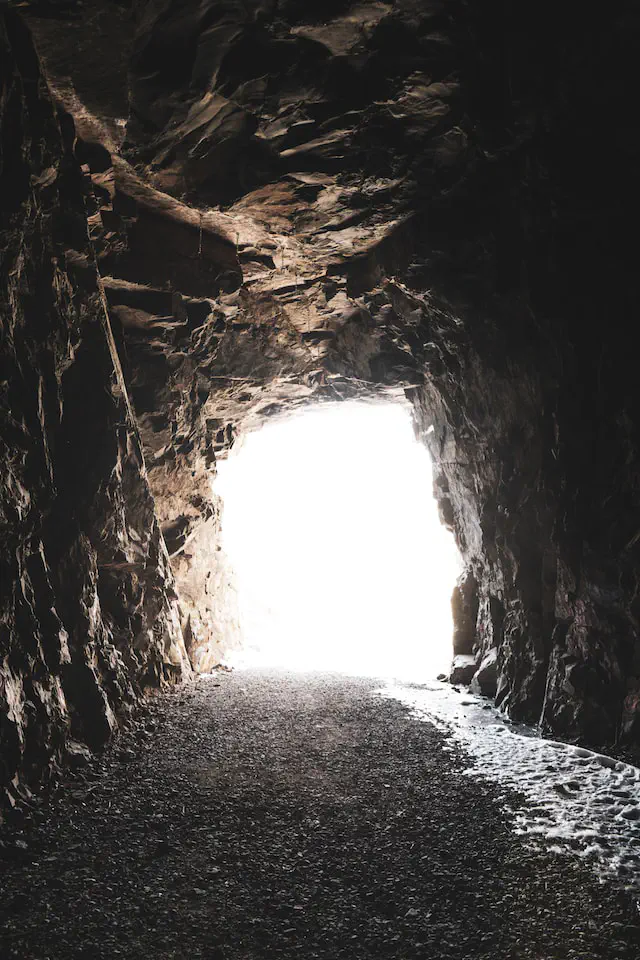
7. Underground Traders’ Market
At a glance: levels Any | Social / resupply | 10–20 minutes | Creatures: 3 commoners; 2 guards.
Lanterns hang above three stalls. A chalk board reads: “Water safe. Blades sheathed. Last caravan leaves at the third bell.”
Setup. A 60-by-40-foot cavern, ceiling 15 feet high. Lanterns provide bright light within 30 feet of the central stalls and dim light for another 30 feet. Entrances east and west. Merchant Iven and two sellers use commoner statistics; two guards stand beside the exits. Everyone here speaks Common.
DM hex map: Underground Traders’ Market

Trigger. Iven asks for an escort carrying a sealed food crate to a camp 1 hour east. Agreeing earns 10 gp on delivery and a free copy of the route map now. Decide where the camp is before using this hook.
Run it. Available stock: two 50-foot hempen ropes at 1 gp each, 10 torches at 1 cp each, 4 oil flasks at 1 sp each, and 8 daily rations at 5 sp each. A reliable map of the next two junctions costs 5 gp. These quantities are the entire stock. No roll is required to buy at the listed price. A DC 12 Charisma (Persuasion) check earns a 1 gp discount on one purchase totaling at least 5 gp; failure leaves the price unchanged, with no repeated checks from the same buyer.
The guards ask armed troublemakers to leave. If attacked, they protect the sellers’ escape instead of fighting to the death. After two trading conversations, ring the bell: the market begins packing, but customers have time to finish their current purchase.
Resolution and reward. Fair dealing earns a named trading contact. A stolen crate makes later traders wary; it contains only ordinary food worth 5 gp.
Adjust. For a shorter scene, remove the escort hook. For greater pressure, begin with the market already packing; do not add a surprise combat to a resupply stop.
SRD reference: Commoner
Medium humanoid; CR 0. AC 10; HP 4; speed 30 ft. All six ability scores 10 (+0). Passive Perception 10; Common for these encounters.
Club: +2 to hit, reach 5 ft.; 2 (1d4) bludgeoning damage. No multiattack or special combat traits.
SRD reference: Guard
Medium humanoid; CR 1/8. AC 16; HP 11; speed 30 ft. STR 13 (+1), DEX 12 (+1), CON 12 (+1), INT 10 (+0), WIS 11 (+0), CHA 10 (+0). Perception +2; passive Perception 12; Common for these encounters.
Spear: +3 to hit, reach 5 ft. or range 20/60 ft.; 4 (1d6 + 1) piercing damage. A two-handed melee strike deals 5 (1d8 + 1), but the guard must stop using its shield first; removing a shield takes an action and reduces this AC to 14.
8. Shadowy Ambush
At a glance: levels 2–3 | Combat / detection | 10–20 minutes | Creatures: 1 darkmantle.
A dented lantern lies beneath a low stone fang. Every drip strikes the lantern’s hood except the drops beneath that one formation.
Setup. A 30-by-20-foot chamber, ceiling 10 feet high, is naturally dark. Entrance west, exit east, both unobstructed. One darkmantle hangs 15 feet from the entrance, above the broken lantern. The missing drips are an observable clue, not a Perception gate.
DM hex map: Shadowy Ambush

Trigger. The creature drops when someone walks directly beneath it. If players probe or throw something at the suspicious formation first, it moves, revealing itself before the attack. Determine surprise using normal 2014 rules; False Appearance does not grant an extra attack or automatic advantage.
Run it. On its first turn it flies down and uses Crush against the nearest creature. On a later turn, if unattached and threatened by several characters, it uses Darkness Aura. That aura takes its action: it does not also attack unless another rule allows it. If it attaches, explain immediately whether the target’s head is engulfed. An ally can spend an action attempting the DC 13 Strength check to pull it free. At 5 HP or fewer, it detaches and flees through a roof crack.
Resolution and reward. The lantern can be repaired during a rest with suitable tools, as a scenario ruling. A pouch beneath it holds 12 gp. Driving the creature away makes the passage safe until it returns the next day.
Adjust. Easier: the creature flees at 11 HP. Harder: widen the room to 40 feet so the darkness cannot be escaped in a single short step. Do not add a second head-engulfing monster for a depleted party.
SRD reference: Darkmantle
Small monstrosity; CR 1/2. AC 11; HP 22; speed 10 ft., fly 30 ft. STR 16 (+3), DEX 12 (+1), CON 13 (+1), INT 2 (−4), WIS 10 (+0), CHA 5 (−3). Stealth +3; blindsight 60 ft.; passive Perception 10; no languages. Blindsight does not work while deafened.
- False Appearance: indistinguishable from a cave formation while motionless.
- Crush: +5 to hit, reach 5 ft., one creature; 6 (1d6 + 3) bludgeoning, then attaches. If the target is Medium or smaller and the attack had advantage, it engulfs the head: target is blinded and cannot breathe while attached this way.
- While attached: can attack only its host, with advantage; its speed is 0 and cannot increase; it moves with the host. A creature can use its action for a DC 13 Strength check to detach it. The darkmantle can detach on its own turn by spending 5 ft. of movement. A suffocating creature can normally hold its breath for 1 + Constitution modifier minutes (minimum 30 seconds); after running out of breath or choking, it survives for Constitution modifier rounds (minimum 1), then drops to 0 HP and is dying at the start of its next turn. Until it can breathe again, it cannot regain HP or be stabilized. Whether a surprised, engulfed creature had time to take a breath is a DM ruling; make that ruling explicit.
- Darkness Aura (1/day): an action creates magical darkness in a 15-foot radius that follows it, spreads around corners, and lasts up to 10 minutes with concentration. Darkvision and natural light cannot illuminate it. Overlapping light spells of level 2 or lower are dispelled. Damage can break concentration: Constitution save DC 10 or half damage taken, whichever is higher.
9. Dwarven Excavation Site
At a glance: levels 1–4 | Social / rescue | 15–25 minutes | Creatures: 4 commoners; 1 guard.
A dwarf in a dented helmet levels a spear across the tunnel. Behind her, someone pounds on the far side of a slab. “Claim business can wait. Can you lift?”
Setup. A 50-by-30-foot work chamber has a 10-foot ceiling and bright lantern light. Four miners use commoner statistics; forewoman Branna uses guard statistics. Their dwarven identity is descriptive here: use the listed NPC statistics without adding ancestry traits. All speak Common. The exit lies behind a 5-foot-high slab 30 feet from the entrance; one miner is trapped beyond it, with air and no immediate injury.
DM hex map: Dwarven Excavation Site

Trigger. Branna requests help moving the slab. She distrusts anyone claiming ownership of the mine but offers access to the tunnel for practical assistance.
Run it. The slab can be shifted with a DC 14 Strength (Athletics) check using an action beside it. A helper can Help; a crowbar used as a lever grants advantage. A failed attempt does not injure anyone, but costs 10 minutes of resetting supports before trying again. With a block and tackle and a sound anchor, the miners can free it in 10 minutes without a check. These are original obstacle rulings.
Branna lends a crowbar freely. She has a block and tackle in a locked chest and hands it over if the party agrees not to remove other supplies. Straightforward agreement works without a social roll. Threats make her order the workers behind cover and demand that the party leave.
Resolution and reward. Freeing the miner earns 20 gp, passage, and one safe rest with a miner standing watch. Refusal means taking a 1-hour detour; there is no mandatory fight.
Adjust. Easier: the block and tackle is already rigged. Harder: the miners need to recover it from a nearby abandoned chamber first.
SRD reference: Commoner
Medium humanoid; CR 0. AC 10; HP 4; speed 30 ft. All six ability scores 10 (+0). Passive Perception 10; Common for these encounters.
Club: +2 to hit, reach 5 ft.; 2 (1d4) bludgeoning damage. No multiattack or special combat traits.
SRD reference: Guard
Medium humanoid; CR 1/8. AC 16; HP 11; speed 30 ft. STR 13 (+1), DEX 12 (+1), CON 12 (+1), INT 10 (+0), WIS 11 (+0), CHA 10 (+0). Perception +2; passive Perception 12; Common for these encounters.
Spear: +3 to hit, reach 5 ft. or range 20/60 ft.; 4 (1d6 + 1) piercing damage. A two-handed melee strike deals 5 (1d8 + 1), but the guard must stop using its shield first; removing a shield takes an action and reduces this AC to 14.
10. Giant Centipede Nest
At a glance: levels 2–3 | Combat / recovery | 10–20 minutes | Creatures: 2 giant centipedes; 1 poisoned commoner.
A boot protrudes from a split ore sack. Beside it, two long, many-legged shapes ripple over a motionless miner’s coat.
Setup. A dark, 30-foot-square chamber has an 8-foot ceiling. Entrance south; exit north. The miner lies 20 feet from the entrance. Two giant centipedes are visible beside him, avoiding surprise. He has 0 HP, is stable, and has 30 minutes left of the centipede’s special poison: he remains paralyzed while it lasts.
DM hex map: Giant Centipede Nest

Trigger. The centipedes attack anyone who approaches within 5 feet of the miner or disturbs the sack. Their poison can deal much more damage than their tiny HP suggests.
Run it. Both initially bite the nearest approaching creature, then remain beside the spilled food rather than pursuing beyond the chamber. A sack of meat or a full ration dragged at least 15 feet away lures them off for 1 minute, allowing recovery without fighting. They flee into wall cracks when one is killed. The ore sack and miner together are not loot: allow players to separate them with a pole or rope from outside bite reach.
Resolution and reward. Healing restores the miner’s HP but does not itself remove the lingering poison or paralysis. Waiting out the duration or using an applicable remedy resolves it. His companions pay 20 gp for his return; his belt holds an intact 50-foot rope available for the rescue. If left behind, the poison and paralysis end after the remaining 30 minutes, but he remains unconscious at 0 HP until healing or the normal recovery rules restore HP.
Adjust. Easier: 1 centipede. Harder: 3, all visible; avoid this increase for an already injured party.
SRD reference: Giant Centipede
Small beast; CR 1/4. AC 13; HP 4; speed 30 ft., climb 30 ft. STR 5 (−3), DEX 14 (+2), CON 12 (+1), INT 1 (−5), WIS 7 (−2), CHA 3 (−4). Blindsight 30 ft.; passive Perception 8; no languages.
Bite: +4 to hit, reach 5 ft., one creature; 4 (1d4 + 2) piercing. Target then makes a DC 11 Constitution save, taking 10 (3d6) poison damage on failure and no poison damage on success. If the poison damage reduces it to 0 HP, it is stable but poisoned for 1 hour, even if healed, and paralyzed while poisoned this way. The initial piercing damage can still reduce a target to 0 normally.
SRD reference: Commoner
Medium humanoid; CR 0. AC 10; HP 4; speed 30 ft. All six ability scores 10 (+0). Passive Perception 10; Common for these encounters.
Club: +2 to hit, reach 5 ft.; 2 (1d4) bludgeoning damage. No multiattack or special combat traits.
11. Dark Elf Assassins
At a glance: levels 3–4 | Social / ambush | 15–25 minutes | Creatures: 2 drow.
A crossbow clicks behind a rock shelf. “Red cloak. Silver clasp. Keep your hands where I can see them.” A second voice adds, “The drawing had a beard.”
Setup. A 50-by-30-foot passage has a 15-foot ceiling and no natural light. Two drow wait 25 feet ahead behind separate 3-foot-high shelves, each granting half cover against attacks from the entrance. The northern exit is behind them; retreat south remains open. They speak Elvish and Undercommon. Their warrant also carries a crude portrait, allowing communication without a shared language.
DM hex map: Dark Elf Assassins

Trigger. They demand a chance to compare the party with the warrant. They have mistaken an adventurer for a thief who stole their employer’s ledger. They do not shoot during the initial demand.
Run it. Showing a clear mismatch with the portrait ends the standoff without a check. An uncertain resemblance requires a DC 12 Charisma (Persuasion) check with a concrete explanation; failure means they demand the disputed cloak or clasp as evidence, not instant combat. The party can instead withdraw.
If attacked, they use crossbows from cover. On a later turn one can cast faerie fire while the other fires; a drow does not cast a spell and make a weapon attack with the same action. They cannot see through their own magical darkness and use it to cover retreat, not to gain effortless accurate shots. They flee once either drops to 6 HP or fewer.
Resolution and reward. Peaceful clarification earns the wanted portrait and the name of an employer buying stolen ledgers. Their purses hold 8 gp each if recovered. Poisoned bolts can incapacitate a target, so keep their opening demand audible and the exit clear.
Adjust. Easier: 1 drow. Harder: 3, with the third openly guarding the north exit rather than springing another surprise.
SRD reference: Drow
Medium humanoid (elf); CR 1/4. AC 15; HP 13; speed 30 ft. STR 10 (+0), DEX 14 (+2), CON 10 (+0), INT 11 (+0), WIS 11 (+0), CHA 12 (+1). Perception +2, Stealth +4; darkvision 120 ft.; passive Perception 12; Elvish and Undercommon.
- Shortsword: +4 to hit, reach 5 ft.; 5 (1d6 + 2) piercing.
- Hand crossbow: +4 to hit, range 30/120 ft.; 5 (1d6 + 2) piercing. DC 13 Constitution save or poisoned for 1 hour. Failure by 5 or more also makes the target unconscious while poisoned this way; damage or another creature’s action shaking it awake ends that unconsciousness.
- Fey Ancestry: advantage on saves against being charmed; magic cannot put it to sleep.
- Sunlight Sensitivity: disadvantage on attacks and sight-based Perception checks in sunlight.
- Innate spells: Charisma, save DC 11, no material components. At will: dancing lights; 1/day each: darkness, faerie fire. Each takes an action and concentration. Dancing lights lasts up to 1 minute, range 120 ft., up to four torch-sized dim lights illuminating 10-foot radii; bonus action to move them up to 60 ft., keeping each within 20 ft. of another. Darkness lasts up to 10 minutes, range 60 ft., 15-foot-radius magical darkness; darkvision and nonmagical light cannot illuminate it, and overlapping light spells of level 2 or lower are dispelled. Faerie fire lasts up to 1 minute, range 60 ft., 20-foot cube: objects are outlined, creatures make Dexterity saves to avoid outlining; outlined targets shed dim light 10 ft., cannot benefit from invisibility, and attacks against them have advantage if the attacker can see them. See SRD pp. 133 and 141 for the full spells.
12. Ooze Infestation
At a glance: levels 2–4 | Combat / containment | 15–20 minutes | Creatures: 1 gray ooze.
A pickaxe head has dissolved into flakes beside an oily puddle. On the far side of the spill, a wooden chest sits untouched.
Setup. A dark 30-by-20-foot storeroom, ceiling 10 feet high. Entrance west, exit east. A gray ooze lies motionless in the center. A 5-foot-wide dry stone ledge along the north wall allows creatures to pass outside its 5-foot attack reach if it remains in place. The chest stands on that ledge. Show the damaged metal tools without a check.
DM hex map: Ooze Infestation

Trigger. The ooze moves toward a creature within 5 feet or attacks if struck. Prodding the puddle from outside reach reveals movement; it does not create a free surprise round for the ooze.
Run it. It attacks the nearest reachable creature and pursues at speed 10 feet. A character can retreat along the ledge faster than it can follow, subject to the usual opportunity attack rules. Use ranged attacks, nonmetal weapons, or containment rather than silently inventing immunity to swords. Tell a player when a metal weapon corrodes and record the cumulative penalty. Gray oozes do not split when slashed.
A stone door at the east exit can be closed from either side with an action. Luring the ooze east, leaving through the west door, and circling through a dry connecting passage takes 10 minutes and leaves it isolated beyond the east door. State that connecting passage when players inspect the exits.
Resolution and reward. The chest is unlocked and contains 25 gp and two oil flasks. Containment preserves a supply route; destruction removes the hazard permanently. Equipment corrosion persists after the fight.
Adjust. Easier: the ooze starts in the east passage. Harder: 2 oozes, separated by 15 feet and both revealed before initiative.
SRD reference: Gray Ooze
Medium ooze; CR 1/2. AC 8; HP 22; speed 10 ft., climb 10 ft. STR 12 (+1), DEX 6 (−2), CON 16 (+3), INT 1 (−5), WIS 6 (−2), CHA 2 (−4). Stealth +2; blindsight 60 ft., blind beyond it; passive Perception 8; no languages.
- Resistance: acid, cold, and fire. Condition immunity: blinded, charmed, deafened, exhaustion, frightened, prone.
- Amorphous: can pass through a 1-inch space without squeezing. False Appearance: indistinguishable from wet rock or an oily pool while motionless.
- Corrode Metal: after a nonmagical metal weapon hits and deals damage, it gains a permanent, cumulative −1 to damage rolls; destroyed at −5. Nonmagical metal ammunition is destroyed after hitting and dealing damage. The ooze eats through 2-inch-thick nonmagical metal in 1 round.
- Pseudopod: +3 to hit, reach 5 ft.; 4 (1d6 + 1) bludgeoning plus 7 (2d6) acid. Nonmagical metal armor worn by the target takes a cumulative, permanent −1 to the AC it offers; destroyed if that AC reaches 10. It does not have a Split reaction.
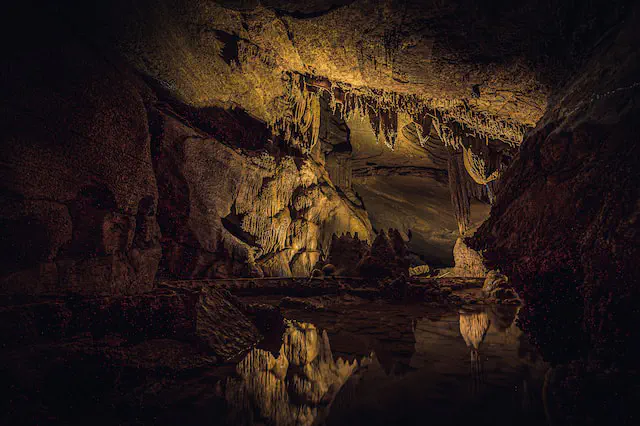
13. Medusa’s Gaze
At a glance: levels 6–8 | Dangerous social / combat | 20–40 minutes | Creatures: 1 medusa.
Stone travelers crowd the gallery, each shielding its face. Behind a hanging curtain, a woman says, “Speak from there. My veil is thinner than you think.”
Setup. A 60-by-40-foot gallery has a 20-foot ceiling. Two hooded lanterns give bright light across the central 30 feet. The medusa stands behind an opaque curtain 40 feet from the south entrance. The north exit is beside her. Statues are solid obstacles, not additional enemies, and can provide cover when they block sight or attacks. She begins veiled, with no visible eyes.
DM hex map: Medusa’s Gaze

Trigger. She asks the party to recover a polished silver mirror taken to the nearest surface settlement by a named fence, Oren Vell. Accepting the task grants immediate passage; record that promise for a later session. No Persuasion check is required to accept.
Run it. She keeps her veil on while the party remains south of the curtain or honors her directions. If threatened, she warns, “Look away,” then removes it on her first combat turn. Do not apply her gaze through the opaque curtain or veil. Once her eyes are visible, use the exact start-of-turn gaze procedure in the reference below, including the choice to avert eyes and the follow-up save. She fights from the statue rows, uses her bow at distance, and allows retreat south. At 40 HP or fewer she offers a ceasefire if the party leaves the gallery.
Resolution and reward. Returning the mirror earns 150 gp and a route through her gallery. Her lockbox behind the curtain contains the same 150 gp, not a second reward. She cannot automatically reverse petrification; identify a source of greater restoration before using this encounter if you want a recovery quest available.
Adjust. Easier: she remains behind the curtain unless attacked, making this a negotiation scene. Harder: remove one statue row, reducing cover; do not remove the warnings or escape route.
SRD reference: Medusa
Medium monstrosity; CR 6. AC 15; HP 127; speed 30 ft. STR 10 (+0), DEX 15 (+2), CON 16 (+3), INT 12 (+1), WIS 13 (+1), CHA 15 (+2). Deception +5, Insight +4, Perception +4, Stealth +5; darkvision 60 ft.; passive Perception 14; Common.
- Petrifying Gaze: when a creature that can see her eyes starts its turn within 30 ft., she can force a DC 14 Constitution save if she can see it and is not incapacitated. Failure by 5 or more: instantly petrified. Other failure: restrained, then repeats the save at the end of its next turn; failure petrifies, success ends the effect. Petrification persists until greater restoration or other suitable magic frees the victim.
- Avert eyes: unless surprised, a creature can avert its eyes at the start of its turn to avoid the save. It cannot see her until the start of its next turn. Looking at her before then immediately triggers the save. Apply the normal unseen-target rules to attacks.
- Reflection: seeing her own reflection on a polished surface within 30 ft. in bright light subjects her to her own gaze. Merely carrying a mirror does not make that happen.
- Multiattack: snake hair once and shortsword twice, or longbow twice.
- Snake hair: +5 to hit, reach 5 ft.; 4 (1d4 + 2) piercing plus 14 (4d6) poison.
- Shortsword: +5 to hit, reach 5 ft.; 5 (1d6 + 2) piercing.
- Longbow: +5 to hit, range 150/600 ft.; 6 (1d8 + 2) piercing plus 7 (2d6) poison.
14. Goblin Market
At a glance: levels 1–3 | Social / investigation | 15–25 minutes | Creatures: 4 .
Four goblins squat around a blanket of mismatched spoons, boots, and glittering stones. One raises a familiar brass trail marker. “Rare surface antique. Very expensive.”
Setup. A 30-foot-square room, ceiling 10 feet high. A central lantern provides bright light throughout. Entrance south, a narrow but walkable escape tunnel west, onward route north. Four goblins speak Common and Goblin. They wear their shields and keep their weapons sheathed; use the SRD AC 15. Draw weapons and roll initiative normally if fighting starts.
DM hex map: Goblin Market

Trigger. Seller Kip asks 5 gp for the brass marker that identifies the safe northern fork. If the party does not already own such a marker, it belongs to a missing local caravan instead.
Run it. Buying it works without a check. Trading a useful tool worth 1 gp or more also works. A DC 12 Charisma (Persuasion) check lowers the cash price to 2 gp; failure leaves the original price. The goblins recovered the goods from an abandoned wagon, and Kip truthfully identifies its location in return for friendly conversation.
If someone steals from the blanket, Kip demands the item back before fighting. If attacked, goblins use Nimble Escape to Disengage and flee west with whatever each can carry. They shoot only to cover escape, and surrender if cornered after one goblin falls.
Resolution and reward. The marker identifies the safe fork with no further navigation check there. The blanket also holds 3 gp in mixed coins and ordinary salvage worth 5 gp total. Learning the wagon’s location supplies the next adventure lead without combat.
Adjust. For a shorter scene, Kip accepts any fair trade immediately. For a longer scene, one of the goods belongs to an NPC the party knows, creating a restitution choice rather than more enemies.
SRD reference: Goblin
Small humanoid (goblinoid); CR 1/4. AC 15; HP 7; speed 30 ft. STR 8 (−1), DEX 14 (+2), CON 10 (+0), INT 10 (+0), WIS 8 (−1), CHA 8 (−1). Stealth +6; darkvision 60 ft.; passive Perception 9; Common and Goblin.
- Scimitar: +4 to hit, reach 5 ft.; 5 (1d6 + 2) slashing.
- Shortbow: +4 to hit, range 80/320 ft.; 5 (1d6 + 2) piercing.
- Nimble Escape: can Disengage or Hide as a bonus action on each turn. Hiding still requires somewhere the creature can hide.
15. Deep Gnome Explorer
At a glance: levels 1–4 | Social / exploration | 10–20 minutes | Creatures: 1 deep gnome.
A small explorer draws three tunnels in chalk, then crosses one out. She points to a plumb line disappearing into a crack and sighs.
Setup. A 30-by-20-foot junction, ceiling 8 feet high, with west, east, and north exits. Surveyor Niri stands in lantern light beside a 2-foot-wide fissure 10 feet deep. Use the SRD deep gnome statistics. She speaks Gnomish, Terran, and Undercommon; her labeled sketch and gestures permit the basic bargain without a shared language.
DM hex map: Deep Gnome Explorer

Trigger. Niri offers her reliable map if the party retrieves her brass survey weight, visible at the fissure’s bottom. The north tunnel is a dead end; the east tunnel is the onward route. Make those directions concrete when she hands over the map.
Run it. Lowering a rope and climbing down the rough wall requires no check under calm conditions. Normal climbing costs 1 extra foot of movement per foot. A suitably long hooked pole or effective magic also retrieves the weight without a roll. A character who insists on jumping down takes the normal 1d6 bludgeoning damage for a 10-foot fall.
Niri is cautious rather than hostile. If robbed, she uses blur to protect herself while retreating east; she does not attack merely because the party declines. Her other innate spells are optional resources listed below, not required solutions to the scene.
Resolution and reward. Recovering the weight earns the map and 5 gp. The map also marks a dry alcove 10 minutes east where the party can attempt a rest without this encounter introducing another threat. Refusal simply leaves the party to choose its own route.
Adjust. Easier: the weight can be reached with an ordinary 10-foot pole. Harder: water obscures it, requiring a light or a few minutes of probing; do not turn a friendly favor into a concealed lethal trap.
SRD reference: Deep Gnome
Small humanoid (gnome); CR 1/2. AC 15; HP 16; speed 20 ft. STR 15 (+2), DEX 14 (+2), CON 14 (+2), INT 12 (+1), WIS 10 (+0), CHA 9 (−1). Investigation +3, Perception +2, Stealth +4; darkvision 120 ft.; passive Perception 12; Gnomish, Terran, Undercommon.
- War pick: +4 to hit, reach 5 ft.; 6 (1d8 + 2) piercing.
- Poisoned dart: +4 to hit, range 30/120 ft.; 4 (1d4 + 2) piercing and DC 12 Constitution save or poisoned for 1 minute. Repeat the save at the end of each affected turn to end it.
- Stone Camouflage: advantage on Stealth checks to hide in rocky terrain. Gnome Cunning: advantage on Intelligence, Wisdom, and Charisma saves against magic.
- Innate spells: Intelligence, save DC 11, no material components. At will: nondetection (self only); 1/day each: blindness/deafness, blur, disguise self. Nondetection is an action, lasts 8 hours, and prevents divination targeting and magical scrying detection. Blindness/deafness is an action, range 30 ft., one visible creature, Constitution save or blinded/deafened for 1 minute, repeating the save at the end of each turn. Blur is an action, self, concentration up to 1 minute; sight-reliant attacks have disadvantage unless the attacker can see through illusions. Disguise self is an action, self, 1 hour, visual only; physical inspection exposes inconsistencies, or a creature can use its action for an Investigation check against DC 11 to discern the disguise. See SRD pp. 122–123, 135, and 167 for the full spells.
16. Underground Garden Guardian
At a glance: levels 1–3 | Social / exploration | 10–20 minutes | Creatures: 2 awakened shrubs.
Pale leaves lean toward a shallow spring. A shrub shuffles across the path. “One cup each. The seedlings drink after you.”
Setup. A 40-by-30-foot garden has a 15-foot ceiling. A roof shaft provides dim daylight throughout the room. Entrance west, exit east. Two awakened shrubs speak Common. A central spring feeds six seed beds; a stone channel diverts most of its water into a crack 10 feet north. The shrubs’ statistics and plant form are unchanged.
DM hex map: Underground Garden Guardian

Trigger. Guardian Bristle asks the party to redirect the channel before filling waterskins. The spring is safe drinking water, but the garden will dry if the channel stays open.
Run it. An action placing a suitable stone in the visible gap redirects the flow without a check. A character can also spend 10 minutes packing it with clay. Bristle objects to taking more water before the repair, blocks the route, and argues; it does not magically restrain anyone. If attacked, the shrubs retreat behind the beds rather than fighting to destruction. They rake only creatures actively uprooting seedlings within reach.
Characters who inspect the beds learn that a lost gardener maintained them. A weatherproof note beside the spring gives that gardener’s name, Eda Marr, and the village where her family lives.
Resolution and reward. Repair earns water for the whole party and 4 daily rations of edible roots. Taking without helping earns no reward and leaves the garden failing. Returning news to Eda’s family earns hospitality, not another compulsory quest.
Adjust. Easier: a suitable stone sits next to the gap. Harder: the party must choose between spending its own rope to secure a temporary repair or taking 30 minutes to construct a lasting one.
SRD reference: Awakened Shrub
Small plant; CR 0. AC 9; HP 10; speed 20 ft. STR 3 (−4), DEX 8 (−1), CON 11 (+0), INT 10 (+0), WIS 10 (+0), CHA 6 (−2). Passive Perception 10; Common for these encounters.
Rake: +1 to hit, reach 5 ft.; 1 (1d4 − 1) slashing damage. Vulnerable to fire; resistant to piercing. While motionless, indistinguishable from an ordinary shrub. Its name and appearance do not grant extra spore or vine attacks.
17. Shadow Rift
At a glance: levels 2–4 | Timed hazard / combat | 15–25 minutes | Creatures: 2 at most.
A black seam parts the cavern wall. Three iron seal plates hang loose around it. From inside comes the scrape of a blade against bone.
Setup. A dark, 40-foot-square chamber, ceiling 15 feet high. The rift is north, 30 feet from the south entrance. Its three seal plates are reachable from ground level within 5 feet of it. An open western exit lies 10 feet from the entrance. This rift uses the original hazard procedure below for its seals and emerging creatures.
DM hex map: Shadow Rift

Trigger. When someone enters the chamber, one skeleton steps out beside the rift and initiative begins. On initiative count 0 of round 2, a second emerges if the rift is still open. No more creatures emerge during this encounter.
Run it. A creature beside the rift can use an action to lock one plate with a DC 12 Intelligence (Arcana) check or DC 12 Dexterity check using thieves’ tools. A failed check leaves it loose, with no damage or lost previous progress. A character can instead spend two consecutive actions holding and wedging a plate with a piton, automatically securing that plate at the end of the second action. Moving away or becoming incapacitated before finishing loses progress only on that unfinished plate. Each plate needs one successful check or one completed wedge procedure.
The skeletons attack creatures working on the plates, moving normally. They pursue only within the chamber. Securing all three plates closes the rift and prevents the second skeleton if it has not yet emerged; existing skeletons remain until defeated or avoided.
Resolution and reward. The sealed frame releases three removable silver caps worth 5 gp each. Retreat is possible at any point; an unsealed rift remains a known obstacle on the route back.
Adjust. Easier: start with one plate secured. Harder: both skeletons are present from round 1. Do not add unlimited reinforcements.
SRD reference: Skeleton
Medium undead; CR 1/4. AC 13; HP 13; speed 30 ft. STR 10 (+0), DEX 14 (+2), CON 15 (+2), INT 6 (−2), WIS 8 (−1), CHA 5 (−3). Darkvision 60 ft.; passive Perception 9; understands languages known in life, but cannot speak.
Shortsword: +4 to hit, reach 5 ft.; 5 (1d6 + 2) piercing. Shortbow: +4 to hit, range 80/320 ft.; 5 (1d6 + 2) piercing. Vulnerable to bludgeoning damage; immune to poison damage and the exhaustion and poisoned conditions.
18. Ghostly Miners
At a glance: levels 3–5 | Social / possible combat | 15–25 minutes | Creatures: 1 specter.
A translucent miner scratches at a blank memorial plate. It turns toward you, then points at a heap of fallen tools. No voice follows its moving lips.
Setup. A 40-by-30-foot chamber, ceiling 15 feet high, is dark except for the party’s lights. Entrance south, exit east. One specter hovers at a memorial 25 feet from the entrance; a rubble heap 10 feet west of it contains a brass nameplate. This original miner can communicate by gesture and scratching in dust, but cannot speak, matching the SRD stat block.
DM hex map: Ghostly Miners

Trigger. It points repeatedly between the rubble and memorial. It attacks only if someone deliberately damages the memorial or tries to steal the nameplate after finding it. Passing through without interfering is allowed.
Run it. Searching the indicated rubble for 1 minute finds the plate automatically: “Dara Flint, tunnel keeper.” Returning it to the visible slot ends the haunting. A rushed search takes an action and a DC 12 Wisdom (Perception) check; failure means it has not yet been found, and the slow search remains available. Neither a failed check nor ordinary speech triggers combat.
If attacked, the specter uses Life Drain against the attacker, then moves away from other characters using its incorporeal movement. Warn through description that the touch drains vitality, and track maximum HP separately from current HP. It stops attacking if the plate is restored. That release is an original story resolution, not a universal way to defeat specters.
Resolution and reward. Before fading, it points to a loose memorial stone containing 30 gp and a drawing of a safe eastward route. If destroyed, the same cache can be found with a 10-minute search; the miners’ story remains unresolved. Refusing the request leaves the haunting in place without blocking the exit.
Adjust. Easier: place the plate on top of the rubble. Harder: the plate is caught behind a loose beam requiring an action and DC 12 Strength (Athletics) check, or 10 minutes of careful removal. Do not add more Life Drain attacks just to lengthen the scene.
SRD reference: Specter
Medium undead; CR 1. AC 12; HP 22; speed 0 ft., fly 50 ft. (hover). STR 1 (−5), DEX 14 (+2), CON 11 (+0), INT 10 (+0), WIS 10 (+0), CHA 11 (+0). Darkvision 60 ft.; passive Perception 10; understands languages known in life but cannot speak.
- Life Drain: melee spell attack +4, reach 5 ft., one creature; 10 (3d6) necrotic. DC 10 Constitution save or maximum HP decreases by the damage taken until the target finishes a long rest. The target dies if its maximum HP reaches 0.
- Resistance: acid, cold, fire, lightning, thunder; bludgeoning, piercing, and slashing from nonmagical attacks. Damage immunity: necrotic, poison.
- Condition immunity: charmed, exhaustion, grappled, paralyzed, petrified, poisoned, prone, restrained, unconscious.
- Incorporeal Movement: other creatures and objects count as difficult terrain for its movement; takes 5 (1d10) force damage if it ends its turn inside an object.
- Sunlight Sensitivity: disadvantage on attacks and sight-based Perception checks while in sunlight. In this original encounter, the deceased miner’s desire for burial overrides its usual hostility; its combat statistics are unchanged.
Rules sources
Creature references use the 2014-compatible SRD 5.1. See Credits & Licensing for source, license, and adaptation details.