Spider Climb 5e: Ceilings, Concentration, and Upcasting
I like Spider Climb when the best way forward runs along a wall. It lets one creature carry equipment or work with both hands while climbing. Choosing who gets that freedom matters as much as finding the route. This guide uses the 2014 spell first.
Spider Climb 5e Quick Spell Reference
- Casting time
- 1 action
- Range
- Touch
- Components
- V, S, M (A drop of bitumen and a spider.)
- Duration
- Concentration, up to 1 hour
- Classes
- Sorcerer, Warlock, Wizard
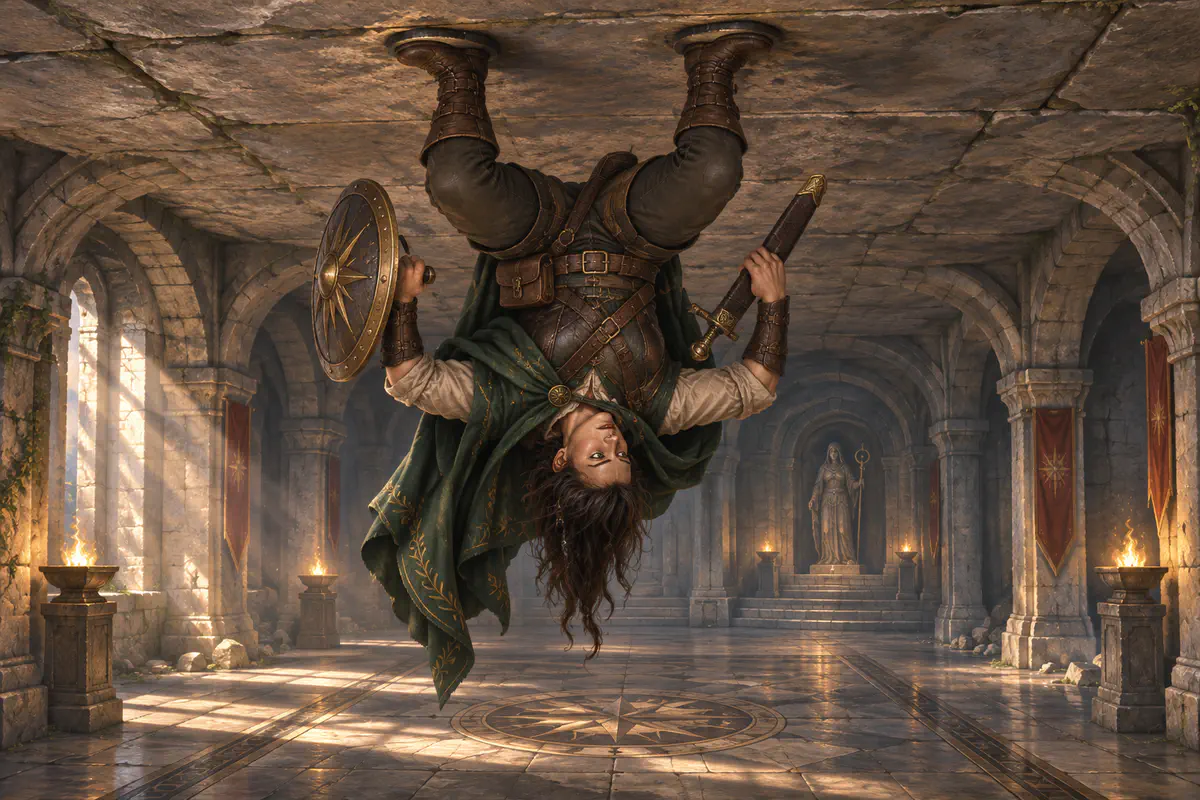
Until the spell ends, one willing creature you touch gains the ability to move up, down, and across vertical surfaces and upside down along ceilings, while leaving its hands free. The target also gains a climbing speed equal to its walking speed.
Who Can You Cast Spider Climb On?
Use an action to touch one willing creature, which can be yourself. For up to one hour while you concentrate, the target gains a climbing speed equal to its walking speed. It can travel across walls and along ceilings upside down with its hands free. A willing target needs no saving throw.
You only need to touch the creature when you cast. Once the spell is active, the climber can leave your reach while you maintain concentration. The 2014 SRD lists Sorcerer, Warlock, and Wizard. Specific class features can grant access too, such as the Forest Circle of the Land druid’s circle spells. Druid guide
How Much Movement Does Climbing Use?
Use the climbing speed to avoid the usual extra movement cost of climbing. Walking and climbing still share the movement you can spend in a turn. A creature with a walking and climbing speed of 30 feet can walk 10 feet to a wall and climb 20 feet in the same turn. The distance it already walked counts when it switches speeds.
Spider Climb supplies a way to travel on vertical surfaces and ceilings without using your hands. If a surface presents a separate hazard, such as stone that breaks under weight, the DM still resolves that hazard. The general 2014 climbing rules also let the DM call for an Athletics check on difficult surfaces. Discuss the specific obstacle before choosing a route.
What Can You Do With Your Hands While Climbing?
You can use weapons, hold tools, or handle spell components while standing on a surface the spell lets you traverse. Apply the usual requirements for what you’re holding and what you’re trying to do. Attacking from a ceiling can open a new line of sight or put you beyond a creature’s reach. Measure the actual distance and check cover from that position. Spell components and focuses · Cover
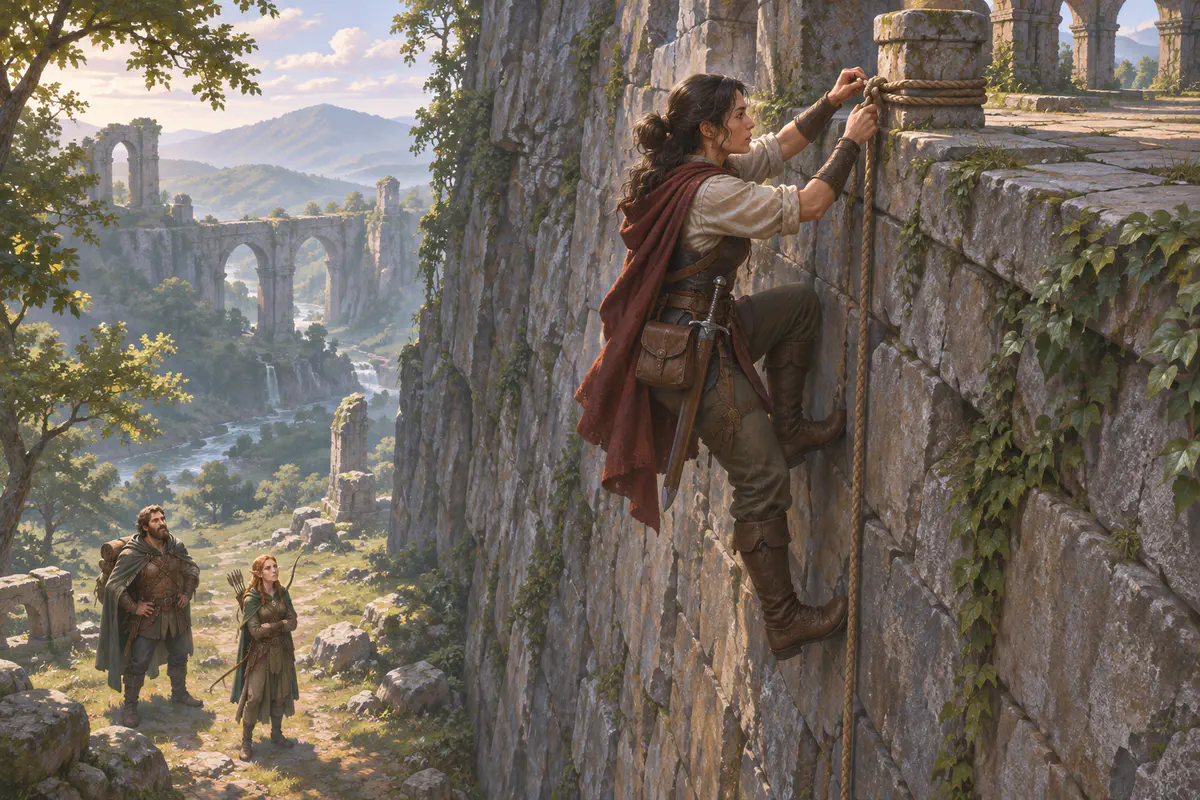
For a party crossing a wall, the climber can go first and secure a rope at a suitable anchor. Everyone else then uses the rope under the normal climbing rules. This works best when the obstacle offers a safe ledge and a sound place to tie off. A single casting can help the whole group cross even though only one creature gains the spell’s climbing ability.
What Happens if Concentration Ends on a Ceiling?
The target loses the climbing ability granted by the spell. If it has no support or other way to stay attached, it falls. A safe ledge, a secured rope, or a caster with feather fall available gives the party another option. Resolve the fall from the target’s actual height.
The caster maintains concentration. If a wizard casts Spider Climb on a fighter, damage to the wizard can force a concentration save. Damage to the fighter alone leaves the wizard’s concentration unaffected. Casting a different concentration spell also ends Spider Climb, so tell the climber before you switch spells. Concentration
Spider Climb 2014 vs. 2024 Rules
The 2014 spell targets one creature regardless of slot level. The 2024 spell adds one willing target you touch for each slot level above 2. A 3rd-level slot therefore covers two creatures, and a 4th-level slot covers three. The revised spell still uses concentration for up to one hour.
Spider Climb FAQ
Can a 2014 sorcerer use Twinned Spell on Spider Climb?
Yes. The 2014 spell targets one creature and has a range of Touch. A sorcerer casting it with a 2nd-level slot can spend two sorcery points to include a second willing creature within touch range. Both targets share the same casting and concentration. Sorcerer guide
Can you cross a gap in the ceiling?
Plan a route along connected surfaces, or use your normal jumping rules or another effect for the gap. Spider Climb gives you a climbing speed and the ability to move along a surface. An unsupported crossing requires its own means of movement.