Chain Lightning 5e: Targets, Range, and Upcasting
I like Chain Lightning because it rewards target selection more than a simple blast radius. The first target is not merely one more victim—it determines which other creatures or objects the spell can reach, so a good anchor can turn a scattered formation into four precise hits.
This guide uses the 2014 spell. The revised wording and material-component change are covered separately below.
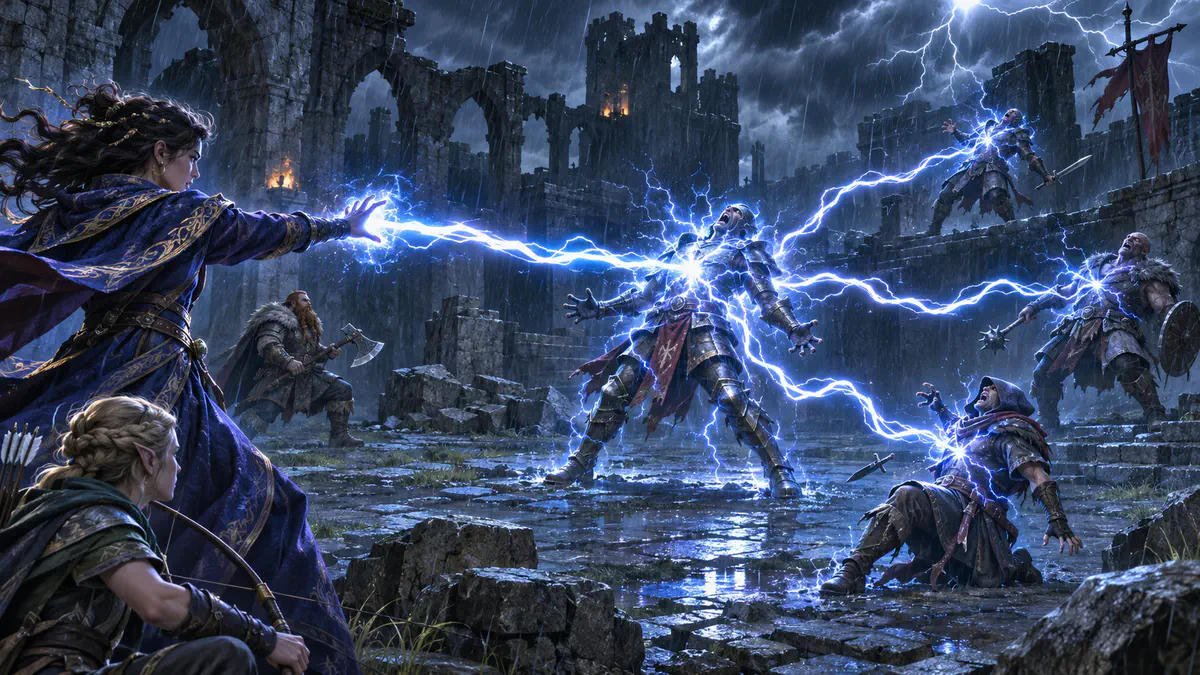
Chain Lightning 5e — Quick Spell Reference
- Casting time
- 1 action
- Range
- 150 feet
- Components
- V, S, M (A bit of fur; a piece of amber, glass, or a crystal rod; and three silver pins.)
- Duration
- Instantaneous
- Classes
- Sorcerer, Wizard
You create a bolt of lightning that arcs toward a target of your choice that you can see within range. Three bolts then leap from that target to as many as three other targets, each of which must be within 30 feet of the first target. A target can be a creature or an object and can be targeted by only one of the bolts.
A target must make a dexterity saving throw. The target takes 10d8 lightning damage on a failed save, or half as much damage on a successful one.
Choose the First Target, Then Measure Every Jump from It
Choose one creature or object you can see within 150 feet. That is the first target. Up to three bolts then leap from it to as many as three other targets, each within 30 feet of the first target.
The bolts do not form a sequential path. Target three does not need to be near target two; every secondary target is measured from the original anchor. A target can receive only one bolt from the casting.
The initial target must be visible and within the spell’s 150-foot range. The secondary-target sentence supplies its own 30-foot relationship to the first target and does not say that those targets must also be within 30 feet of one another.
This geometry makes the first choice crucial. A durable enemy in the middle of a formation may be a better anchor than a weaker creature at its edge.
Every Target Makes Its Own Dexterity Save
Each target makes a separate Dexterity saving throw against your spell save DC. Every target takes 10d8 lightning damage on a failed save or half as much on a success. Secondary targets do not take reduced damage merely because the lightning reached them after the first target.
The average of 10d8 is 45 damage before saves, resistance, or other modifiers. Because the spell deals half damage on a successful save, it still contributes against targets with strong Dexterity saves.
Chain Lightning is instantaneous and requires no concentration. The spell ends after those saves and damage are resolved; there is no ongoing electrical link between targets.
Can Chain Lightning Target Objects?
Yes. Both the first and secondary targets can be creatures or objects. An unattended statue, siege engine, or other visible object can therefore serve as the first target when it creates a useful 30-foot cluster.
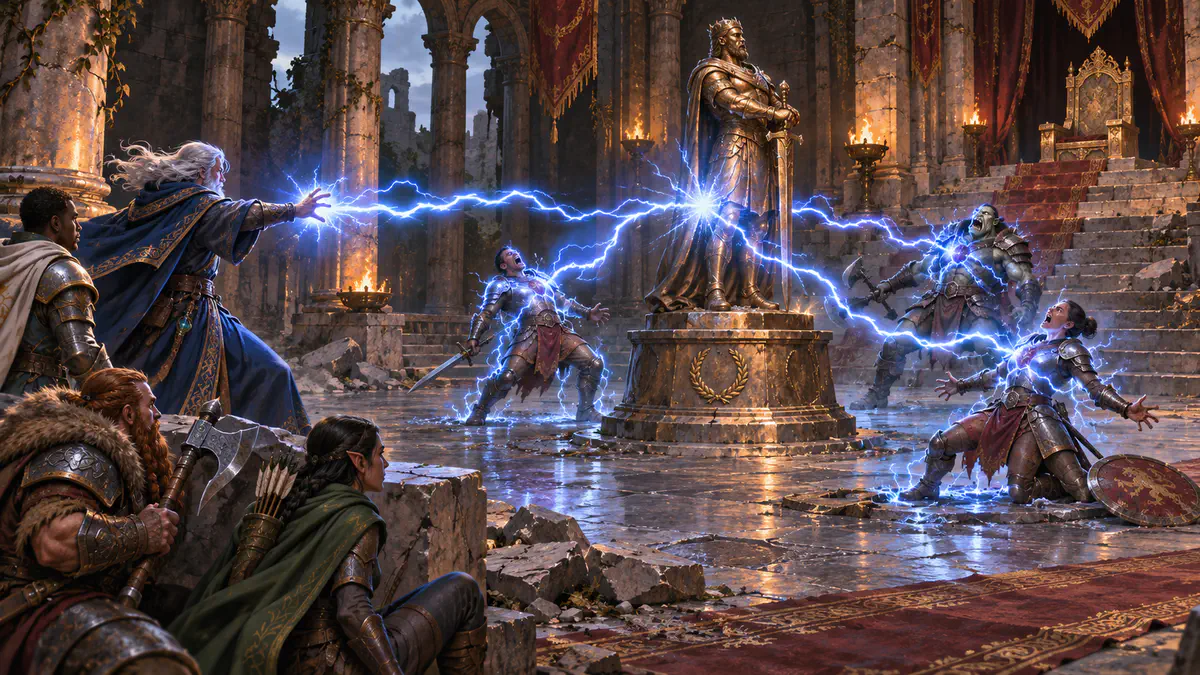
Object damage is still governed by the game’s object rules. The spell does not guarantee that every object is fragile, conductive, or destroyed by one casting. Targeting worn or carried equipment can also depend on the applicable object and targeting rules; use an unattended object when you want the clearest ruling.
The spell does not say the lightning spreads to everyone near the anchor. You choose up to the allowed number of targets. Allies are safe if you do not choose them, although a feature that redirects or changes a spell can create a separate interaction.
Cover, Sight, and Positioning
You must see the first target. The spell does not repeat that visibility requirement for the secondary targets, but they must still be valid targets and within 30 feet of the first. Ask the DM to resolve unusual cases where total cover blocks the magical path; the general cover rules can prevent an effect from reaching a target when an obstruction fully conceals it from the effect’s origin.
Before casting, identify the anchor and measure a 30-foot radius around it. Because the spell lets you choose fewer than three secondary targets, it remains useful when enemies and allies are mixed together. Its strength is selective multi-target damage rather than covering every creature in a large area.
Upcasting Adds Targets, Not Damage Dice
A slot above 6th adds one secondary bolt for each additional slot level.
| Spell slot | Maximum total targets | Damage to each target |
|---|---|---|
| 6th | 4 | 10d8 |
| 7th | 5 | 10d8 |
| 8th | 6 | 10d8 |
| 9th | 7 | 10d8 |
Every added target must still be within 30 feet of the first target and can receive only one bolt. Upcasting does not increase the damage per target, the jump distance, or the 150-foot range.
That means a higher slot is valuable only when another legal target is available. Spending a 9th-level slot against four creatures produces the same four bolts as the base casting.
Chain Lightning: 2014 vs. 2024 Rules
The spell’s combat effect is essentially unchanged in 2024: one visible first target within 150 feet, up to three secondary targets within 30 feet of it, 10d8 lightning damage with a Dexterity save for half, and one added target per higher slot.
The revised wording explicitly says the secondary targets are of your choice, removing a common reading question from the 2014 phrasing. The material component is also simplified to three silver pins; the 2014 version additionally lists fur and a piece of amber, glass, or a crystal rod. Neither version consumes the components or assigns them a price.
Chain Lightning FAQ
Do all four targets take 10d8 damage?
Yes. The first target and every selected secondary target use the same damage and make separate Dexterity saves.
Can the same creature be hit by more than one bolt?
No. A target can receive only one bolt from the casting.
Do the secondary targets have to be within 30 feet of each other?
No. Each one must be within 30 feet of the first target. Their distances from one another do not define the spell.
Does Chain Lightning require concentration?
No. It resolves instantaneously.
Rules sources: Chain Lightning in the 2014 Basic Rules and the revised spell in SRD 5.2.1. Object edge cases are identified as adjudication; tactical recommendations are original advice.