Goblin 5e Guide: Tactics, Clues, and an Encounter to Run
This guide uses the 2014 goblin from SRD 5.1. The encounter and behavior below are original DM suggestions.
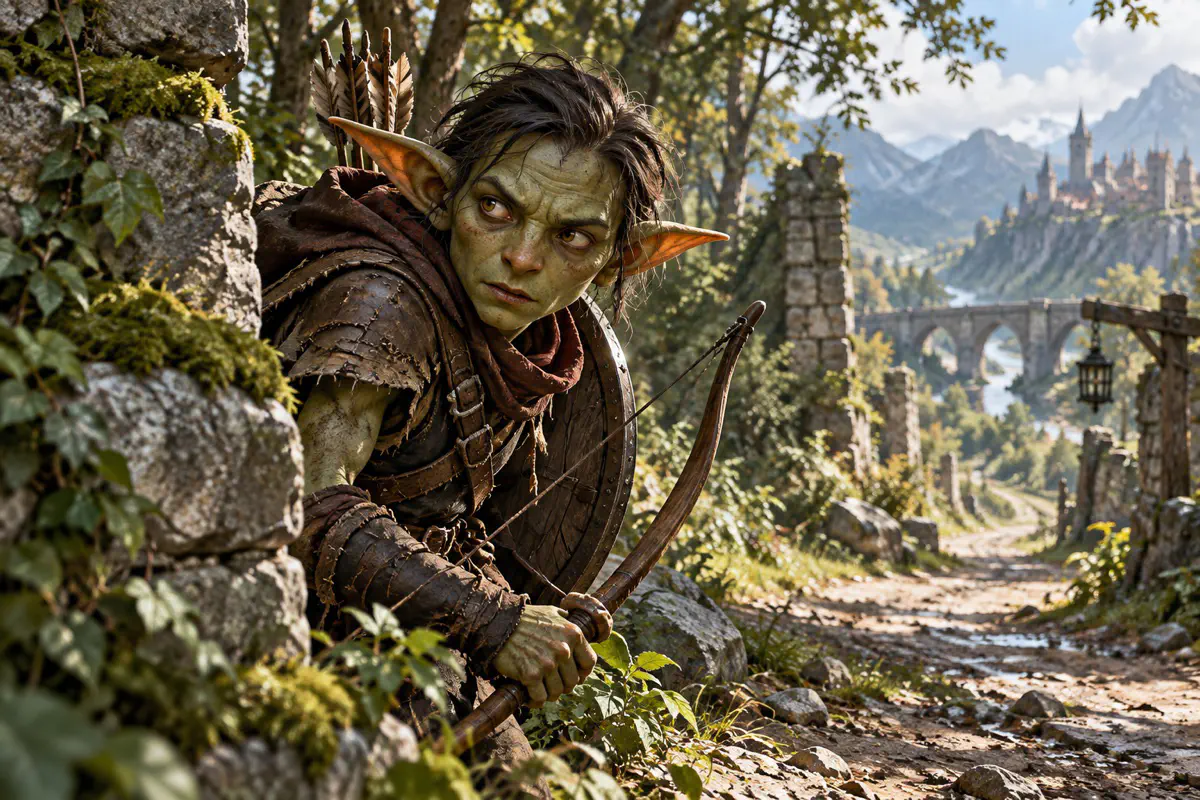
Monster overview
Goblins are Small humanoids with sharp features, pointed ears, and a talent for making a little ground go a long way. A goblin with a bow behind a wall creates a very different scene from the same creature caught in the open. Their small stature and mobile fighting style make them useful scouts, raiders, lookouts, or troublesome neighbors.
Woodland camps, ruined forts, roadside shelters, and underground passages all suit goblin encounters. Give a group a concrete reason to be there: supplies to obtain, a boundary to guard, or someone to escape. The creature’s identity gives players a recognizable starting point, while its particular circumstances determine whether this meeting becomes a chase, a bargain, or a fight.
Running goblins
Give goblins a reason to risk a fight and a way to escape it. A hungry toll collector, a frightened lookout, and a determined thief can use the same stat block while creating very different scenes.
The goblin at a glance
AC 15 · HP 7 · Speed 30 feet · CR 1/4. Its signature trait, Nimble Escape, permits a bonus-action Hide or Disengage. Preview the .
Run movement with a purpose
Before drawing the map, choose what the goblins hope to leave with. Supplies, a stolen document, and a prisoner each suggest different targets and decisions.
Put useful cover near a retreat route. Let players see the broken walls and dense undergrowth so they can plan around them. A goblin holding a position for no reason will feel different from one trying to carry a sack back through a narrow gap.
Hiding still needs a suitable opportunity; pressing a bonus-action button does not make a creature disappear in an open field. Use the stealth and hiding rules when a goblin tries to break contact. Keep track of where the creature actually moves, even when the characters lose sight of it.
Choose a morale point before play. For example, these particular raiders flee when their leader falls. Show that changing confidence through shouted arguments, dropped loot, and glances toward the exit. This is a decision about the characters in your scene, not an extra monster ability.
Clues and conversation
Offer information that changes a choice: little footprints behind the toll sign, smoke from a hidden cooking fire, or a voice asking whether anyone brought bread. Let players investigate before crossing the obvious barricade.
Give the speaker a concrete request and something useful to offer in exchange. Goblins can provide directions, trade stolen goods, or warn of a worse danger. A clear agreement should produce the promised result; avoid adding a betrayal merely because the party negotiated successfully.
Ready to run: the unofficial toll
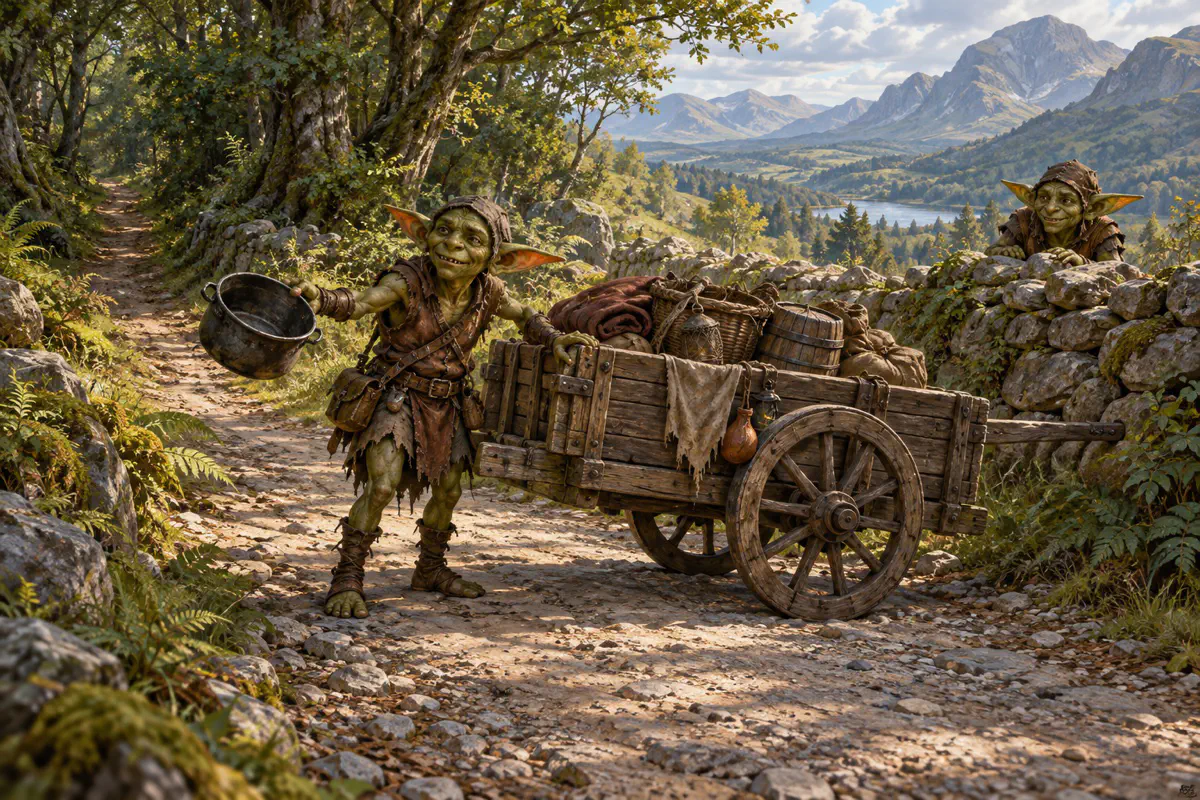
Situation: two goblins have blocked a disused road with a handcart. They want four food portions for their camp and would prefer not to fight. Choose this scene for a party that can handle the listed creatures; a first-level group can be badly hurt by a few successful attacks.
Layout: the party approaches from the south. A cart stands 30 feet ahead; a waist-high stone wall runs along the east side of the road. A visible footpath leaves west toward the goblins’ camp. The cart can be walked around.
Opening: one goblin waves an empty cooking pot. The other watches from behind the wall. No one attacks while the party is talking.
Choices: paying four portions earns passage and directions to a safe campsite. Offering help finding food also works if the party proposes a workable plan. The goblins let travelers turn back. If attacked, they use their normal statistics and attempt to retreat west after one falls. Roll initiative when hostilities begin; the lookout’s position alone does not grant surprise.
Finish: peaceful agreement provides a local contact. Victory reveals the camp’s scratched route map, worth more to the next leg of the journey than the cart’s few copper coins.
For another goblin scene, try the cave encounter collection. Track the resulting fight with the initiative tracker.