Darkness 5e: Magical Sight, Combat, and Moving the Sphere
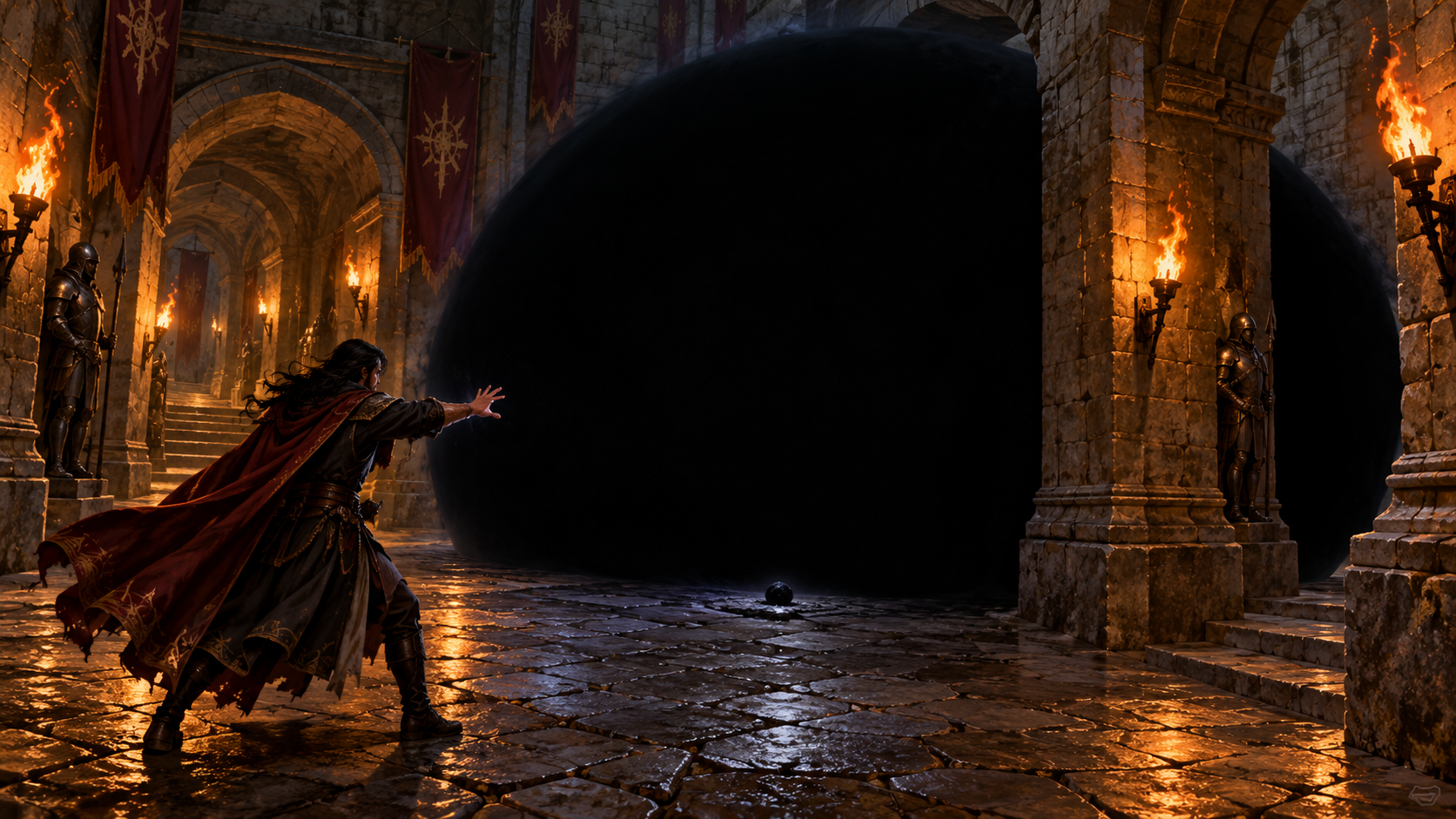
I’ve always liked Darkness because it is as much a positioning tool as a vision effect. Its opaque sphere can block sightlines, cover a retreat, or turn a carried object into a movable patch of magical darkness. The challenge is that ordinary darkvision does not help—not even the caster’s—and unseen combat often affects both sides in surprising ways.
Darkness 5e — Quick Spell Reference
| Casting Time | 1 action |
|---|---|
| Range | 60 feet (15-foot-radius sphere) |
| Components | V, M(bat fur and a drop of pitch or piece of coal) |
| Duration | Up to 10 minutes |
| Concentration | Yes |
| Ritual | No |
| Classes | Sorcerer, Warlock, Wizard |
| Source | Player's Handbook (2014), pg. 230 |
How Does Darkness Work in 5e?
The caster chooses a point within 60 feet. Magical darkness fills a 15-foot-radius sphere around that point for up to 10 minutes while the caster maintains concentration. The darkness spreads around corners.
Nonmagical light cannot illuminate the area, and ordinary darkvision cannot see through it. The caster receives no special ability to see through the spell merely for creating it.
The sphere blocks vision into, out of, and through its area. A creature needs a feature that specifically works through magical darkness, such as the warlock’s Devil’s Sight invocation, to see normally within it.
Darkness is not a solid barrier. Creatures, weapons, and spell effects can cross the sphere normally, but anything that requires seeing a creature or point may fail because sight through the area is blocked.
Can Darkness Be Cast on an Object and Moved?
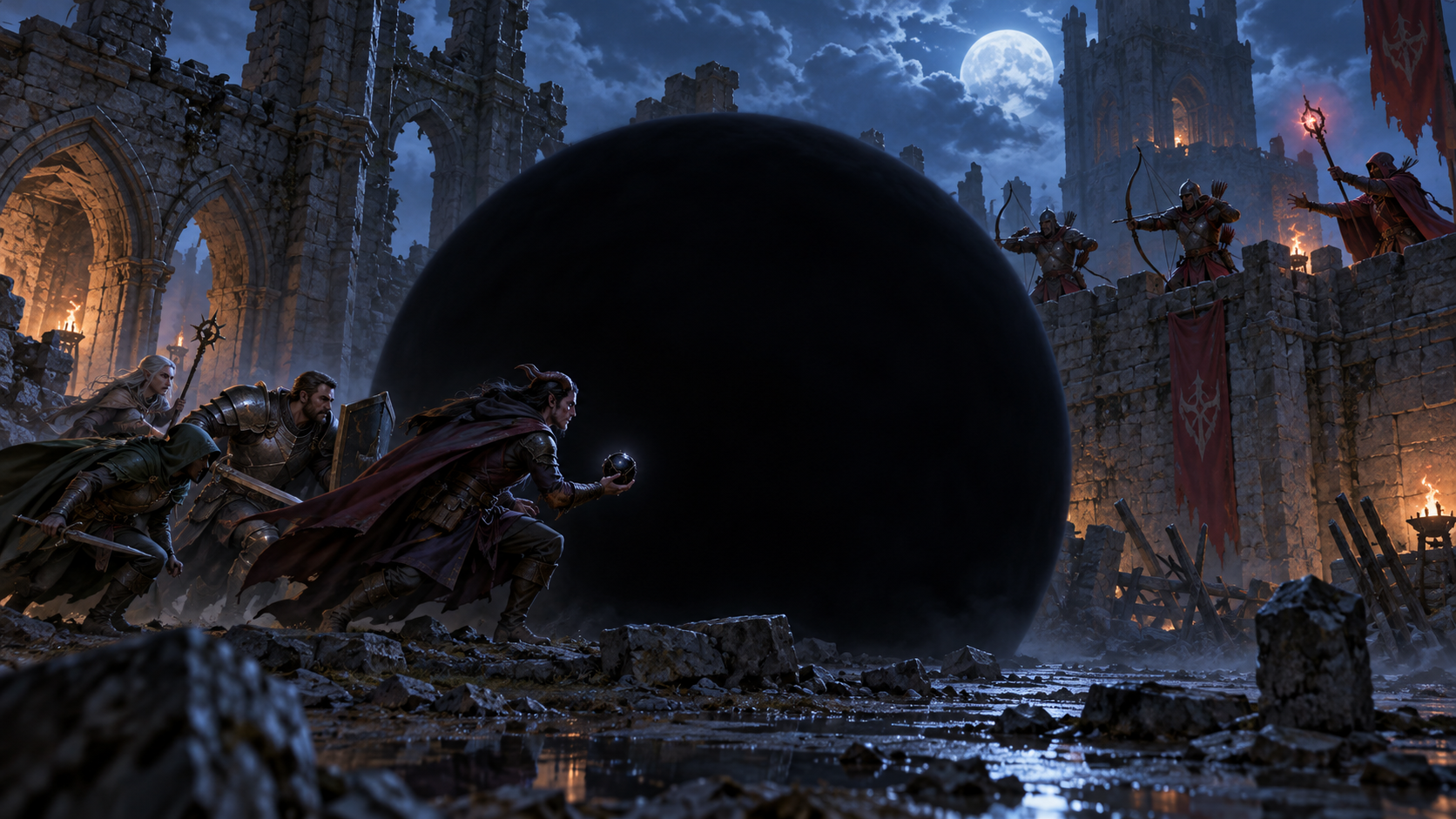
The chosen point can be on an object the caster is holding or on an object that is not being worn or carried. In that case, the darkness emanates from the object and moves with it.
Completely covering the source with an opaque object blocks the darkness. A hooded container, bowl, or helm can therefore switch the visible effect off without ending the spell. Uncovering the source allows the darkness to fill its area again while the duration and concentration continue.
The 2014 wording does not allow the caster to place Darkness directly on an object another creature is wearing or carrying. The caster can, however, hold an eligible object when casting and then move or hand it off afterward.
How Does Darkness Affect Attack Rolls?
Magical darkness creates a heavily obscured area for creatures that cannot see through it. A creature is effectively blinded when trying to see something in that area. Attacks against unseen targets have disadvantage, while attacks by unseen attackers have advantage; when both combatants are unable to see each other, those two modifiers often cancel.
Many spells and features require a target the user can see, so Darkness can prevent those options even when attack advantage and disadvantage cancel. An opportunity attack also requires seeing the creature that moves away, which usually prevents one against a target hidden by the sphere.
The spell does not impose silence, prevent movement, reveal hidden creatures, or stop attacks from passing through its area. Creatures can still act using their knowledge of positions, sounds, and other senses, subject to the normal rules and the DM’s rulings.
Darkness does not automatically hide a creature. Hiding still uses the normal rules and generally requires the Hide action. The sphere can make hiding possible by blocking sight, but enemies may still know where a creature is from its last known position, noise, tracks, or another sense.
Which Spells Does Darkness Block?
The spell is especially effective against abilities whose targeting language says “a creature you can see” or “a point you can see.” A caster outside the sphere usually cannot choose a creature hidden inside for such a spell, and a caster inside has the same problem looking out.
Not every spell requires sight. Area effects aimed at a known point, attacks against an unseen target, and abilities based on hearing or special senses may still work. Darkness changes vision; it does not add total cover or make every creature inside untargetable.
What Magical Light Can Dispel Darkness?
If the sphere overlaps light created by a spell of 2nd level or lower, the spell that created that light is dispelled. This is not an ability check; the qualifying light spell simply ends where the rule applies.
Casting Darkness with a higher-level slot does not let it dispel higher-level light spells. The spell’s text fixes the interaction at light created by a spell of 2nd level or lower, regardless of the slot used for Darkness.
A spell such as Dispel Magic can also end Darkness under its normal rules. Losing concentration ends the entire sphere immediately.
Tactical Uses and Limitations
Darkness can break line of sight, protect a withdrawal, interfere with enemy spell targeting, conceal an interaction, or create an area that allies with special magical sight can exploit. Placing it on a coverable object makes the effect portable and controllable.
Without a way to see through magical darkness, allies suffer many of the same limitations as enemies. The sphere can obstruct healing and control spells that require sight, complicate movement, and give opponents a place to hide. Concentration also competes with many other strong spells.
Casting at Higher Levels
Darkness has no higher-level benefit. A higher slot does not increase its radius, duration, or ability to dispel magical light.
FAQ
Can the caster see through their own Darkness?
No. The spell grants no special sight. The caster needs a separate feature that explicitly sees through magical darkness.
Does ordinary darkvision work in Darkness?
No. The spell expressly prevents darkvision from seeing through its area.
Can Darkness move?
Yes, if cast on an eligible object. The sphere moves with that object.
Does covering the object end the spell?
No. An opaque cover blocks the darkness while covered, but the spell and its concentration continue.