Ghoul 5e Guide: Paralysis, Rescue, and a Crypt Retrieval
Rules baseline: 2014 D&D 5e, SRD 5.1. Use the ghoul stat block in the SRD, page 312 for complete statistics. The hunger response, layout, objective, and pursuit limit below are original DM suggestions.

A ghoul turns a routine crypt fight into a rescue problem. Its claws can take a character out of action while leaving allies able to intervene. That is most interesting when the room provides space to respond and players understand why the victim suddenly stops moving.
What to emphasize
The standard ghoul is CR 1. A claw hit against a creature other than an elf or undead calls for a DC 10 Constitution save against paralysis for up to one minute. The victim repeats the save at the end of each of its turns, ending the effect on a success. The bite does not carry this paralysis effect, and the ghoul does not have Multiattack.
Use the full 2014 paralyzed condition. Attacks against the victim have advantage, and a hit is a critical hit if the attacker is within 5 feet. The attack must still hit. Mark the end-of-turn saving throw in the initiative tracker so a player never loses an extra turn through forgotten timing.
Paralysis is not the poisoned condition or a disease merely because an undead creature caused it. Apply effects that actually remove paralysis, such as an appropriately used lesser restoration. Do not give an ordinary ghoul a ghast’s Stench or Turning Defiance traits.
Give allies room to help
Use low tombs and a broad central aisle rather than a single-file tunnel. An ally should be able to reach a disabled companion without needing to walk through three more enemies. Describe gates, stairs, and retreat paths before the first claw attack.
A paralyzed character cannot act or react, but the rest of the party still can. Allies might drive the ghoul back, remove the condition, or move the victim using the relevant carrying, dragging, or grappling rules. State what a proposed rescue costs before the player commits. A dramatic description alone does not grant a free extraction action.
Clues can be specific: a recovered survivor remembers remaining conscious while unable to move, or a clawed door leads toward a burial chamber. An informed temple attendant can explain the danger without requiring the party to learn it through a casualty.
Ready to run: the memorial urn
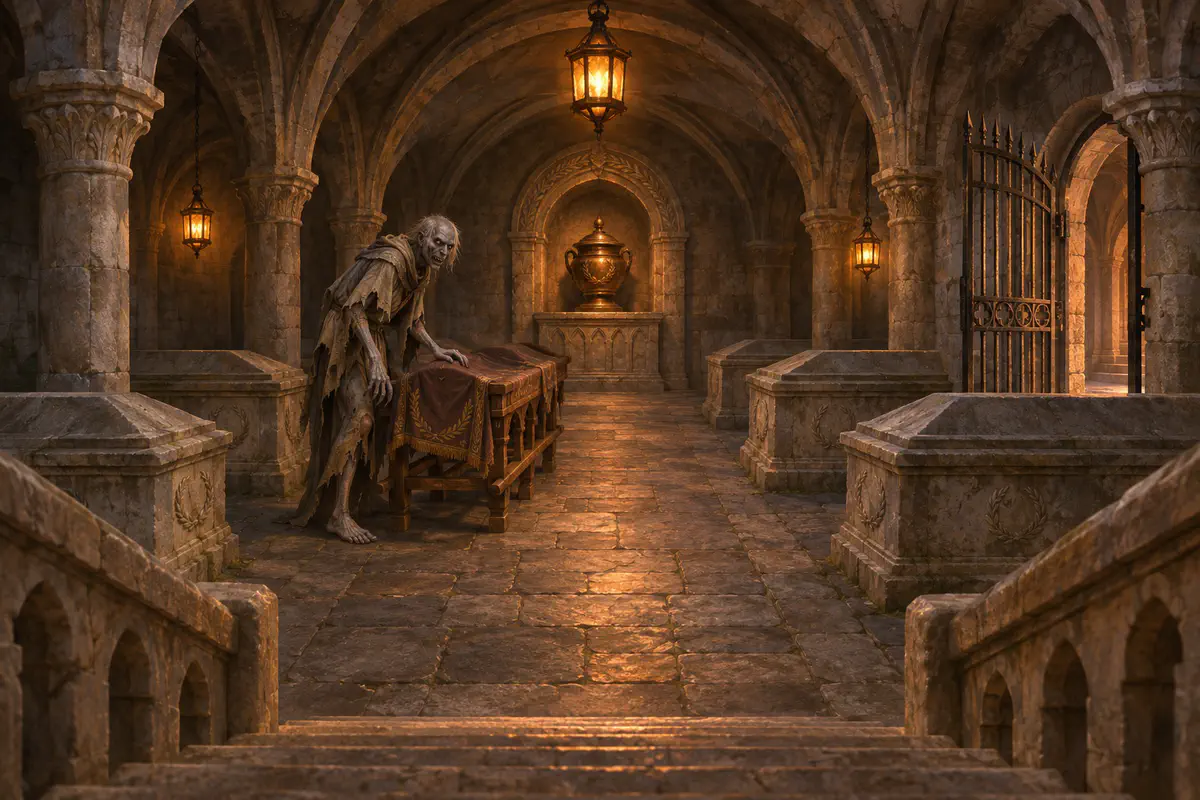
Situation: one ghoul has entered an abandoned crypt. The caretaker needs a bronze memorial urn recovered from the northern niche before the building is sealed. Nobody is trapped inside. The ghoul is feeding on old burial remains beneath the bier; keep the description as restrained as suits the group.
Layout: a 40-by-30-foot crypt has southern entry stairs, a 10-foot-wide central aisle, and two rows of low tombs. The bier stands west of the aisle. An open iron gate on the east leads to a service passage that loops back to the southern stairs. The urn is in the north wall, 30 feet from the entry.
Opening: from the stairs, the party hears scraping behind the bier and can see the urn and open side gate. The caretaker waits outside and warns that the creature’s claws left an earlier visitor unable to move.
Choices: the party can withdraw, secure the entry, and return with help. For this scenario, a substantial offering of butcher’s offal placed beside the western bier occupies the ghoul for one minute if nobody attacks or approaches within 10 feet of it. The caretaker can identify a butcher aboveground. This distraction is a prepared behavior, not a standard ghoul trait or an automatic use of a social skill.
If combat begins: roll initiative. The ghoul closes with the nearest intruder using its printed attacks. If someone becomes paralyzed, describe their rigid limbs and remind the table of the end-of-turn save. It pursues intruders within the crypt but returns to the bier if they escape up the stairs. It does not follow them into the village in this scene.
Finish: retrieving the urn allows the caretaker to seal the crypt. If the party retreats without it, the caretaker can delay the sealing until dawn, creating a clear deadline for another attempt. The urn holds memorial ashes, not a hidden monster or an unannounced curse.
Prepare for your party
Paralysis makes additional attackers especially dangerous. Check the encounter balancing guide before adding more ghouls; their CR alone does not capture the risk to an isolated victim. Easier: have the ghoul remain distracted while the party surveys the room. Harder: make the urn bulky enough to require two carriers. For a simpler undead guard, use the skeleton guide.