Basilisk 5e Guide: Creature Overview, Petrifying Gaze, and Quarry Clues
Rules baseline: 2014 D&D 5e, SRD 5.1. Use the for complete statistics. The quarry, refuge, recovery arrangements, and behavior below are original DM suggestions.

Monster overview
A basilisk is a squat, many-legged reptilian monstrosity whose gaze can turn living creatures into stone. Its heavy body, scales, and unsettling eyes suggest a grounded predator rather than a winged or serpentine dragon. The standard creature is Medium, so a narrow doorway or quarry passage can frame it without needing an enormous lair.
The basilisk’s defining adventure role is leaving evidence that also contains victims: statues in natural poses, abandoned tools, and suddenly deserted work sites. Caves, old quarries, and ruins suit that mystery. Unlike an ordinary ambush predator, its presence can create a rescue or restoration quest even after the immediate encounter has ended.
What to emphasize
The standard basilisk is CR 3. When a creature starts its turn within 30 feet, both creatures can see each other, and the basilisk is not incapacitated, its Petrifying Gaze can force a DC 12 Constitution save. Failure first restrains the victim as it starts turning to stone. The victim repeats the save at the end of its next turn: success ends the effect; failure petrifies it until appropriate magic frees it.
A creature that is not surprised can avert its eyes to avoid the initial start-of-turn save. It then cannot see the basilisk until its next turn begins; looking at it in the meantime immediately requires the save. Apply the normal consequences of attacking an unseen creature and being attacked by one you cannot see. Averting your eyes does not erase an already pending second save.
The gaze does not replace the basilisk’s action. Its printed bite remains dangerous. Killing it also does not automatically restore petrified victims. The trait names greater restoration or other appropriate magic; an ordinary lesser restoration is insufficient.
Give players something to learn
Show a statue of a miner shielding their eyes, a dropped polished shield, or a survivor’s charcoal sketch. These clues should arrive before the party unknowingly enters gaze range. Make a covered route visible so recognizing the danger leads to a useful choice.
The stat block includes a specific reflection interaction: if the basilisk sees its reflection within 30 feet in bright light, it mistakes that image for a rival and targets itself with its gaze. A mirror plan therefore needs suitable light, distance, and positioning. Resolve the printed gaze rather than instantly petrifying the creature because a player owns a hand mirror.
An opaque screen can prevent mutual sight, but it can also hide the basilisk’s movement. Describe where the screen stands and whether anyone peeks around it. Avoid turning all the quarry’s stonework into transparent scenery when the party uses it well.
Ready to run: the miner under the arch
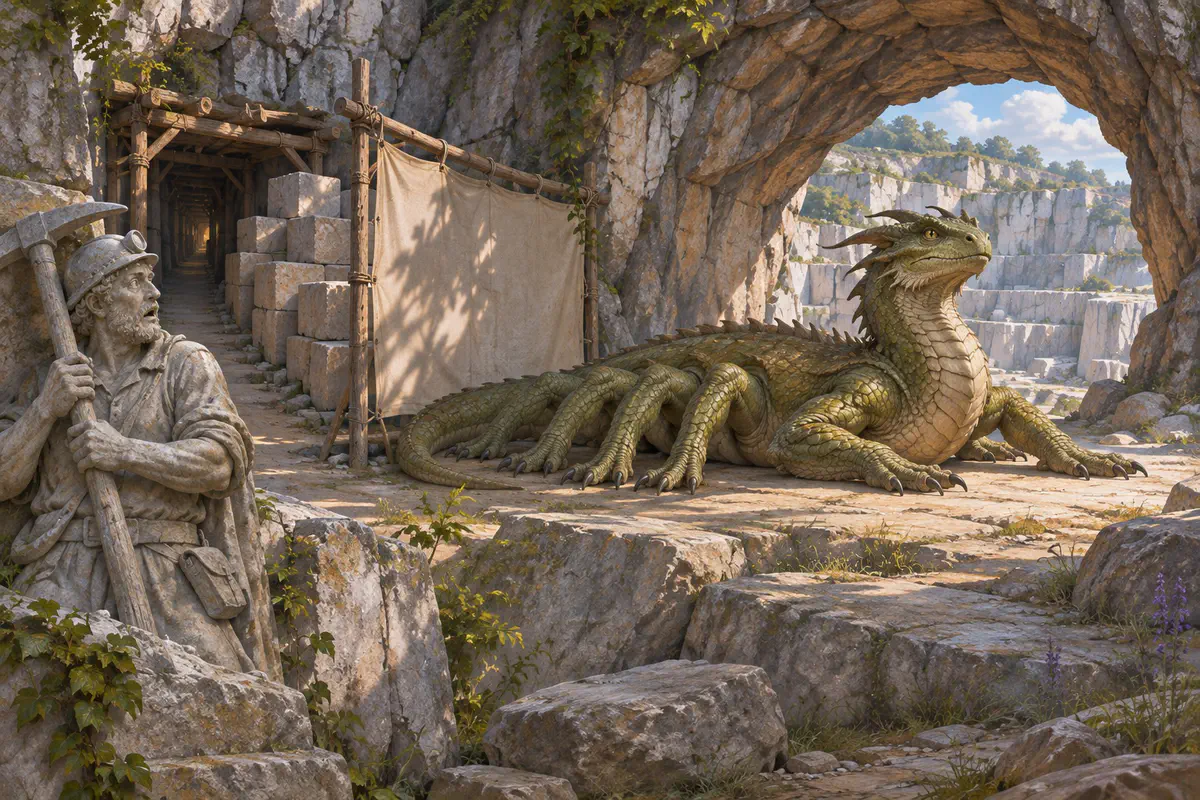
Situation: one basilisk has settled beneath a quarry arch. A miner is petrified near the entrance. The foreman has arranged a restoration scroll and a qualified temple caster in town; the party’s job is to bring the intact statue back. Establish that support before the party chooses the rescue.
Layout: a 60-foot quarry yard has a southern gate, northern arch, and stacked blocks along the west wall. The statue stands 20 feet inside the gate, 25 feet from the basilisk. A western passage behind the blocks approaches the statue without exposing travelers to its gaze. A movable opaque canvas screen is stored by the gate.
Opening: the foreman identifies the miner and explains what happened. The party can inspect the covered route from outside the yard. The basilisk remains beneath the arch unless disturbed.
Choices: moving the screen along the western route lets the party reach the statue without mutual sight. The foreman supplies a padded sled and enough laborers to move it; the laborers enter only after the party secures the screen. This plan needs time and positioning, not a mandatory saving throw through an opaque barrier. A reflection plan is also possible in daylight if the party arranges the required conditions.
If combat begins: roll initiative. Ask about eye-averting choices at the appropriate turns, and record each pending second save separately. The basilisk defends the arch but does not pursue beyond the southern gate in this scene. Players can retreat and return with different equipment.
Finish: delivering the statue allows the arranged restoration and earns 75 gp from the foreman. If another character is petrified, the foreman helps transport them, but another casting must be obtained; the existing scroll is not an unlimited cure.
Prepare for your party
Petrification changes a character’s ability to participate and can demand resources beyond the party’s level. Include a concrete recovery path when using this creature early. Use the encounter balancing guide and cover rules to prepare. Easier: place the statue behind the western blocks. Harder: retrieving additional statues requires repositioning the screen. Return to Monster Guides for another creature.