Young Red Dragon 5e Guide: Creature Overview, Fire Breath, and Flight
Rules baseline: 2014 D&D 5e, SRD 5.1. Use the for complete statistics. The demands, quarry, bargaining terms, and morale below are original DM suggestions. This guide uses the young creature, not an adult dragon’s statistics.

Monster overview
A red dragon is a winged, fire-breathing dragon associated with heat, treasure, and domination. Crimson scales, horns, claws, and a powerful reptilian body make its identity visible before it breathes flame. A young red dragon is already Large and highly dangerous, although it has not reached the size or full range of abilities of its adult relatives.
Use this creature when an adventure needs an intelligent predator capable of making demands and controlling a landscape. Mountain caverns, volcanic slopes, and abandoned quarries suit its mobility and dramatic silhouette. It can speak Common and Draconic, so negotiations are possible even while its power makes the terms unequal. A treasure claim or demand for public submission can drive a scene before anyone rolls initiative.
What to emphasize
The standard young red dragon is CR 10. Fire Breath fills a 30-foot cone and calls for a DC 17 Dexterity save: 16d6 fire damage on failure, half on success. That can overwhelm a low-level party even when characters save. Check suitability before presenting combat as the expected solution.
After the breath is used, Recharge 5–6 means rolling a d6 at the start of each of the dragon’s turns and restoring the ability on a 5 or 6. It is neither a fixed cooldown nor an automatic recharge every other round. The dragon chooses between its breath action and its printed Multiattack; the latter is one bite and two claws, not three attacks plus free breath.
The young stat block has no Legendary Resistance, legendary actions, or Frightful Presence. Do not silently import those from an adult dragon. It is immune to fire, but that does not make every object or person near it fireproof. Keep environmental damage and the contents of a hoard separate from creature immunities.
Make flight and cover matter
Its 80-foot flying speed and 40-foot climbing speed let it change the angle of a fight quickly. Give the players the ledges, heights, and exits before combat. When the dragon moves, state its altitude and position so ranged attacks, reach, and escape routes remain understandable.
Large outcrops can break sight lines and give cover. Half and three-quarters cover can improve Dexterity saves when applicable, while total cover can block an effect that cannot reach around it. Judge the breath’s actual origin and cone; a rock that protects one character may fail to protect another after the dragon moves.
The bite has 10-foot reach and the claws have 5-foot reach. Use the relevant reach and normal opportunity attack rules instead of giving all attacks the same range. A young dragon can make a powerful solo opponent without receiving actions outside its stat block.
Ready to run: the quarry payroll
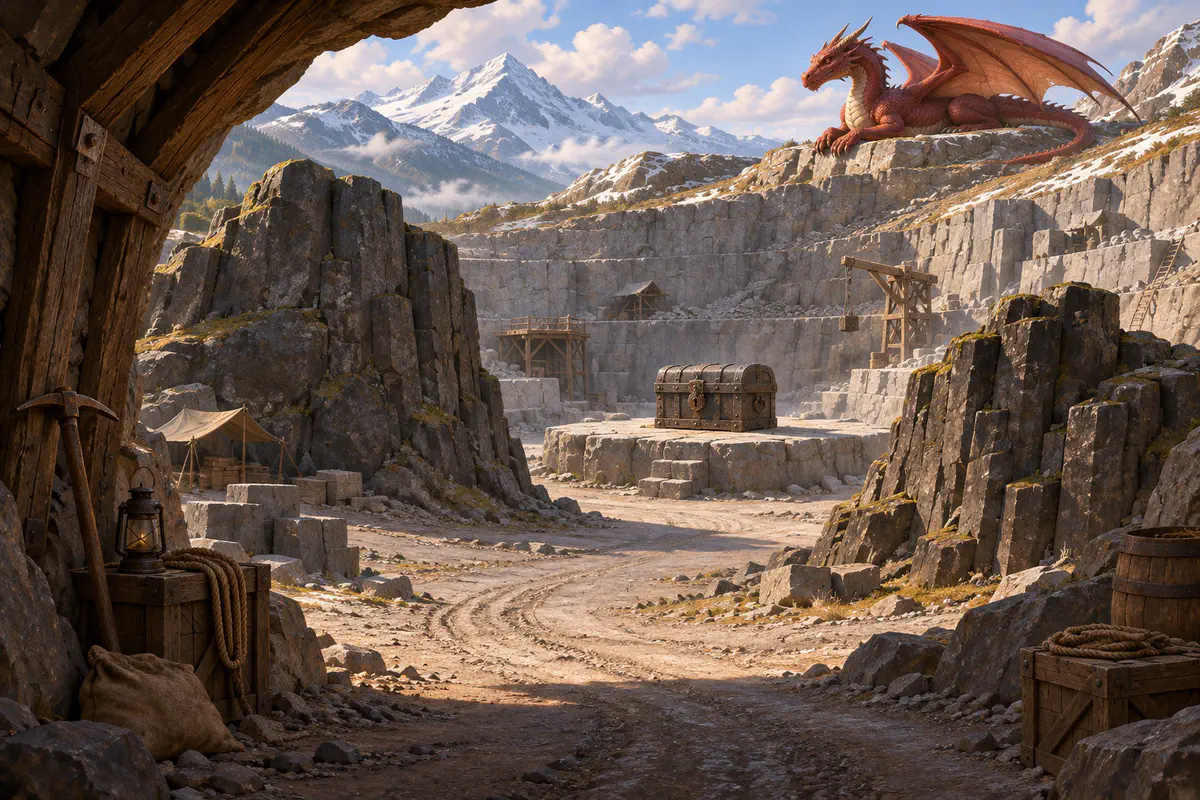
Situation: one young red dragon has claimed a quarry’s locked pay chest, containing 500 gp owed to the workers. The foreman wants the wages returned and can offer a map to an abandoned gemstone prospect in exchange. The dragon wants treasure and acknowledgment that the quarry lies in its territory.
Layout: a 100-by-80-foot open quarry has a broad southern tunnel and a northern ledge 20 feet high. The dragon starts on that ledge. The chest stands on a central platform. Two solid basalt outcrops, each 15 feet high and 20 feet wide, lie between the tunnel and platform with separate routes around them. Draw their actual positions before anyone relies on their protection.
Opening: from the tunnel the party sees the dragon and scorched stone. It speaks before attacking, demanding that the travelers identify who sent them. The foreman explains both the chest’s contents and the map’s real value; neither is a surprise reward invented after negotiations succeed.
Choices: this dragon accepts the authentic prospect map and a public acknowledgment of its claim in exchange for the locked chest. No check is needed if the party accepts those stated terms. A different truthful offer can be negotiated; set its stakes before rolling. A failed counteroffer leaves the original deal or withdrawal available. The party can also return with more help instead of committing to combat.
If combat begins: roll initiative. The dragon uses flight to seek useful breath angles, and it switches to its actual melee options when the breath is unavailable. Track recharge openly in the initiative tracker. Once reduced to half hit points, it tries to withdraw by air rather than die over one payroll. It does not pursue characters beyond the southern tunnel in this scene; that is a morale choice, not a limit on its senses.
Finish: recovering the chest returns the workers’ wages. An agreement may leave the settlement facing an unwelcome territorial claim, creating a later political problem. If the party withdraws, the foreman can seek allies; the quarry remains marked as dangerous rather than becoming a compulsory immediate boss fight.
Prepare for your party
Use the encounter balancing guide with the party’s current resources and ability to respond to flight. This creature’s breath makes it a poor routine fight for beginners. Easier: run the meeting entirely as a negotiation with safe withdrawal. Harder: require moving the heavy chest under pressure while keeping the terrain readable. Browse mountain encounters or return to Monster Guides.