Blink 5e: Ethereal Timing, Return Spaces, and Odds
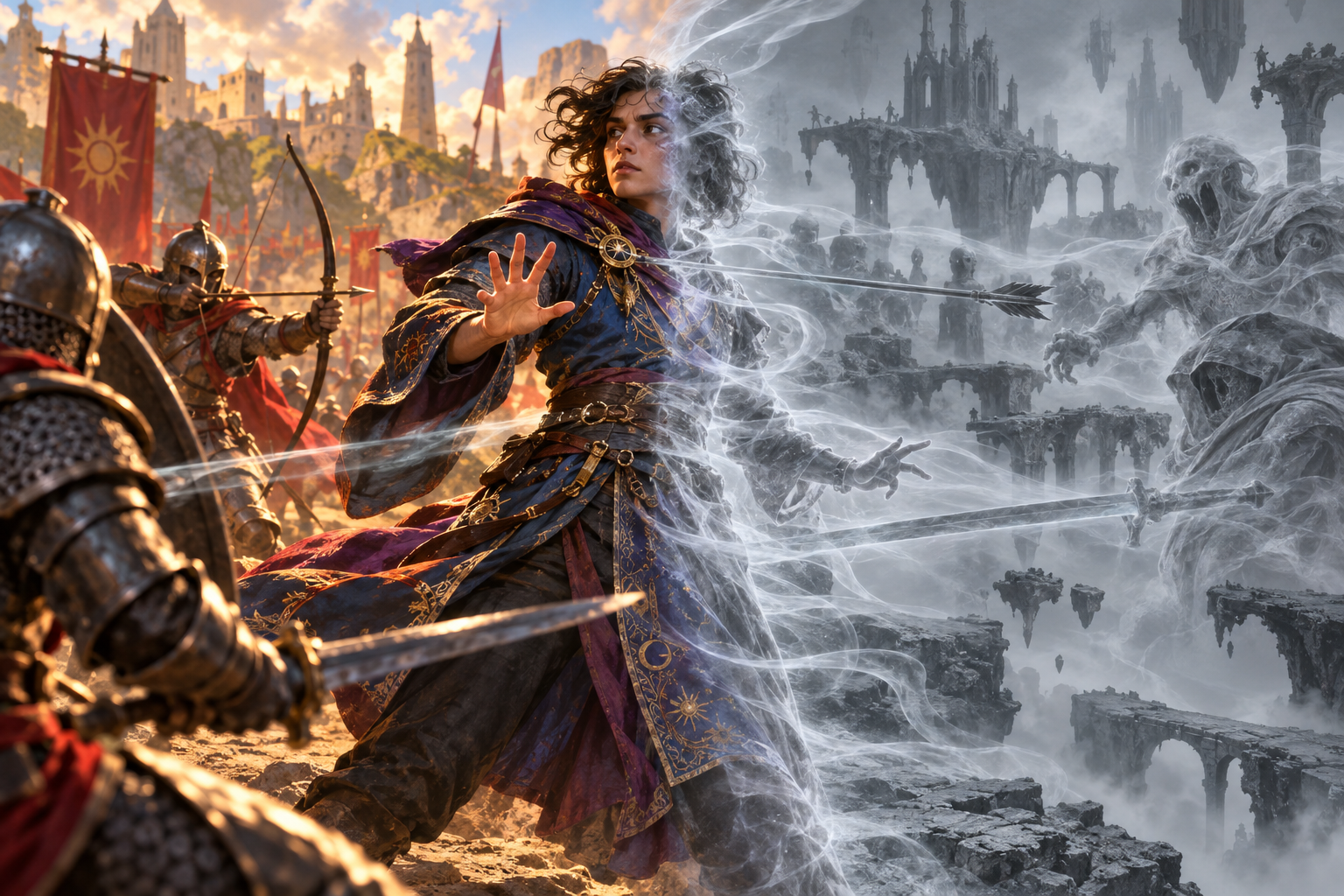
I’ve always loved Blink because it feels unpredictable without being vague. You act normally, roll at the end of your turn, and may disappear until your next turn begins. When it works, enemies lose most of their opportunity to attack you—but your allies also lose access to you.
Blink 5e — Quick Spell Reference
| Casting Time | 1 action |
|---|---|
| Range | Self |
| Components | V, S |
| Duration | 1 minute |
| Concentration | No |
| Ritual | No |
| Classes | Sorcerer, Wizard |
| Source | Player's Handbook (2014), pg. 219 |
How Blink Works
Roll a d20 at the end of each of your turns for 1 minute. On an 11 or higher, you vanish from your current plane and appear on the Ethereal Plane. If you cast Blink while already there, the spell fails and its casting is wasted.
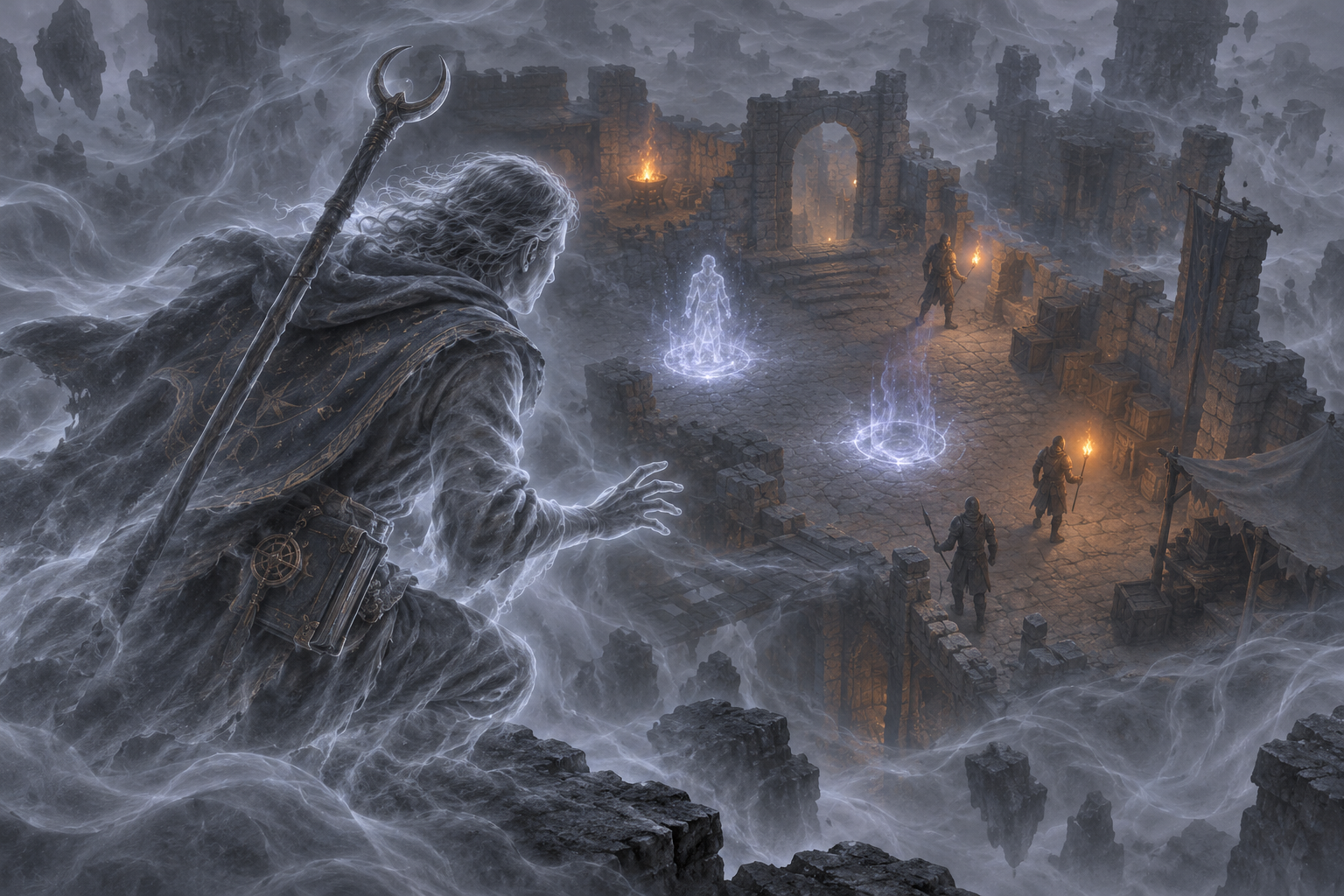
While Ethereal, you can see and hear the plane you left, but it appears in shades of gray and you cannot see farther than 60 feet into it. You can affect and be affected only by creatures on the Ethereal Plane. Creatures on the other plane cannot perceive or interact with you unless a special ability says otherwise.
At the start of your next turn, you return before taking actions or moving. If Blink ends while you are Ethereal, you also return immediately.
What Are the Odds of Blinking?
An 11–20 result succeeds, so each roll has a 50 percent chance. Every roll is independent: failing once does not make the next roll more likely to succeed.
Across several end-of-turn rolls, the chance of blinking at least once is:
| Rolls | Chance of at Least One Blink |
|---|---|
| 1 | 50% |
| 2 | 75% |
| 3 | 87.5% |
| 4 | 93.75% |
| 5 | 96.875% |
Those numbers do not make any particular round reliable. Blink is excellent at reducing danger over time, but it cannot guarantee protection from an attack that must miss this round.
The Timing of Blink
The spell’s sequence is precise:
- Take your turn normally.
- At the end of that turn, roll the d20.
- On 11+, move to the Ethereal Plane.
- Other creatures take their turns while you are away.
- Return at the start of your next turn.
You do not receive a normal turn on the Ethereal Plane. You arrive after your turn has ended and leave when the next one starts. Blink therefore functions mainly as protection between your turns, not as a full round of Ethereal exploration.
Where Do You Reappear?
Choose an unoccupied space you can see within 10 feet of the space where you vanished. If no unoccupied space is available in that range, you appear in the nearest unoccupied space. If several such spaces are equally near, the 2014 spell chooses randomly among them.
This can provide modest repositioning around enemies, hazards, or cover. The destination is measured from the space you left, not from wherever you imagine yourself moving on the Ethereal Plane.
Whether Blink can place you on the far side of a wall depends on satisfying the spell’s sight requirement from your Ethereal perspective and finding a destination within 10 feet of the departure space. A wall does not let you ignore those written limits.
Blink and Concentration
Blink does not require concentration. You can maintain a different concentration spell while Blink runs, and moving to another plane does not by itself end concentration.
This is one of Blink’s strongest uses. Spending fewer enemy turns on the battlefield means fewer attacks and therefore fewer concentration saves. The tradeoff is that allies on the original plane generally cannot target you with healing or other helpful effects while you are Ethereal.
Blink itself also continues if you become incapacitated unless the effect ending it says otherwise. It has a fixed duration and no concentration to lose.
Tactical Uses and Tradeoffs
Blink is best for a caster who wants to act each round, protect an important concentration spell, and reduce exposure between turns. You can cast, attack, or reposition before making the roll, then potentially disappear while enemies respond.
Its randomness is the main drawback. You might spend a 3rd-level slot and fail several rolls in a row. Disappearing can also prevent opportunity attacks or healing that you wanted to receive, and a clever enemy may ready an attack for your return.
Blink does not make you invisible or untargetable on the same plane; it moves you to a different plane. Creatures able to perceive and affect the Ethereal Plane can still threaten you there.
Blink: 2014 vs. 2024 Rules
The 2024 version preserves the spell’s level, school, classes, action, range, components, duration, lack of concentration, 50 percent success chance, Ethereal limitations, and start-of-turn return.
Its visible changes are:
- Roll 1d6 and vanish on 4–6 instead of rolling d20 and vanishing on 11–20. The odds remain 50 percent.
- On a successful Blink roll while already Ethereal, the spell ends instantly rather than describing the spell as failing and its casting as wasted.
- If no space within 10 feet is available, the nearest unoccupied space is used without the 2014 instruction to choose randomly when several are equally near.
- The 2014 option to dismiss Blink as an action is absent.
The main guidance and quick reference on this page use the 2014 version.
Can Blink Be Upcast?
No. A higher-level slot does not improve the success chance, duration, return distance, or senses. Use a 3rd-level slot unless an unusual circumstance leaves no lower slot available.
Blink FAQ
Does Blink require concentration?
No. You can maintain another concentration spell while Blink is active.
Can I act while on the Ethereal Plane?
Normally, no. You vanish at the end of your turn and return at the start of the next, so you do not receive a normal turn there.
Can enemies attack me after I blink?
Creatures remaining on the plane you left generally cannot perceive or affect you. A creature on the Ethereal Plane, or one with a special ability that reaches it, can still interact with you.
Do I roll on the turn I cast Blink?
Yes. The spell is active by the end of the casting turn, so you make the first roll at that turn’s end.
Can I choose not to vanish after a successful roll?
No. On an 11 or higher, the spell says you vanish. The 2014 version can be dismissed as an action, but not after seeing an end-of-turn roll and before its result occurs.
Is Blink better than Blur?
They solve different problems. Blur is reliable disadvantage against many visible attackers but uses concentration. Blink is random, uses a higher slot, and can remove you from the plane between turns without concentration.