Bulette 5e Guide: Deadly Leap, Tremorsense, and a Quarry Rescue
Rules baseline: 2014 D&D 5e, SRD 5.1. Open the for complete statistics. The quarry, rescue, and pursuit behavior below are original suggestions.
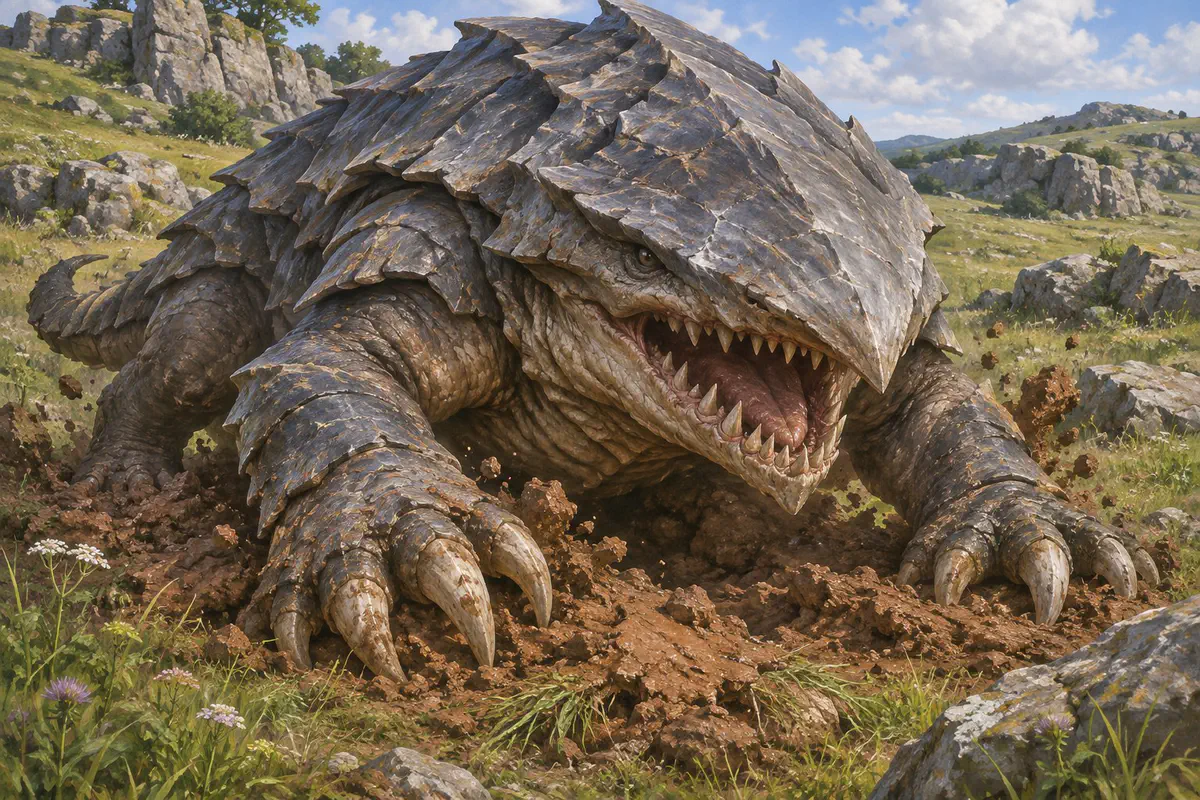
Monster overview
A bulette is a Large monstrosity with overlapping armor plates, a wedge-shaped head, and heavy digging claws. The name land shark suits a predator that travels under loose ground and surfaces close enough to bite. Its 40-foot walking and burrowing speeds let it change its approach quickly in a clay quarry, on a hillside, or across an open field.
Use one to make players pay attention to the ground they stand on. An exposed dirt lane may be the quickest route to a stranded person, while a raised stone bench gives the party a better place to work. The monster’s CR 5 and heavy bite make a direct rescue dangerous even when everyone knows it is coming.
How to run Deadly Leap
Standing Leap lets the bulette long jump up to 30 feet or high jump up to 15 feet without a running start. Those feet count against its movement. If it jumps at least 15 feet as part of its movement, it can spend its action on Deadly Leap to land in an occupied space. Mark the Large creature’s destination before rolling saves so everyone can see who is in it.
Each creature in that space chooses Strength or Dexterity and rolls against DC 16. A failure deals the listed bludgeoning and slashing damage and knocks the creature prone. On a success, it takes half damage and chooses an unoccupied space 5 feet out of the bulette’s space. It falls prone in the bulette’s space if there is no such destination. The leap uses the bulette’s action. Its 30-damage average bite is a separate choice on a normal turn.
Players can spread out to limit how many creatures a single landing catches. A gap wide enough to inconvenience a humanoid may be well within the bulette’s jumping distance. Measure the route from where it starts moving, including any ground it has already crossed that turn.
What tremorsense tells the bulette
Its 60-foot tremorsense pinpoints vibrations when it and their source are in contact with the same ground or substance. It cannot use tremorsense to detect a creature that is flying. Apply the rest of its senses normally if it surfaces, including its darkvision. Tremorsense can tell the bulette where to surface, and it still needs a path and the movement to get there.
Under the ordinary burrowing rules, solid rock stops its burrow. The bulette can still walk or jump onto a rock shelf from above. Earth between the party and the buried creature can provide total cover, so show a moving ridge of clay when the creature is shallow enough to give warning. A player who can see a likely exit point can ready a ranged attack for when it surfaces.
Ready to run: The surveyor on the slab
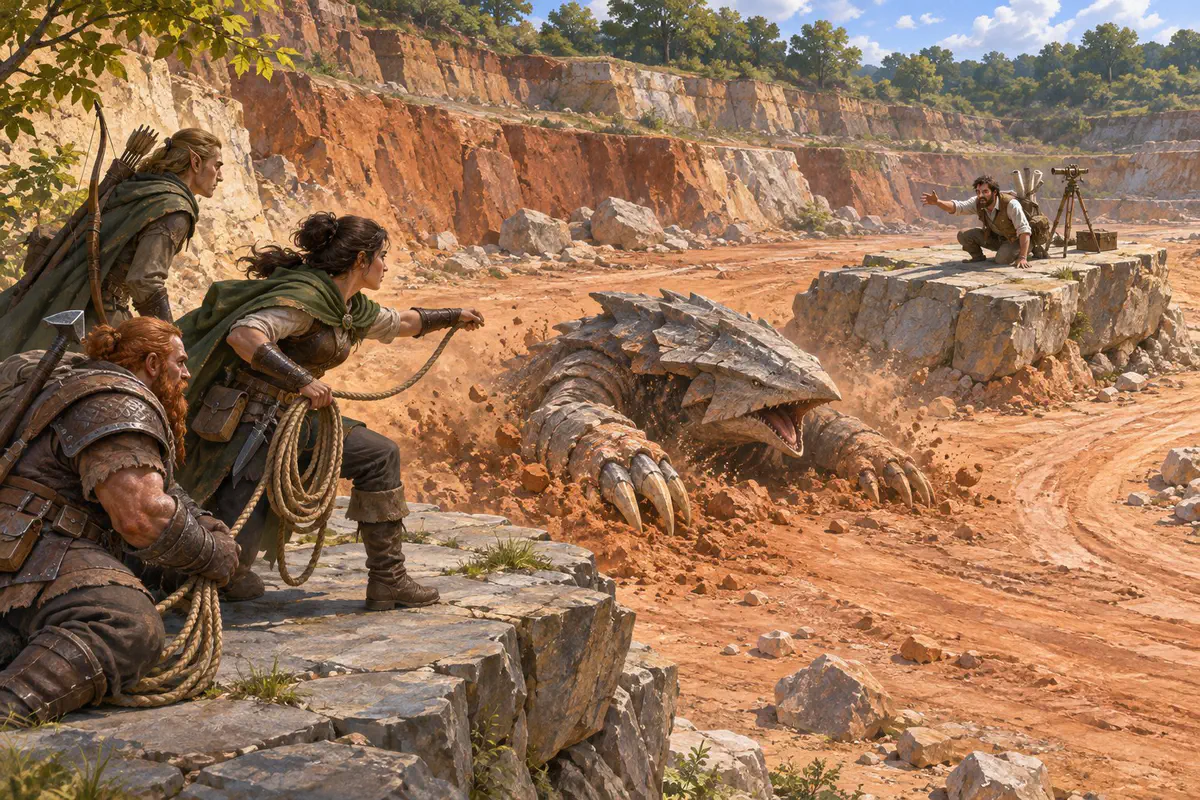
Situation. A surveyor scrambled onto a slab of bedrock after one bulette erupted through the floor of an abandoned clay quarry. The foreman hires the party to bring the surveyor back alive. The bulette is still hunting in the loose clay.
Layout. The party enters on a stone shelf along the south side of a 70-foot quarry floor. The surveyor’s low slab stands 20 feet north of the shelf across loose clay. A 3-foot-wide drainage passage at the south end of the shelf leads back outside. The bulette begins 15 feet east of the slab, just under the clay. An open lane to the east gives it room to leap.
Opening. From the shelf, the party can see an overturned handcart, a ridge of freshly split clay, and the surveyor waving from the slab. The surveyor points at a long wooden plank on the shelf. The foreman explains that the ridge followed the handcart until it overturned.
Choices. Two characters can lay the 25-foot plank across the gap from the shelf to the slab. A rope held taut from both sides makes a handline for the surveyor. If the party lifts the plank into place and stays off the clay, the bulette follows the handcart’s old tracks east long enough for the surveyor to cross. In initiative, each plank handler spends an action adjacent to the near end on the same round. Once the plank is in place, crossing it uses 20 feet of the surveyor’s movement.
If combat begins. Roll initiative when someone steps onto the clay, drops the plank hard against the stone, or deliberately draws the creature’s attention. The bulette surfaces near the strongest ground vibration it detects. It uses Deadly Leap when it has the distance and an occupied landing space. On a turn when it cannot make the jump, it can move in and bite. It abandons the quarry through the east bank at 25 hit points or fewer. It cannot burrow through the bedrock around the drainage passage or fit through its 3-foot opening.
Finish. Getting the surveyor outside earns 80 gp. Retreat leaves the surveyor waiting on the slab while the foreman clears the quarry entrance. The party can return with a sturdier bridge, a different route, or help.
Prepare for your party
Use the encounter balancing guide to judge whether the party can survive a bite or leap. For an easier rescue, leave the plank already spanning the gap so timing matters more than setup. For a harder rescue, move the slab 35 feet away and provide a second plank and a stone footing between the two spans. Put the unstable clay route and stone fallback on the map, as you would for other mountain encounters.