Hold Person 5e: Saving Throws, Paralysis, and Critical Hits
I like Hold Person because it turns a successful spell into an opportunity for the whole party. The catch is choosing a valid target and judging who can act before that target gets another save. Paralysis can be decisive, but it is neither an automatic hit nor a promise that every enemy can be affected.
This guide uses the 2014 spell. A separate 2014 vs. 2024 comparison explains the material change to upcast targeting.

Hold Person 5e — Quick Spell Reference
| Casting Time | 1 action |
|---|---|
| Range | 60 feet |
| Components | V, S, M(a small, straight piece of iron; no listed cost and not consumed) |
| Duration | Up to 1 minute |
| Concentration | Yes |
| Ritual | No |
| Classes | Bard, Cleric, Druid, Sorcerer, Warlock, Wizard |
| Source | Player's Handbook (2014), pg. 251 |
Choose a Humanoid, Then Resolve a Wisdom Save
Choose one humanoid you can see within 60 feet. It makes a Wisdom saving throw against your spell save DC. On a failed save, it is paralyzed while the spell lasts. On a successful initial save, it is unaffected; there is no partial condition or consolation damage.
This is a saving-throw spell, so you make no spell attack roll. Your DC normally equals 8 + proficiency bonus + your class’s spellcasting ability modifier. It is Wisdom for a Cleric or Druid, Charisma for a Bard, Sorcerer, or Warlock, and Intelligence for a Wizard. Other features can provide different access; a spell’s school does not determine its casting ability.
The iron component is not consumed and has no listed price. A suitable focus or component pouch can handle it under the ordinary component rules. You still need to supply the spell’s verbal and somatic components.
Humanoid means creature type, not body shape
Read the target’s creature type rather than deciding from its silhouette. A goblin can be a valid target because it is a humanoid; an ogre is a giant, and a vampire is undead. Looking human or standing on two legs does not make a creature eligible. The official Sage Advice Compendium specifically confirms that Hold Person does not work on a vampire.
An eligible creature can still have immunity to paralysis or another relevant defense. Do not assume an invalid target gets transformed into a valid one by upcasting. Hold Monster is a separate higher-level spell with broader targeting and its own limitations, rather than an upgraded mode of Hold Person.
Repeat Saves Happen at the End of the Target’s Turns
An affected target can repeat its Wisdom save at the end of each of its turns. A success ends the spell for that target. The repeat save is not at the beginning of its turn, and taking damage does not grant an additional save under this spell.
Initiative therefore changes the opportunity. If you cast just after the enemy has acted, allies may have several turns to exploit the condition before its next end-of-turn save. If the enemy acts immediately after you, it loses the relevant actions while paralyzed but may save before many allies can capitalize.
Paralysis does not automatically fail Wisdom saves. Nor does it automatically fail Constitution or Charisma saves. Only the specific Strength and Dexterity saving throws described by the condition fail automatically.
Your own concentration is another limit. Failing a concentration save, becoming incapacitated, or beginning another concentration spell can release the target before its next turn. Up to one minute is a ceiling, not a guaranteed ten-round duration.
What Paralysis Does to Attacks and Critical Hits
Under the 2014 condition, the target:
- Is incapacitated and cannot move or speak. Incapacitation prevents actions and reactions, and also prevents bonus actions under the bonus-action rules.
- Automatically fails Strength and Dexterity saving throws.
- Gives attack rolls against it advantage.
- Takes a critical hit from any attack that hits if the attacker is within 5 feet of it.
You still roll to hit. Advantage improves the chance; it does not make the roll unnecessary. Another source of disadvantage can cancel it. The critical-hit benefit depends on distance, not simply on whether the attack is called melee: a reach attack from 10 feet away does not gain the automatic critical-hit benefit. A qualifying spell attack from within 5 feet can benefit too.
Example: a Rogue within 5 feet lands a rapier hit that qualifies for 2d6 Sneak Attack, with a +3 damage modifier. An ordinary hit would roll 1d8 + 2d6 + 3. Against the paralyzed target at that distance, the critical hit rolls 2d8 + 4d6 + 3. The dice double; the flat modifier does not. This is a rules example, not a guarantee that the attack hits or that every Rogue’s Sneak Attack is 2d6.
A save-based effect is different. Paralysis automatically fails a Dexterity save against a spell such as Fireball, but that does not turn its damage into a critical hit. Critical-hit rules require an attack that hits.
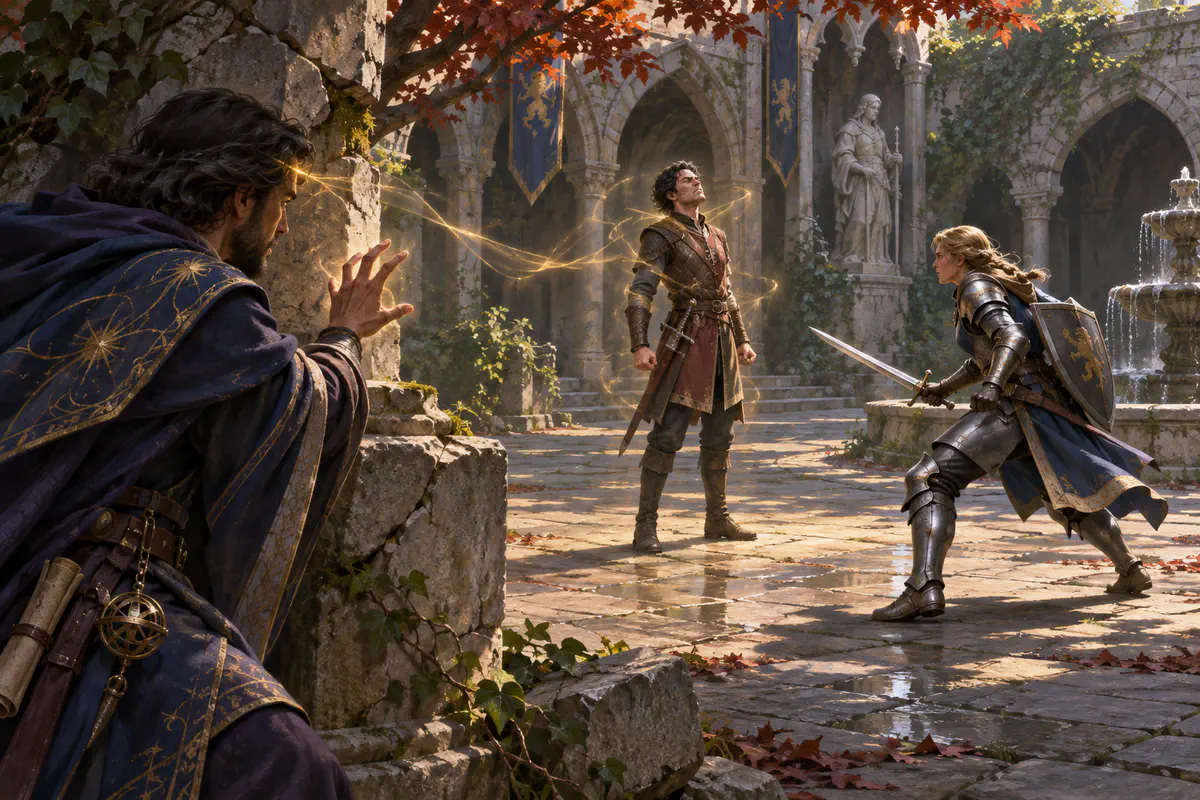
Does Damage Break Hold Person?
No. Damage to the paralyzed creature does not end this spell or create another saving throw. Do not import the damage-ending rule from a different control spell.
Damage to the caster can instead threaten the caster’s concentration, potentially ending the spell for every affected target. A paralyzed enemy’s allies may therefore decide that attacking you is the quickest way to free it. Use cover, distance, and the party’s positioning rather than stepping next to the enemy merely to watch the follow-up attacks.
Paralysis also incapacitates a target that was concentrating on its own spell, ending that concentration. It does not dispel every non-concentration spell or other magical effect on the target. An ally with Dispel Magic or an effect that ends paralysis may have a separate way to remove the problem; check the exact ability rather than treating any healing as a cure.
Upcasting: More Targets with a 2014 Grouping Limit
A slot above 2nd adds one humanoid per additional slot level. Each must be visible and within the spell’s 60-foot range, and the humanoids must be within 30 feet of each other when targeted in the 2014 version.
| Slot level | Maximum humanoids |
|---|---|
| 2nd | 1 |
| 3rd | 2 |
| 4th | 3 |
| 5th | 4 |
Each target makes its own initial and repeat saves. One success does not free the others; losing your concentration does. A higher slot does not raise the save DC, extend the duration, or allow non-humanoids. The grouping requirement is checked when you target them, not a new ongoing tether described by the spell.
Consider spreading the risk when several suitable enemies are together: one may save while another fails. Against a single enemy with strong Wisdom defenses, the same higher slot does not make that one creature more likely to fail. Compare the available targets before spending the slot.
Hold Person: 2014 vs. 2024 Rules
The 2024 spell still targets visible humanoids within 60 feet, uses Wisdom saves, causes paralysis, allows end-of-turn repeat saves, and requires concentration for up to one minute. Its base spell level and the six listed classes are unchanged.
The material targeting change is that the revised upcasting entry omits the 30-foot grouping restriction. Extra targets must still satisfy visibility and range, but the old requirement that they be within 30 feet of one another is not part of the revised spell. Use the rule belonging to your table’s version; the table and examples earlier in this guide retain the 2014 restriction.
Hold Person FAQ
Does being an elf make a creature immune?
No. The 2014 elf’s protection against magical sleep and advantage against being charmed do not themselves protect against Hold Person. The spell causes paralysis, not sleep or the charmed condition. Check any other specific traits the target has.
Can the target choose to fail the Wisdom save in 2014?
The 2014 spell does not grant a general option to choose failure. If a scene needs a willing creature to be held, ask the DM how that is adjudicated rather than assuming every saving throw is optional.
Does it deal damage by itself?
No. Its value comes from preventing actions and enabling follow-up effects. You and your allies still need to use that opportunity before a save or loss of concentration ends it.
Rules sources: 2014 Basic Rules spell descriptions, 2014 conditions, and Sage Advice Compendium; the revised targeting comparison uses the 2024 rules, p. 141. The examples and tactical recommendations are original advice.