Slashing Damage 5e: Weapons, Resistance, and Ooze Rules
Slashing damage is easy to picture: a sword cuts, an axe cleaves, and a monster rakes with its claws. I find the interesting questions start when that familiar blade meets an unusual defense, especially an ooze that reacts to being cut.
This guide uses 2014 D&D 5e rules, with 2024 weapon mastery explained separately.
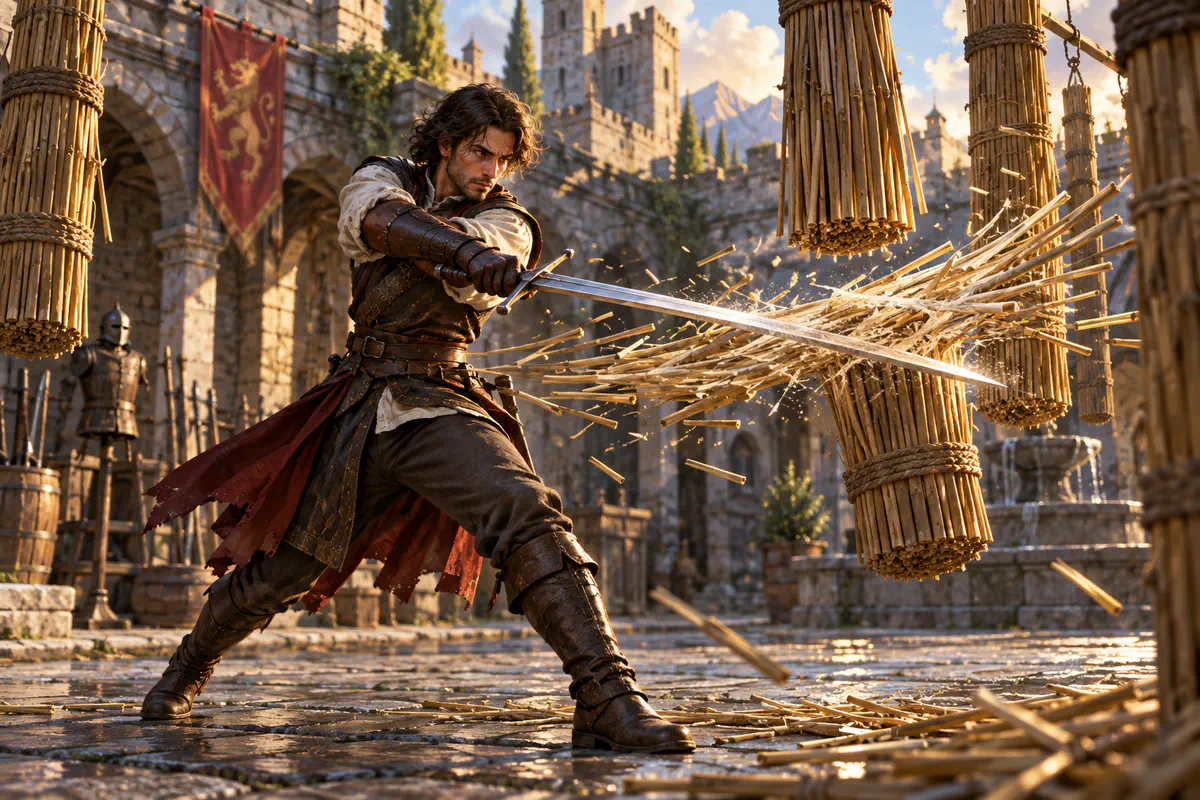
Slashing Damage 5e: Quick Answer
Slashing damage represents cutting and tearing attacks. Many swords, axes, and monster claws deal it. It does not automatically cause bleeding, sever limbs, or strike additional creatures.
Apply the effect’s normal attack or saving throw procedure, then any relevant defenses. Resistance halves applicable damage, immunity prevents it, and vulnerability doubles it. Specific monster traits can create additional interactions.
Which Weapons Deal Slashing Damage?
Common 2014 examples include the following, before ability modifiers and other bonuses:
| Weapon | Damage |
|---|---|
| Handaxe | 1d6 slashing |
| Sickle | 1d4 slashing |
| Scimitar | 1d6 slashing |
| Longsword | 1d8, or 1d10 with two hands |
| Battleaxe | 1d8, or 1d10 with two hands |
| Greataxe | 1d12 slashing |
| Greatsword | 2d6 slashing |
| Glaive or halberd | 1d10 slashing |
| Whip | 1d4 slashing |
Not every sword deals slashing damage: a rapier and shortsword normally deal piercing damage. Use the weapon entry rather than judging the blade’s appearance.
Claws also use the damage listed in their monster or character feature. Their narrative resemblance to a sword does not give them a sword’s weapon properties.
How Do Slashing Resistance and Magical Weapons Interact?
Read the whole defense. Resistance to slashing damage from nonmagical attacks does not protect against a qualifying magical slashing attack. Resistance to slashing damage without that restriction still does.
A magic longsword normally continues to deal slashing damage unless its description says otherwise. It does not become force damage simply because it is enchanted.
For example, an ordinary sword hit dealing 15 slashing damage becomes 7 against applicable resistance, after rounding down. A magical sword dealing the same 15 damage bypasses a resistance limited to nonmagical attacks, but still deals only 7 against unrestricted slashing resistance.
See damage resistance for other source restrictions and overlapping defenses.
What Happens When You Slash a Black Pudding?
The 2014 black pudding is immune to slashing damage. It also has a separate Split reaction: when a Medium or larger pudding with at least 10 hit points is subjected to lightning or slashing damage, it can split into two smaller puddings.
The split does not mean the sword successfully removed hit points. Immunity and the reaction are separate parts of the stat block. The reaction also has requirements, so this is not a rule that every ooze splits after every sword hit.
A 2014 ochre jelly has its own Split reaction and slashing immunity too. Check the specific creature before using slashing against an unfamiliar ooze. If your blade is ineffective, consider another damage type rather than repeatedly making the same attack.
Can Slashing Damage Cut Ropes and Break Objects?
A blade can be a sensible tool for cutting a rope, but object interactions are adjudicated by the DM using the object rules and the situation. There is no universal slashing bonus against all objects.
A rope, stone door, and iron chain need not respond identically. Some objects may be immune to a damage type or require a more suitable tool. The DM also decides when a simple task needs no roll.
Spell targeting remains a separate limit. An effect that targets creatures does not automatically become an object-cutting tool just because it deals slashing damage.
Does Slashing Damage Cause Bleeding or Dismemberment?
Not under the default damage-type rules. Subtracting hit points does not automatically impose a lasting wound, reduce speed, or sever a limb. A critical hit normally increases damage dice rather than adding those effects.
A feature, magic item, optional injury rule, or agreed house rule can change that. Identify the rule responsible instead of attaching the result to every slashing hit.
Likewise, a greatsword does not hit multiple enemies simply because its attack is described as a wide sweep. Extra targets require an actual feature or an optional rule your table uses.
When Is Slashing Damage Useful?
Slashing weapons cover many play styles: a finesse scimitar, a one-handed longsword, or a two-handed polearm. Compare proficiency, damage dice, reach, properties, and your character features before selecting one.
A backup damage type can matter against an ooze or another unusual defense. However, changing from a magic sword to a nonmagical hammer can introduce a different problem if the enemy resists nonmagical attacks. Consider both the source and the damage type.
Slashing Damage: 2014 vs. 2024 Rules
The 2024 rules add weapon mastery properties that can change how a slashing weapon performs. A longsword has Sap, a greatsword has Graze, and a greataxe has Cleave.
You need a feature that unlocks the weapon’s mastery, and each property has its own conditions. Cleave is therefore a specific revised weapon option, not proof that all slashing damage hits several enemies. These properties do not belong to the 2014 versions of the weapons.
Slashing Damage FAQ
Can a slashing attack knock a creature unconscious?
Yes. In the 2014 rules, an attacker can choose a knockout when a melee attack reduces a creature to 0 hit points. The rule is not limited to blunt weapons.
Does fire resistance help against a flaming sword’s slashing damage?
Only the fire portion. If a hit deals 8 slashing and 6 fire damage to a creature resistant only to fire, the result is 8 + 3 = 11 damage.
Can Sneak Attack deal slashing damage?
Yes. A qualifying attack with a finesse slashing weapon such as a scimitar can deal slashing Sneak Attack damage. The normal Sneak Attack requirements still apply.
Rules Sources
This guide uses the official 2014 combat rules, 2014 equipment rules, and the object and ooze rules in SRD 5.1. The comparison uses the official 2024 weapon mastery rules.