Skill-Only Encounters in D&D 5e: How to Run Skill Challenges That Feel Exciting (No Combat Needed)
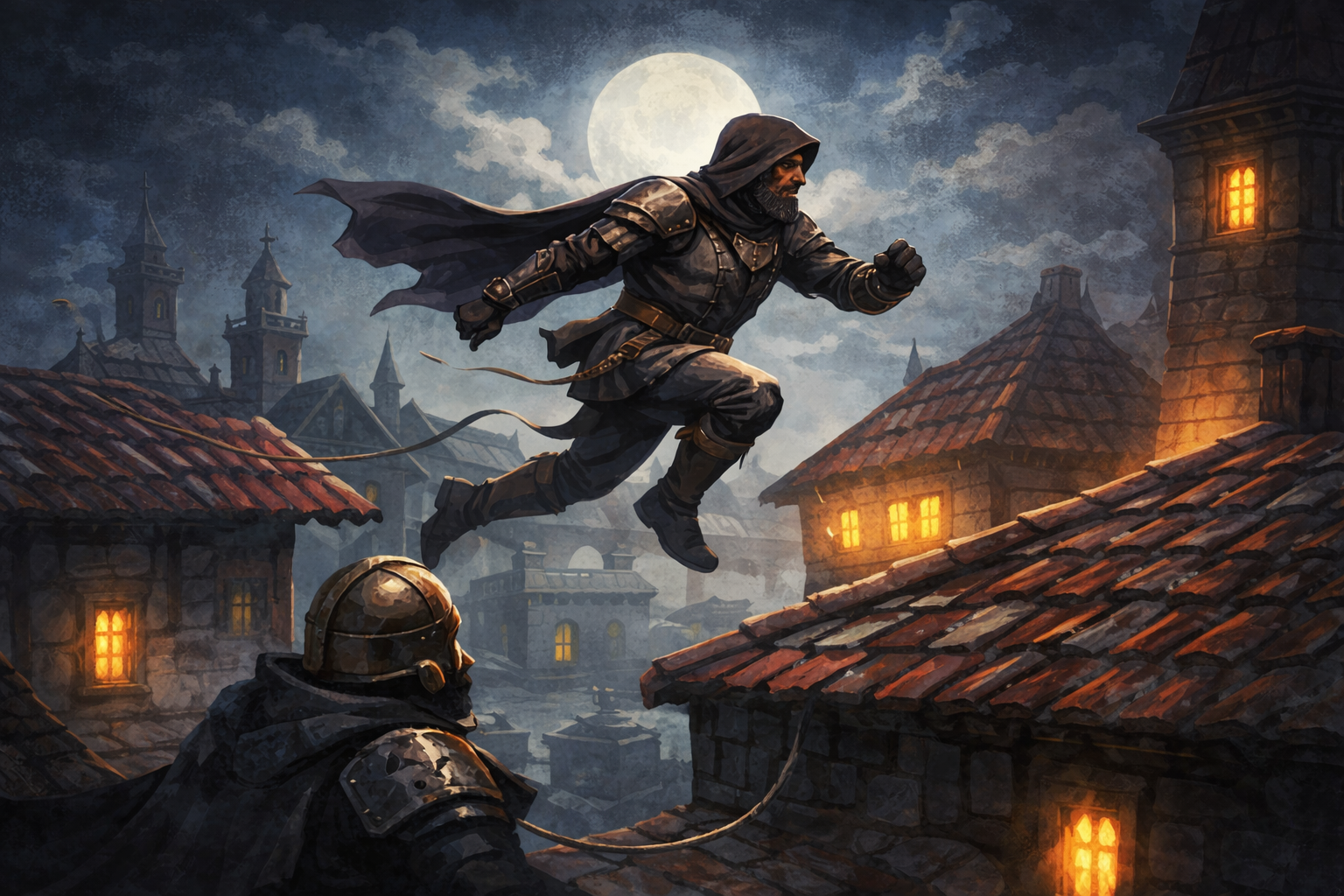
Skill-only encounters (often run as skill challenges) are a DM’s best tool for making chases, negotiations, escapes, heists, wilderness hazards, and time-sensitive puzzles feel as tense as combat—without rolling attack dice.
This guide pulls together what consistently shows up in high-ranking “skill challenge” posts: clear stakes, a simple success/failure track, spotlighting every player, and “fail forward” consequences instead of dead ends.
Key Takeaways
- Skill-only encounters replace combat with structured skill challenges, using successes and failures instead of hit points.
- Always define the goal and stakes up front so players understand what success and failure mean.
- Track progress with a simple success/failure system (such as 6 successes before 3 failures) to keep tension high.
- Keep DCs reasonable (usually 10–15) and increase difficulty through complications, not higher numbers.
- Require skill variety so every player contributes and no single skill dominates the scene.
- Narrate every roll as a change in the situation, even on success.
- Use “fail forward” consequences—failure should create new problems, not stop the story.
- Skill-only encounters shine in chases, social scenes, escapes, and environmental hazards where combat would slow the game down.
What is a skill-only encounter?
A skill-only encounter is a scene where the party’s goal is resolved through a sequence of ability checks that build toward an overall outcome. Instead of “hit points,” you track successes and failures.
Done well, it creates:
- A clear objective (what “winning” looks like)
- Rising tension (every roll changes the situation)
- Meaningful consequences (success matters; failure costs something)
When to use a skill-only encounter
Use them when you want the pace of combat, but the fiction isn’t about trading blows:
- Chase scenes (rooftops, forests, crowded markets)
- Escaping danger (collapsing dungeon, spreading fire, rising water)
- Infiltration and heists (guards, locks, alarms, disguises)
- Travel hazards (blizzard, desert crossing, rapids)
- Social set pieces (trial, negotiation, interrogation, debate)
- Complex tasks under pressure (ritual interruption, sabotage, repairs mid-crisis)
DM Tip: If the scene has no meaningful risk (or unlimited retries), don’t roll—just narrate success and move on.
The 7-step framework for running skill-only encounters
1) State the goal and the stakes out loud
Start with one sentence each:
- Goal: “You’re trying to cross the collapsing bridge before it falls.”
- Stakes: “If you fail, you’ll lose time, take damage, and arrive with enemies alerted.”
Players perform better when they understand the game of the scene—what they’re aiming for and what’s at risk.
2) Pick a simple tracker: successes before failures
Two table-friendly options:
Option A: 6 successes before 3 failures (classic)
- Fast to run
- Perfect for short, intense scenes
Option B: Scale by party size
- Win at 2 × party size successes
- Lose at party size failures
Example: 4 PCs → 8 successes before 4 failures
Which should you use?
- Use 6/3 for quick scenes
- Use scaled for longer, spotlight-heavy encounters
3) Set DCs using the typical DC ladder
- Very Easy: 5
- Easy: 10
- Medium: 15
- Hard: 20
- Very Hard: 25
- Nearly Impossible: 30
Practical advice: Most skill-only encounters live in DC 10–15. Raise DCs only when the situation is truly dangerous or time-critical.
4) Establish turn order
Choose one method and stick with it:
- Go around the table
- Roll initiative (great for chases)
- Let players choose the order
Turn order ensures spotlight balance and keeps pacing tight.
5) Give players permissions and constraints
Use these two rules to keep things interesting:
- A character can’t use the same skill twice in the same challenge
- Optional: No two players use the same skill in the same round
Then add one permission:
“Pitch any skill or tool proficiency—if you can explain how it helps.”
6) Narrate every roll as a change in the situation
After each check, answer:
- What changed?
- What new problem appears?
- Who is now under pressure?
Even successes should push the scene forward:
“You make the jump—but the roof tiles crack beneath you.”
7) Use fail-forward outcomes
Avoid “nothing happens.” Instead, apply success with cost:
- Lose time
- Take damage or exhaustion
- Spend resources
- Alert enemies
- Introduce complications
Failure should change the situation, not stop the story.
The secret sauce: partial successes
Use partial success to avoid binary outcomes:
- Clear failure: mark a failure + complication
- Clear success: mark a success + advantage
- Middle result: success, but with a complication
This keeps tension high and every roll meaningful.
Three plug-and-play skill-only encounter templates
Template 1: Rooftop Chase
Goal: Escape pursuers
Tracker: 6 successes before 3 failures
DC: 13–15
Possible skills:
- Acrobatics – leap gaps
- Athletics – sprint or climb
- Stealth – blend into crowds
- Deception – mislead guards
- Perception – find shortcuts
- Thieves’ Tools – jam doors
Failure costs:
- Minor damage
- Dropped item
- Exhaustion
- Lost distance
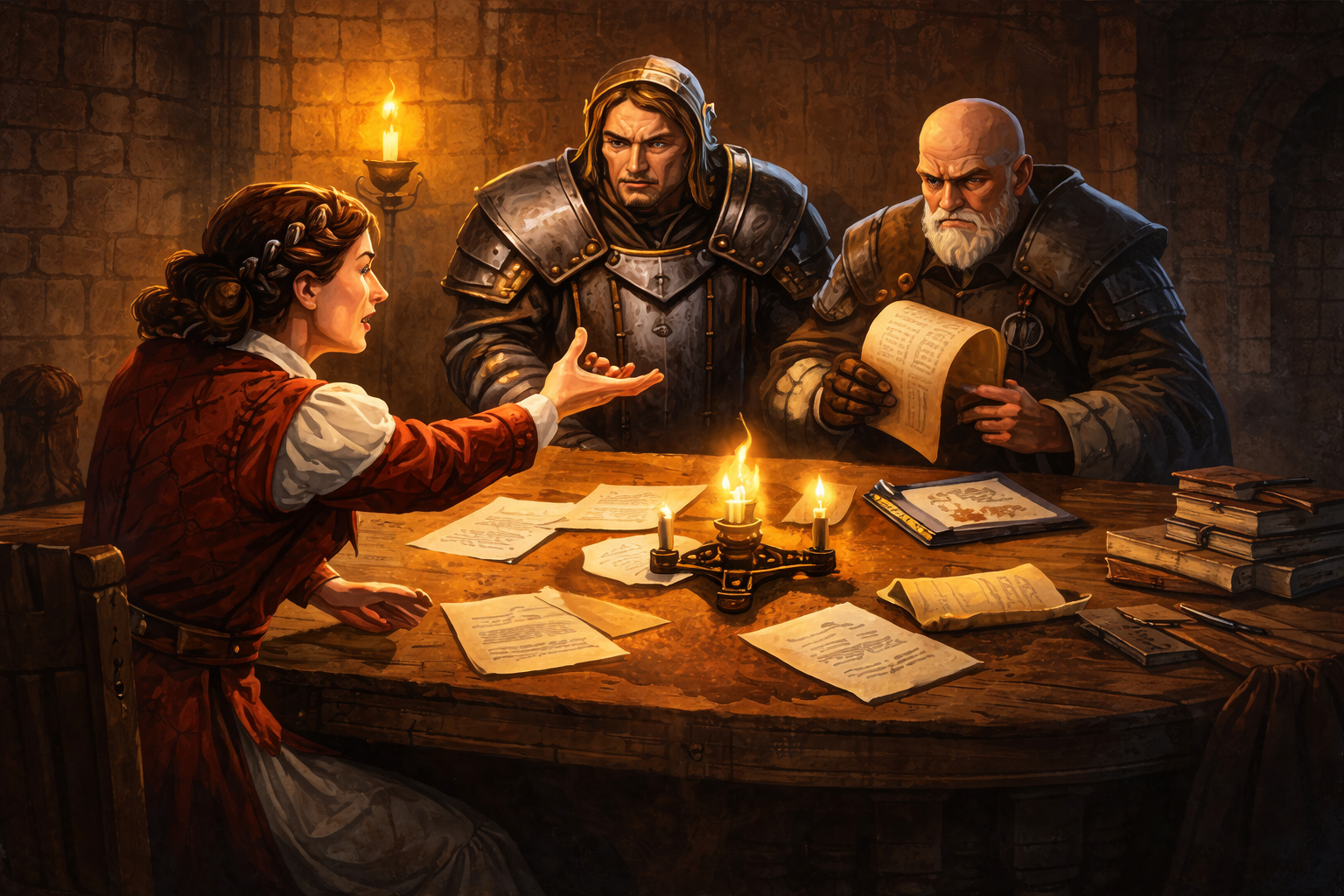
Template 2: The Tribunal
Goal: Win a ruling or avoid prison
Tracker: 8 successes before 4 failures
DC: 12–16
Possible skills:
- Persuasion – logical appeals
- Insight – read the judges
- History / Religion – cite precedent
- Performance – emotional argument
- Investigation – expose contradictions
- Intimidation – risky pressure
Fail-forward outcomes:
- Victory with obligations
- Partial loss with new leads
- Reduced sentence or fine
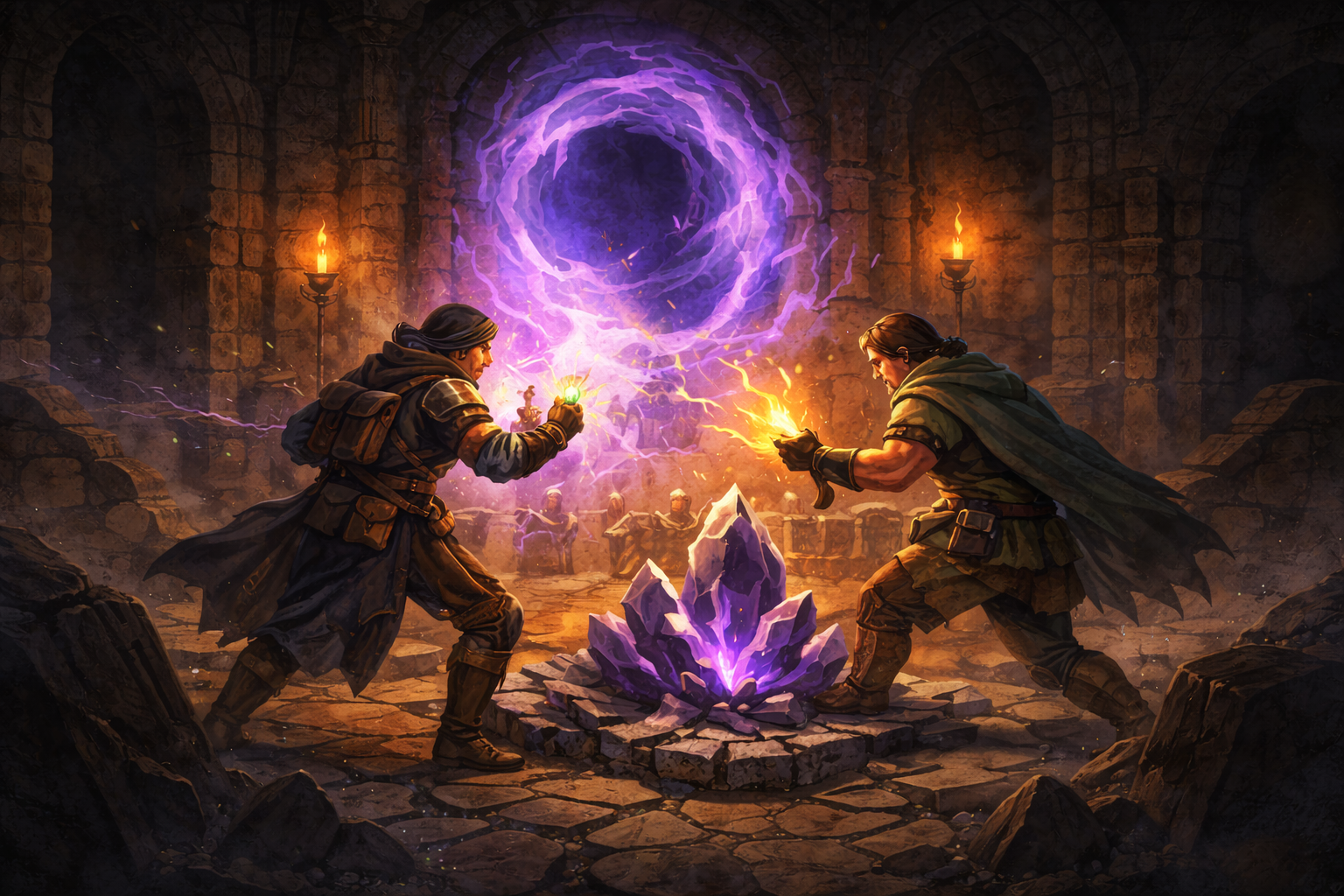
Template 3: Stop the Ritual
Goal: Disrupt a dangerous ritual
Tracker: 6 successes before 3 failures
DC: 15
Possible skills:
- Arcana – disrupt runes
- Religion – counter-chant
- Sleight of Hand – swap components
- Athletics – topple focus objects
- Medicine – stabilize collapsing allies
Failure complications:
- Portal advances
- Environmental damage
- Summoned hazards
- Disadvantage on the next check
Common mistakes (and fixes)
Mistake: Everyone rolls until someone succeeds
Fix: One roll per character per beat, tracked clearly
Mistake: DCs too high
Fix: Keep DCs reasonable; add danger through complications
Mistake: Failure stops the story
Fix: Fail forward with meaningful costs
Mistake: One player dominates
Fix: Enforce skill variety and turn order
Quick DM script
“This is a skill-only encounter.
Your goal is [goal].
We need [X] successes before [Y] failures.
The base DC is [DC].
Describe what you do and choose a skill or tool that fits.
You can’t reuse the same skill in this challenge.
Every roll changes the situation.”
FAQ
Do I have to call it a skill challenge?
No. You can track successes secretly and run it entirely in-fiction.
Should spells be allowed?
Yes. Treat them as strong narrative tools—advantage, lowered DCs, or automatic successes at a resource cost.
Do skill-only encounters grant XP?
Many DMs award encounter-equivalent XP, but milestone leveling works best.
Final Thoughts
Skill-only encounters are one of the most powerful tools a Dungeon Master has for keeping a game fast, cinematic, and player-driven—without defaulting to combat. When run well, they give every character a moment to shine, create real tension at the table, and turn routine obstacles into memorable story beats.
The key is structure, not rigidity. Clear goals, reasonable DCs, and meaningful consequences give the scene weight, while flexible skill use and strong narration keep it feeling natural and immersive. Don’t be afraid to let players get creative, and don’t be afraid of failure—some of the best moments in a campaign come from plans that go slightly wrong.
Use skill-only encounters whenever combat would slow the story down or distract from the drama. With a little practice, they’ll become a go-to technique for chases, negotiations, escapes, and high-stakes moments your players will remember long after the dice stop rolling.