How to Run Multi-Stage Boss Fights in D&D 5e
I run multi-stage showdowns to stop end-of-dungeon letdowns. I define what a multi-stage encounter is and why it keeps moments fresh as the party adapts.
I call out the core problem: a lone apex foe often loses to sheer turn volume. I build phases so pressure and pacing shift, and players feel tested without being steamrolled.
Community-tested tactics guide me: add minions, drain resources before the reveal, and use the arena and story to raise stakes. Legendary traits and lair effects help rebalance action economy while keeping fights cinematic.
I focus on clear telegraphing so big shifts feel epic, not unfair. My goal is fun: I want the party to have memorable wins that feel earned and dramatic.
Key Takeaways
- Use phases to counteraction economy and keep momentum.
- Foreshadow changes so transitions feel fair and exciting.
- Burn resources or add minions to elevate early tension.
- Leverage environment and story to raise stakes, not just HP.
- Build templates that scale across tiers for quick prep.
What I Mean by Multi‑Stage Boss Battles (and Why They Work Right Now)
A single showdown that mutates during play keeps my table alert and invested.
Multi‑stage design breaks one climactic sequence into shifting phases triggered by HP thresholds, objectives, or timers. I use short beats so the encounter breathes and stays tense.
Community advice matters: I drain resources with waves or challenges before the reveal. That keeps fresh full‑resource blitzes from collapsing the scene.
I blend mechanics like legendary and lair moves or minions with story beats—reveals, bargains, consequences. This pairs tactical pressure with emotional stakes.
- I design stages to blunt alpha‑strikes and avoid endless grinds.
- I use timers and objectives to force proactive play, not passive trading.
- I telegraph shifts so the party reads danger and plans around change.
For me, success is not raw attrition. It is tight choices, close calls, and a memorable challenge that fits my players and the game I run.
Foreshadowing and Prep: Setting Up the Boss So the Payoff Lands
I build a breadcrumb trail so the final clash feels earned, not random. Small touches across sessions make the showdown meaningful and let my players feel smart for noticing patterns.
Clues, rumors, and minions that build anticipation
I sprinkle tangible hints—scorched corridors, warped victims, branded coinage—so the table senses an expanding influence long before the encounter.
I put lieutenants and hench‑crews in front of the party. Their tactics echo the main villain, so the eventual fight feels inevitable and earned.
Seeding counters so players can prepare without spoilers
I drop hints about resistances or terrain weakness through rumors or NPC insights. That way characters can pack smart tools without me revealing stats.
- I preview a signature move safely—like a side chamber hazard—so players can test counters.
- I use minions as moving breadcrumbs: undead that reform near fonts, cultists with heat‑scarred armor.
- I seed minor items or terrain features that answer specific threats, making the party feel clever, not coddled.
Keep at least three concrete tells the group can find before the finale. Tie those signs to your campaign themes so the climax actually matters to the characters.
Wear the Party Down the Smart Way
I plan the run-up so the party arrives worn but not broken. Smart prep makes the final scene tense and fair.
Adventuring‑day pacing matters. I mix short travel, small scrapes, and one or two meaningful encounters so the group can’t comfortably long‑rest to full.
Adventuring‑day pacing and pre‑boss gauntlets
I structure the day to chew spell slots, hit dice, and consumables. That forces the party to trade something—HP, positioning, or spells—if they want to win the run‑up.
Waves before the reveal to burn short‑rest resources
I open the lair with timed waves: guards, hazards, or summoned pests that fade before the lead threat appears. Two to three quick rounds of pressure is usually enough to force key cooldowns.
- I vary damage types and saves so a single buff doesn’t trivialize the approach.
- I use terrain to scatter formations—locked doors or collapsing ledges make ideal setups messy.
- I telegraph the big arrival with roars or ritual ticks so players can choose measured play.
| Goal | Typical Effect | Design Tip |
|---|---|---|
| Drain resources | Fewer high‑impact actions at start | Use 1–3 quick waves |
| Disrupt setup | Broken formations and lost positioning | Add terrain hazards early |
| Preserve agency | Players feel rewarded for restraint | Offer scarce, risky healing options |
Boss Fights in D&D 5e: Fixing the Action Economy
Action flow makes or breaks a climactic encounter, so I design mechanics that keep momentum balanced each round.
Legendary actions that matter
I give the big foe a compact toolkit instead of filler attacks. I use a 1‑1‑3 split: a 1‑point reposition, a 1‑point strike, and a 3‑point signature move that shifts tempo or terrain.
I avoid wasted options. If a legendary can’t trigger, it has a fallback—half‑damage pulse or a short move—so the action order stays meaningful.
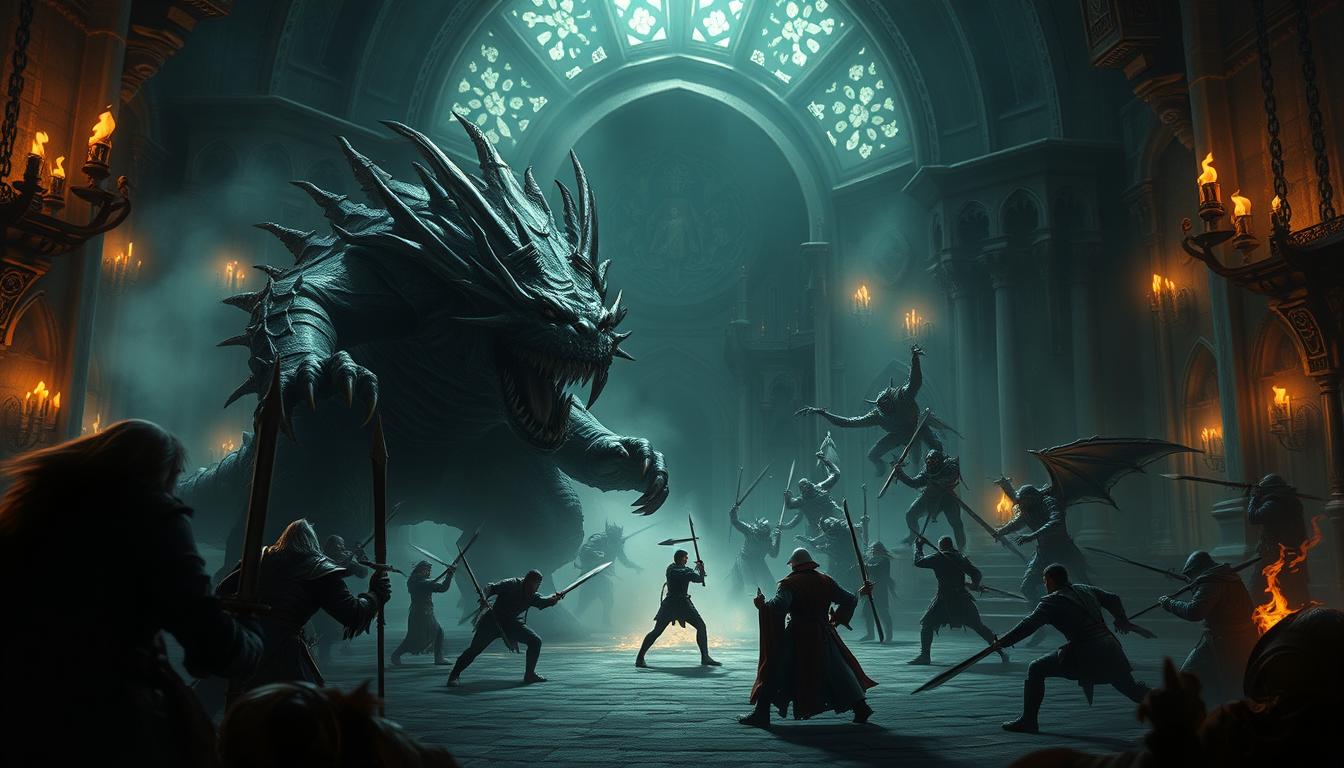
Adding minions without slog
I bring in minions that create choices, not bookkeeping. Skirmishers pin casters, a pocket healer top‑ups the target, and a controller punishes clustering.
Keep stats light and roles clear. I aim for 1–2 more enemies than the party on the field, rotating bruisers, then artillery to shift priorities across stages.
Target counts, roles, and support
Design lair actions that force decisions—zones that block healing or nudge movement at a steady initiative count.
Round flow matters: party acts, lair pulses, boss acts with legendaries interleaved. When each layer asks a question, the table stays tactical and engaged.
| Design Goal | Typical Effect | Tip |
|---|---|---|
| Legendary cadence | Controls tempo | Use 1‑1‑3 split |
| Minion roles | Force target choices | Skirmisher, healer, controller |
| Lair beats | Round‑to‑round stakes | Predictable, modest DCs |
Make the Arena Fight Back
I design arenas that push the table to move, adapt, and make real choices. The room should add questions every round, not just extra hit points.
Hazards that shape movement, not just deal damage
I use erupting lava flows, shifting plates, and falling stalactites as avoidable threats that change where the party wants to stand. These hazards focus on displacement and denial more than raw damage.
Interactive features players can turn against the boss
I place ballistae, rune pylons, and valves that players can use. A charged pylon or a flipped valve should feel like a clear opportunity to punish the foe if the players cooperate.
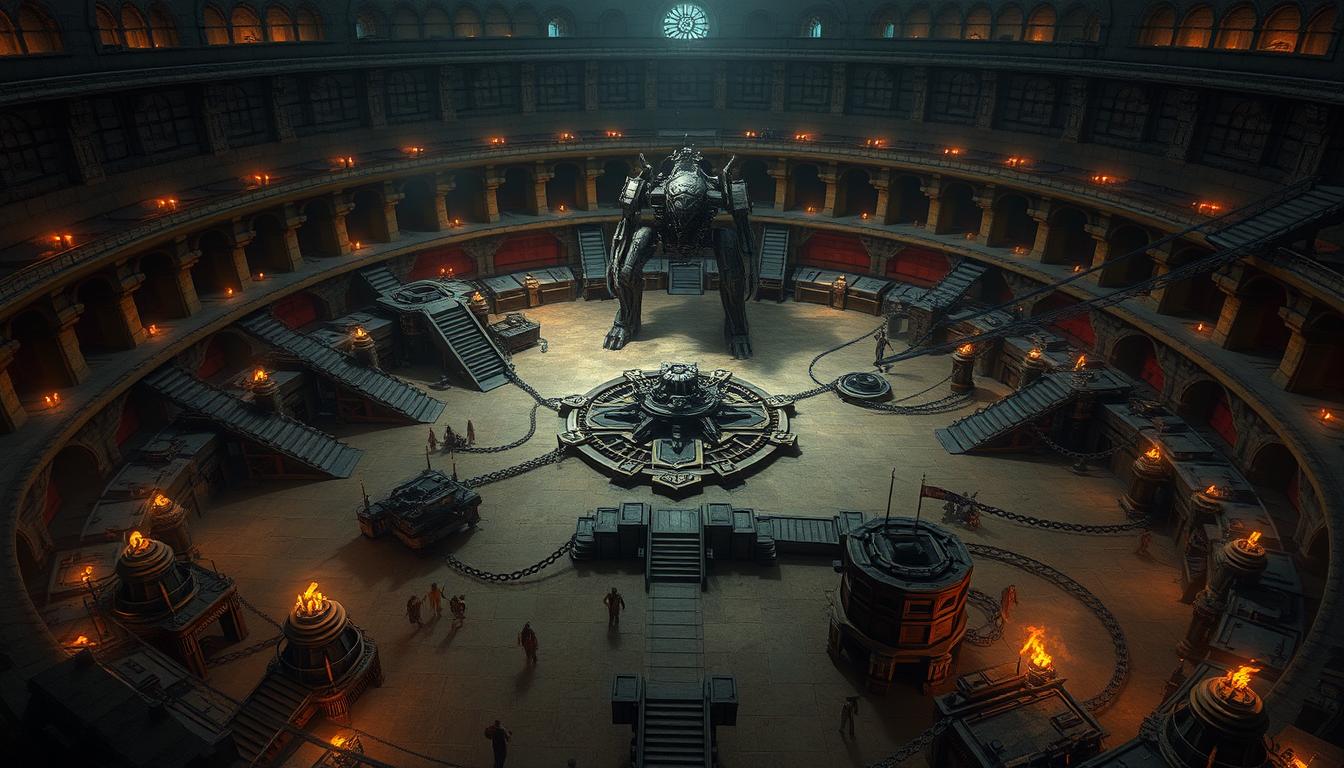
Designing lairs that fit the monster’s tactics
I tie each lair feature to the monster’s toolkit: burrowers get shifting floors, flyers get updrafts and fragile perches, and controllers get zones that herd targets. That alignment makes the space feel lived‑in and strategic.
- I build arenas where movement and sight lines matter so the battle becomes about space control, not only trading hits.
- I telegraph hazard timing clearly—on initiative counts or rounds—so players can plan counterplay.
- Every environmental thing has a counter: jump paths, cover, or skill checks, so clever play beats brute force.
| Feature | Effect | Counter |
|---|---|---|
| Lava surge | Denies area for 1–2 rounds | Alternate route / timed dash |
| Rune pylon | Buffs or punishes proximity | Disable check or reverse charge |
| Collapsing ledge | Shifts elevation, breaks formation | Hold breath/rope anchors |
Keep passive damage modest and favor choices that reward positioning and teamwork. Let the creature use the room first, then let the party flip the thing back for a satisfying turn in the battle.
Designing the Stages: Triggers, Transitions, and Escalation
When I map stages, I start with simple, obvious triggers that everyone at the table can watch for. Clear cues cut down rules arguments and keep the moment dramatic.
Stage triggers can be HP thresholds, broken objectives, or a rising timer. I use easy markers—70% and 40% HP, a ritual hitting six of ten charges, or three anchors shattered—so the group knows why the scene changes.
Transformation beats should feel cinematic. I script terrain shifts, a shed husk that grants new speed, or runes that call reinforcements. Each change unlocks specific abilities so the combat puzzle changes, not just the numbers.
I prefer swapping enemy types over endlessly adding more. That keeps the board readable and forces fresh priorities for the party.
Execution and pacing
I pace stages at about 2–4 rounds. That keeps momentum and lets each turn matter. I cap power spikes with strong telegraphs—a glowing crack, a chorus of chanting, or a visible vortex—so players can react.
| Trigger | Effect | Player option |
|---|---|---|
| 70% / 40% HP | New ability unlocked | Prepare counters |
| Ritual charge | Reinforcements arrive | Interrupt skill check |
| Broken anchor | Terrain shift | Stabilize or reroute |
- I decide ahead which tool the boss loses and which it gains, keeping escalation sideways.
- I give the party at least one short window that favors them for clever play.
- I keep turn‑order cues written so transitions run smooth and fast.
Tactics That Play to Win (While Keeping It Fun)
My first step is to script an opening sequence that forces a choice from the players fast. I define positioning, an opening salvo, and a defensive reply so the first rounds feel decisive.
Pre‑plan pivots by listing clear fallback conditions: low HP, platform collapse, or the party using a known signature spell. When a pivot triggers, swap tactics quickly—zone control, kiting, or reinforcements—so the scene changes without slow rulings.
Pre‑planning an opening script and pivot options
I script the first two turns: where the creature lands, who it targets, and a short defensive action. That removes hesitation and keeps pacing tight.
- I set target priorities that make sense: silence controllers, punish clumped melee, and pressure healers while still spreading the spotlight.
- I map likely player tools—high DPR bursts, battlefield control, nova combos—and plan counters that test those strengths without shutting a character out.
Countering the specific party you have, not a theoretical one
Know your table. If they fly, create grounded zones. If they turtle, split the map. If they alpha‑strike, force movement with hazards rather than insta‑death locks.
Make each character matter: give a lever to pull, a hazard to disable, or a moment where a smart attack changes the tide. Use clear telegraphs for big moves so counterplay feels earned.
| Design Focus | Quick Effect | Player Option |
|---|---|---|
| Scripted opener | Fast pacing | React or reposition |
| Planned pivots | Smooth transitions | Exploit openings |
| Target priorities | Clear threats | Protect or break roles |
Dialing Survivability and Damage Without Cheating
I tune survivability so the fight feels tense without dragging on. Small, legal changes let me shape pacing and keep the table invested.
HP ranges, resistances, and regeneration that pace the fight
I set the creature’s hit points as a range and pick a target based on how hard the party hits that night. I will use max hit points for big moments if I need a firmer wall, or the lower end if the table is shredding threats quickly.
Temporary shields and short regen pulses work well. I add telegraphed resistances or a surge of temp HP that buys one more round. A tethered guardian or modest regeneration makes focusing objectives matter for the characters.
Boosting damage and pressure instead of only adding hit points
I prefer raising controlled damage and battlefield pressure over bloating pools. I increase signature attack output—use max dice or about +50% dice—so the encounter threatens the party without expanding the turn count endlessly.
| Adjustment | Effect | Design tip |
|---|---|---|
| HP range | Flexible durability | Commit night-of based on party output |
| Short resist / temp HP | Buys decisive rounds | Telegraph visual cue before it activates |
| Boosted damage | Maintains pressure | Max dice or +50% dice on signature moves |
Practical rules: keep AC slightly above average to avoid whiffing, vary save types so more characters stay relevant, and use a pressure checklist—minion, lair pulse, hazard—before inflating hit points. Those small mechanics keep action economy honest and the scene exciting.
Story Stakes and Alternative Win Conditions
When the scene asks for more than damage, I shift the table toward choices that matter. I want a clear challenge that forces the table to weigh goals, not just HP totals. That makes climactic moments feel like part of the larger story.
Deals, sacrifices, and complications that reshape the battle
Offers or horrors on the table work well as pressure points. I let a villain present a bargain, reveal a deeper threat, or demand a costly choice so the moment becomes emotional as well as tactical.
I treat bargaining like another set of moves: timed, risky, and visible to the group. Players must debate whether a quick gain is worth long‑term costs to the campaign.
Objectives beyond “reduce to 0 HP” for climactic finales
I layer concrete goals: smash ward pylons, disrupt a ritual, or free captives. These objectives give the party multiple paths to victory and create meaningful tradeoffs.
| Objective | Effect | Role |
|---|---|---|
| Destroy anchor | Removes shield / short timer | Skirmishers sprint |
| Complete counter‑ritual | Stops invulnerability | Casters focus checks |
| Evacuate hostages | Reduces collateral loss | Brusiers hold lines |
I make all options visible with clear DCs, timers, and clues so players can act confidently. I avoid absolute fail states; partial wins like delaying a rite still change the scene and feel earned.
Placing a duel on a crowded street or near fragile lore forces creative play. That gives the group one plausible way to win without pure combat, and it keeps future encounters tied to the choices made here.
Stage-by-Stage Templates You Can Steal Tonight
Below you’ll find three battle-ready templates I use when I need a quick, memorable finale. Each template maps clear triggers, simple minion counts, and one player-seizable tool so transitions feel fair and dramatic.
Dragon Caldera
Stage 1: the dragon strafes above magma vents that erupt on initiative 20. Cultist spotters mark targets while the creature uses hit-and-run attacks.
Stage 2: platforms collapse and two drakes plus two cultists join. Replace fallen minions so play stays readable.
Stage 3: the dragon is grounded, exposing a heart-crystal that, if shattered, cancels a final breath nova and ends the scene.
Necromancer Phylactery
Stage 1: waves of skeletons with a pocket-healer acolyte wear the party down. Stage 2: ward pylons appear and must be disrupted to reveal the phylactery.
Stage 3: the group splits focus between smashing the phylactery and stopping a spreading curse. Lair actions dim lights or raise bone walls to punish bad positioning.
Beholder Gauntlet
Stage 1: sliding cover on tracks breaks lines of sight so eye rays force movement. Stage 2: floating mirrors create reflectable lanes and give the party a lever.
Stage 3: tilting platforms slide PCs into kill zones unless they anchor. I tune eye rays to the party’s choices so each round asks a fresh question.
- Keep minions light and predictable. Swap roles between stages to preserve action economy.
- Make hazard timing clear and give the players one control point they can seize.
- End each template with a visible victory trigger—crystal shattered, phylactery destroyed, or monster routed—so the payoff never feels anticlimactic.
| Template | Core Trigger | Player Lever |
|---|---|---|
| Dragon Caldera | Platform collapse / heart-crystal | Shatter crystal |
| Necromancer | Ward pylons disabled | Pylon switches |
| Beholder | Mirror network active | Mirror controls |
Conclusion
My goal at the end is simple: give the group several clear chances to shine while the final boss still feels dangerous.
I keep essentials ready: pre‑fight attrition, minions to fix action economy, living arenas, and stage triggers that run clean. I telegraph big changes so the players feel clever when they counter, not cheated.
I plan two or three alternate ways to win beyond pure damage and tune HP or damage within tight bounds. I carry quick notes and simple timers so I don’t stall the party or the game.